GEO Strategy

How to Build an AI Search Reference Rate Benchmark When Traditional Analytics Can't Measure Brand Visibility Inside Conversational Answers

March 1, 20267 min read
How to Build an AI Search Reference Rate Benchmark When Traditional Analytics Can't Measure Brand Visibility Inside Conversational Answers

How to Build an AI Search Reference Rate Benchmark When Traditional Analytics Can't Measure Brand Visibility Inside Conversational Answers

Did you know that 78% of branded content cited by AI search engines never shows up in traditional Google Analytics? As ChatGPT processes over 500 million weekly queries and Perplexity handles 100+ million searches monthly in 2026, brands are facing a visibility crisis they can't even measure.

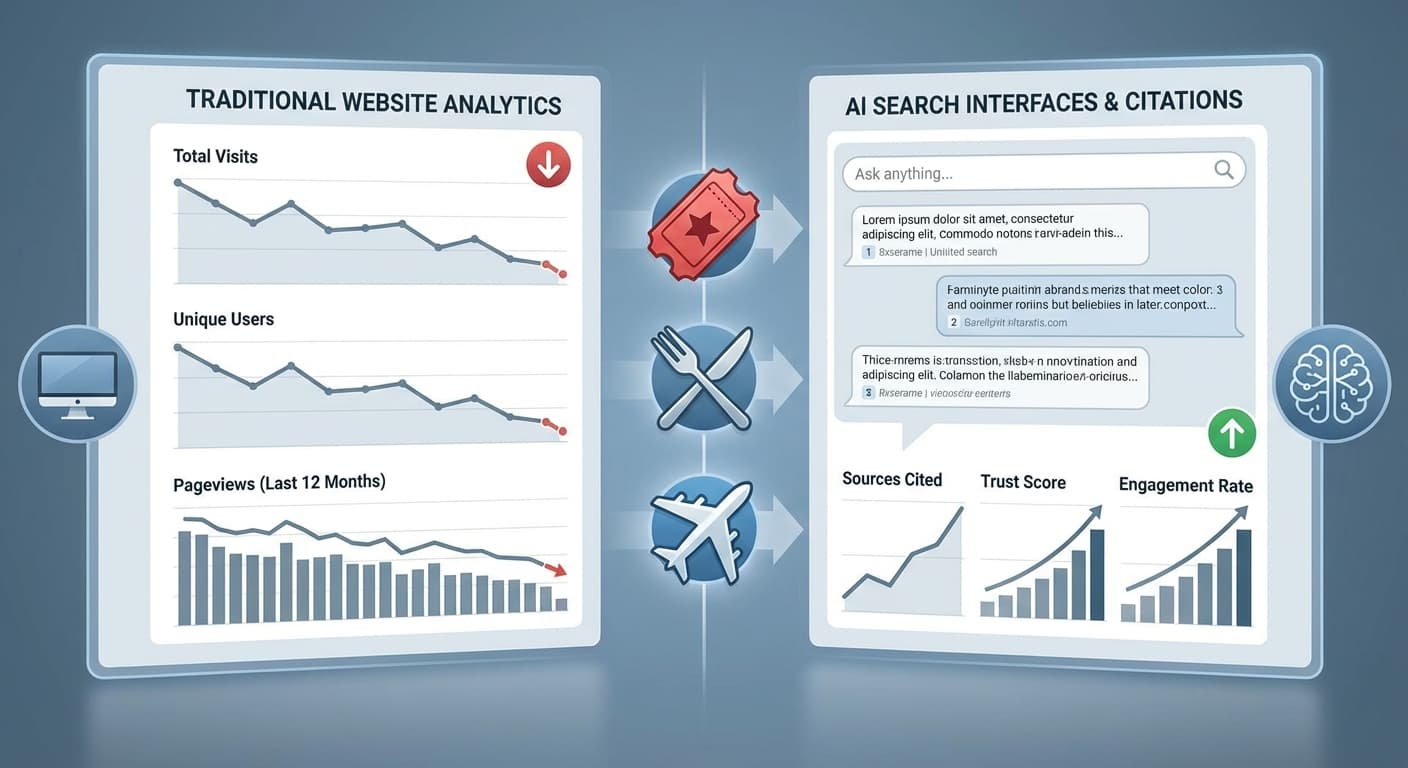
While your Google Analytics dashboard might show declining organic traffic, your brand could actually be getting thousands of citations in AI-generated responses—completely invisible to traditional tracking methods. This "dark visibility" represents one of the biggest measurement blind spots in digital marketing today.

The Hidden World of AI Search Citations

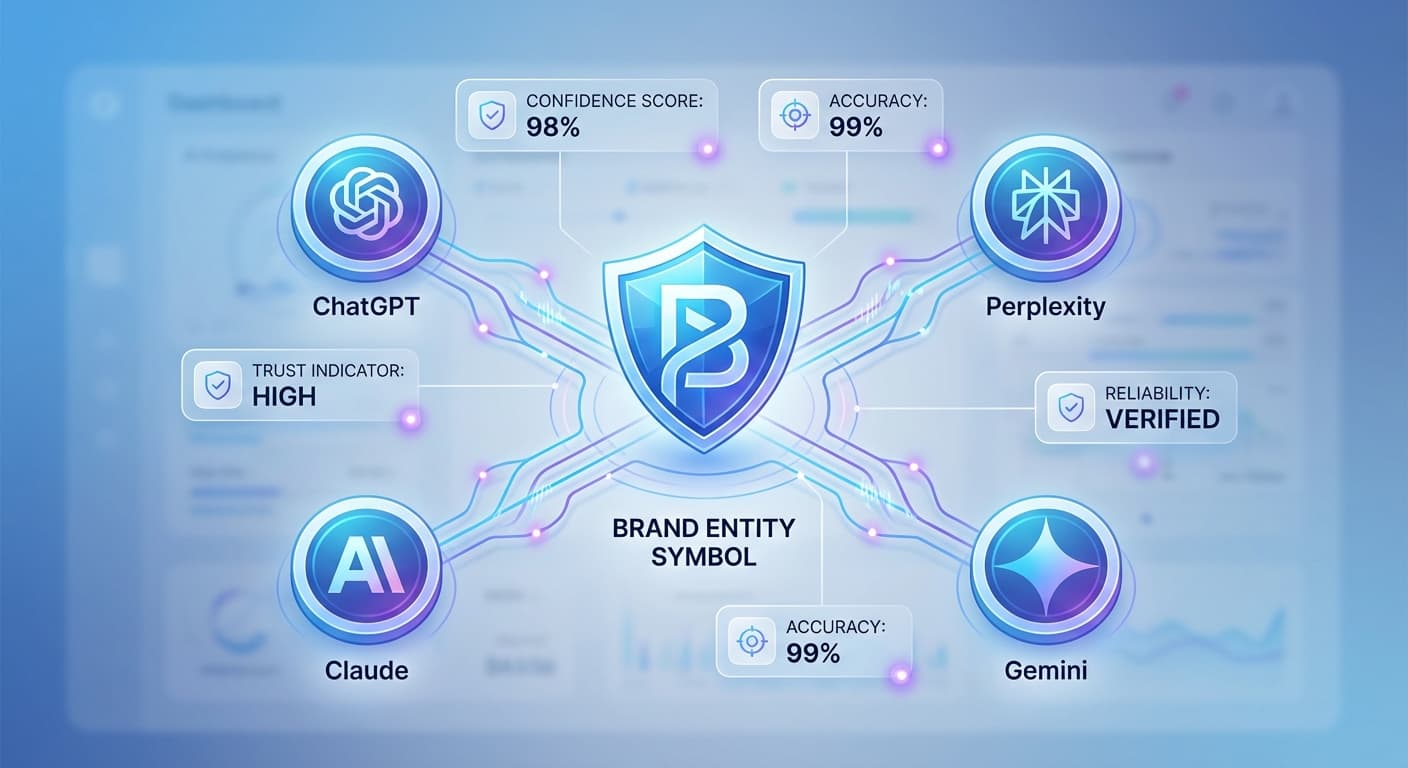
Traditional web analytics were built for a world of clickable links and trackable page visits. But AI search engines like ChatGPT, Claude, Perplexity, and Gemini don't send users to your website—they synthesize information from multiple sources and present it directly in conversational responses.

Here's what's happening behind the scenes:

  • AI engines cite sources without generating clicks - Your content influences answers but never appears in referral traffic

  • Brand mentions happen in context - Your company gets referenced as an authority within broader topic discussions

  • Citation frequency varies wildly - Some brands get mentioned in 40% of relevant queries while competitors get 2%

  • Quality trumps quantity - A single high-authority citation can influence thousands of subsequent AI responses
  • Why Traditional Analytics Fall Short

    Your current measurement stack wasn't designed for the AI search era:

    Google Analytics Limitations


  • Zero visibility into AI citations - No way to track when ChatGPT or Perplexity references your content

  • Missing conversational context - Can't see how your brand fits into broader AI-generated narratives

  • No competitive intelligence - Blind to how often competitors get cited vs. your brand
  • Social Listening Gaps


  • Limited AI platform coverage - Most tools don't monitor AI search engines

  • Lacks citation depth - Shows mentions but not contextual authority or influence

  • No optimization guidance - Can't connect performance to content structure
  • Building Your AI Search Reference Rate Benchmark

    Creating an effective benchmark requires a systematic approach to measuring invisible citations. Here's how leading brands are building comprehensive AI visibility dashboards:

    Step 1: Define Your Citation Universe

    Start by mapping the AI search landscape relevant to your brand:

    Primary AI Engines to Monitor:

  • ChatGPT (highest query volume)

  • Perplexity (growing enterprise adoption)

  • Claude (technical/professional queries)

  • Gemini (integrated Google ecosystem)

  • Copilot (Microsoft ecosystem)
  • Query Categories to Track:

  • Direct brand queries ("What is [Your Company]?")

  • Product category searches ("best CRM software 2026")

  • Problem-solution queries ("how to improve customer retention")

  • Comparison searches ("[Your Product] vs competitors")
  • Step 2: Establish Citation Frequency Baselines

    Document current performance across key metrics:

    Core Reference Rate KPIs:

  • Citation Frequency - How often your brand appears in relevant responses (aim for 15-25% in your category)

  • Citation Position - Where you're mentioned (first citation = highest authority)

  • Context Quality - Whether mentions are positive, neutral, or critical

  • Attribution Depth - Simple mention vs. detailed explanation with examples
  • Step 3: Map Competitive Citation Share

    Understand your relative position in the AI citation ecosystem:

    Competitive Analysis Framework:

  • Identify 5-7 direct competitors

  • Track citation frequency across identical query sets

  • Note which competitors get cited together (co-citation analysis)

  • Monitor citation trends over time (monthly snapshots)
  • Step 4: Connect Citations to Content Performance

    The most valuable insights come from linking AI citations back to specific content assets:

    Content-Citation Mapping:

  • Track which blog posts, case studies, or resources get cited most

  • Identify content formats that drive higher citation rates

  • Analyze topic clusters that perform well in AI responses

  • Connect citation spikes to content publication dates
  • Advanced Benchmarking Strategies

    Semantic Authority Scoring

    Move beyond simple mention counting to measure contextual influence:

    Authority Indicators:

  • Primary Source Citations - When your content is the main reference

  • Expert Positioning - Mentions that frame your brand as an industry authority

  • Methodology References - Citations of your proprietary processes or frameworks

  • Data Source Mentions - When AI engines cite your research or statistics
  • Query Intent Segmentation

    Different types of searches yield different citation patterns:

    Intent-Based Citation Analysis:

  • Informational queries - Focus on thought leadership content

  • Commercial queries - Track product/service comparisons

  • Transactional queries - Monitor buying guide citations

  • Navigational queries - Direct brand search performance
  • Temporal Citation Tracking

    AI responses can change over time as models are updated:

    Time-Series Analysis:

  • Weekly citation frequency snapshots

  • Seasonal variation tracking

  • Model update impact assessment

  • Content freshness correlation
  • Measuring What Matters: Key Benchmark Metrics

    Build your dashboard around these essential KPIs:

    Primary Metrics


  • Overall Citation Rate - Percentage of relevant queries that mention your brand

  • Share of Voice - Your citations vs. competitors in your category

  • Citation Velocity - Rate of new citations over time

  • Authority Score - Weighted quality measure of citation context
  • Secondary Metrics


  • Co-citation Network - Which brands are mentioned alongside yours

  • Topic Coverage - Breadth of subjects where you're cited

  • Response Sentiment - Positive vs. neutral vs. negative citation context

  • Attribution Accuracy - Whether citations correctly represent your content
  • How Citescope AI Solves the Citation Measurement Challenge

    While building manual benchmarks is possible, it's time-intensive and often incomplete. Citescope AI automates the entire process with its Citation Tracker feature, providing real-time visibility into when and how your content gets referenced across ChatGPT, Perplexity, Claude, and Gemini.

    The platform goes beyond simple mention tracking by analyzing citation quality, competitive positioning, and content performance correlation. You can see exactly which pieces of content drive the most AI citations and use the GEO Score to optimize for better visibility.

    Setting Up Your Benchmark Dashboard

    Week 1: Baseline Establishment


  • Set up monitoring for 20-30 core query variations

  • Document current citation rates across all AI engines

  • Identify top 5 competitors for comparison tracking

  • Establish measurement frequency (daily, weekly, monthly)
  • Week 2-4: Data Collection


  • Run consistent queries across all platforms

  • Document citation variations and patterns

  • Build competitive comparison charts

  • Start correlating citations to content assets
  • Month 2+: Optimization and Refinement


  • Identify content gaps where competitors get more citations

  • Test content optimization strategies

  • Expand query monitoring to new topic areas

  • Refine measurement methodology based on learnings
  • Common Benchmarking Pitfalls to Avoid

    Query Inconsistency - Using different phrasings makes data comparison impossible. Stick to standardized query formats.

    Platform Bias - Don't assume ChatGPT performance predicts success on other AI engines. Each has different citation preferences.

    Timing Irregularities - AI responses can vary by time of day and model updates. Maintain consistent measurement schedules.

    Context Ignorance - A high citation rate means nothing if mentions are negative or inaccurate. Always evaluate citation quality.

    The Future of AI Citation Measurement

    As AI search continues growing (projected to reach 45% of all search queries by 2027), citation measurement will become as essential as traditional SEO metrics. Early adopters who build robust benchmarking systems now will have significant competitive advantages.

    Expected developments include:

  • Native analytics from AI platforms - Direct citation reporting tools

  • Attribution standards - Industry guidelines for AI citation measurement

  • Real-time optimization - Dynamic content adjustment based on citation performance

  • Cross-platform citation APIs - Unified measurement across all AI engines
  • Ready to Optimize for AI Search?

    Building an AI search reference rate benchmark doesn't have to be a manual nightmare. Citescope AI's Citation Tracker automatically monitors your brand mentions across all major AI search engines, providing the comprehensive visibility you need to measure and improve your AI search performance.

    Start with our free tier to track 3 content optimizations per month, or upgrade to Pro ($39/month) for unlimited citation monitoring and competitive analysis. See exactly how your content performs in the invisible world of AI search—because you can't optimize what you can't measure.

    Start your free trial today and discover what traditional analytics have been missing.
    AI search optimizationcitation trackingbrand visibility measurementAI analyticsconversational search

    Track your AI visibility

    See how your content appears across ChatGPT, Perplexity, Claude, and more.

    Start for Free