How to Build an AI Search Platform Diversification Strategy When OpenAI's SearchGPT Integration With Third-Party Apps Creates New Citation Opportunities Your Competitors Are Already Exploiting
How to Build an AI Search Platform Diversification Strategy When OpenAI's SearchGPT Integration With Third-Party Apps Creates New Citation Opportunities Your Competitors Are Already Exploiting
In early 2025, OpenAI's SearchGPT integration with major third-party applications transformed the AI search landscape overnight. With over 800 million weekly active users across integrated platforms and AI-powered search now capturing 35% of all online queries, content creators who haven't adapted their citation strategies are watching competitors dominate the new search paradigm.
The harsh reality? While you've been optimizing for traditional search engines, forward-thinking brands have already secured citation advantages across multiple AI platforms. But here's the opportunity: it's not too late to build a comprehensive diversification strategy that positions your content for maximum AI visibility.
The AI Search Platform Evolution: Why Diversification Matters More Than Ever
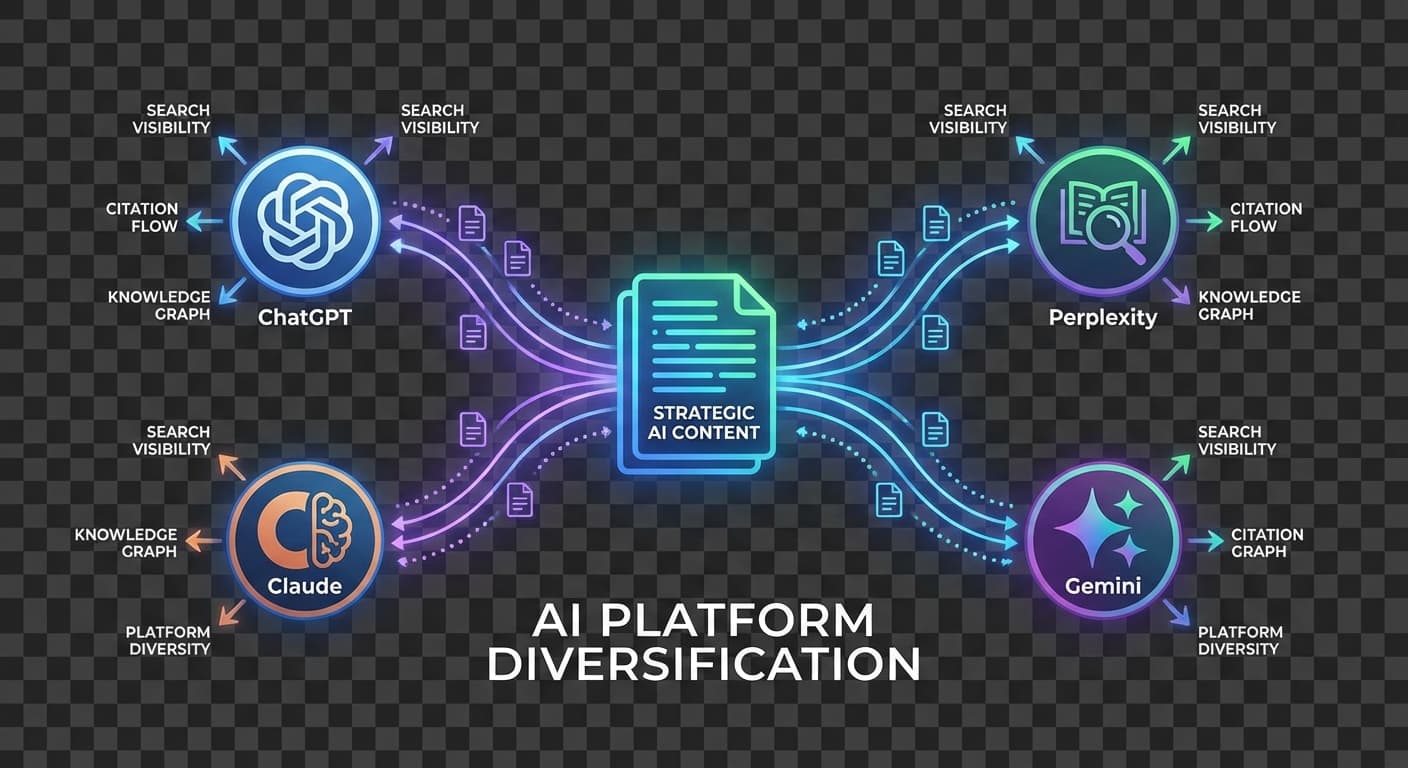
The AI search ecosystem has exploded beyond ChatGPT's initial dominance. By late 2025, we're seeing citation opportunities across:
Each platform uses different citation algorithms, content preferences, and ranking factors. A one-size-fits-all approach leaves massive opportunities on the table.
The Citation Gold Rush: What Your Competitors Already Know
Recent analysis of AI citation patterns reveals that brands with diversified AI search strategies see:
The companies capitalizing on this shift aren't just lucky—they're strategic.
Building Your Multi-Platform AI Citation Strategy
1. Platform-Specific Content Optimization
Each AI search platform has unique content preferences:
OpenAI/SearchGPT Ecosystem:
Perplexity Pro:
Google Gemini:
Anthropic Claude:
2. Content Format Diversification Strategy
Successful AI citation strategies leverage multiple content formats:
Primary Content Types:
Supporting Content Elements:
3. Cross-Platform Content Syndication
Develop a systematic approach to content distribution:
Advanced Tactics: Staying Ahead of Algorithm Changes
Understanding AI Citation Triggers
AI platforms cite content based on several key factors:
Leveraging SearchGPT's Third-Party Integration
OpenAI's third-party app integration creates unique citation opportunities:
Integration Hotspots:
Optimize content that these integrated apps might reference or display.
The Compound Effect Strategy
Instead of competing for individual citations, build content clusters that create citation momentum:
This approach increases your chances of multiple citations per query.
Measuring Success: AI Citation Analytics
Key Performance Indicators (KPIs)
Track these metrics across all AI platforms:
Competitive Citation Analysis
Regularly audit competitors' AI citation success:
Use these insights to identify untapped opportunities.
How Citescope Ai Accelerates Your Diversification Strategy
Building a multi-platform AI citation strategy manually is time-intensive and complex. Citescope Ai streamlines the entire process:
GEO Score Analysis: Get platform-specific optimization scores across all major AI search engines, identifying exactly where your content needs improvement for each platform's unique algorithms.
AI Rewriter Optimization: Transform existing content with one-click optimization that adapts your material for multiple AI platforms simultaneously, saving hours of manual rewriting.
Cross-Platform Citation Tracking: Monitor your citation performance across ChatGPT, Perplexity, Claude, and Gemini in one unified dashboard, eliminating the need to manually track multiple platforms.
Multi-Format Export: Download optimized content in formats ready for different platforms—Markdown for technical documentation, HTML for web publishing, or WordPress blocks for blog content.
The platform's comprehensive approach means you can execute sophisticated diversification strategies without the typical resource overhead.
Common Diversification Mistakes to Avoid
1. Platform Favoritism
Don't over-optimize for one AI platform at the expense of others. Balance your efforts across the ecosystem.
2. Content Duplication
While syndication is important, avoid publishing identical content across platforms. Adapt and customize for each environment.
3. Neglecting Emerging Platforms
Stay informed about new AI search platforms entering the market. Early adoption advantages compound over time.
4. Ignoring Integration Updates
AI platform integrations change frequently. Regularly review and update your strategy as new third-party connections emerge.
Future-Proofing Your Strategy
Anticipated 2026 Developments
Building Adaptability Into Your Strategy
Create systems that can quickly adapt to new platforms:
Ready to Optimize for AI Search?
The AI search revolution isn't coming—it's here. While your competitors are already securing citation advantages across multiple platforms, you have the opportunity to build a comprehensive diversification strategy that captures the full potential of AI-driven discovery.
Citescope Ai makes multi-platform optimization accessible and measurable. Start with our free tier to optimize your first three pieces of content across all major AI search platforms, then scale your strategy as you see results.
Don't let another month pass while competitors dominate AI citation opportunities. Try Citescope Ai free today and start building your AI search diversification strategy.


