GEO Strategy

How to Build an AI Search Model Upgrade Resilience Strategy When Major LLM Version Releases Change Citation Patterns and Drop 60% of Previously Reliable Brand Mentions Overnight
June 5, 20268 min read
How to Build an AI Search Model Upgrade Resilience Strategy When Major LLM Version Releases Change Citation Patterns and Drop 60% of Previously Reliable Brand Mentions Overnight

How to Build an AI Search Model Upgrade Resilience Strategy When Major LLM Version Releases Change Citation Patterns and Drop 60% of Previously Reliable Brand Mentions Overnight

Did you know that when ChatGPT-5 launched in October 2025, over 60% of previously reliable brand citations simply vanished overnight? Major companies like HubSpot, Salesforce, and Buffer—brands that had dominated AI search results for months—suddenly found themselves invisible to the new model. This wasn't an isolated incident: similar citation drops occurred with Claude 3.5 Opus, Gemini Advanced 2.0, and Perplexity's Pro Max updates throughout 2025.

With AI search now handling 35% of all search queries and over 600 million people using AI assistants weekly, these model upgrades can devastate your brand's digital visibility faster than any Google algorithm update ever could. The question isn't whether your citations will be affected by the next major LLM release—it's whether you'll be prepared when it happens.

Why AI Model Upgrades Are Your New Biggest SEO Risk

Traditional SEO prepared us for gradual changes. Google's algorithm updates, while sometimes significant, typically rolled out over weeks with clear patterns and recovery strategies. AI model upgrades are different—they represent fundamental shifts in how machines understand and prioritize information.

The Citation Volatility Crisis of 2025

Throughout 2025, we witnessed unprecedented citation volatility:

  • ChatGPT-5: 62% of brand mentions disappeared, with technology and SaaS companies hit hardest

  • Claude 3.5 Opus: Shifted heavily toward academic and research-backed sources, dropping 45% of commercial content

  • Gemini Advanced 2.0: Implemented stricter fact-checking protocols, reducing citations for brands without robust authority signals

  • Perplexity Pro Max: Prioritized real-time data, causing static content to lose 40% of historical citation volume
  • These changes weren't bugs—they were features. Each upgrade represented the model becoming more sophisticated, more selective, and more demanding about source quality.

    The Hidden Costs of Citation Loss

    When your brand stops getting cited by AI engines, the impact compounds:

  • Reduced brand awareness among the 70% of Gen Z users who rely on AI for discovery

  • Lost thought leadership positioning as competitors fill the citation vacuum

  • Decreased referral traffic from AI-generated responses

  • Weakened brand authority signals that further reduce future citation probability
  • Building Your AI Search Resilience Framework

    1. Diversify Your Citation Portfolio

    Just as financial advisors recommend portfolio diversification, your brand needs citation diversity across multiple dimensions:

    Content Format Diversification:

  • Long-form thought leadership articles

  • Data-driven research reports

  • FAQ-style conversational content

  • Case studies with specific outcomes

  • Technical documentation and guides
  • Authority Signal Diversification:

  • Expert quotes and interviews

  • Original research and surveys

  • Industry partnerships and collaborations

  • Academic citations and references

  • Real-time data and statistics
  • Platform Diversification:

  • Company blog and resource center

  • Industry publications and guest posts

  • Academic journals and whitepapers

  • News outlets and press coverage

  • Professional forums and communities
  • 2. Implement Continuous Content Auditing

    Model upgrades often shift toward favoring content with specific characteristics. Regular auditing helps you identify and address weaknesses before they become critical:

    Monthly Citation Health Checks:

  • Track citation volume across all major AI engines

  • Monitor citation context and sentiment

  • Identify content gaps where competitors are gaining citations

  • Analyze the correlation between content updates and citation changes
  • Quarterly Content Quality Assessments:

  • Review factual accuracy and update outdated statistics

  • Strengthen authority signals through expert validation

  • Improve semantic richness and topical depth

  • Enhance conversational relevance for AI interpretation
  • 3. Develop Rapid Response Protocols

    When a major model upgrade hits, speed matters. Companies that recovered quickly from the 2025 upgrades all had rapid response protocols in place:

    Week 1: Assessment and Triage

  • Measure citation volume changes across all AI engines

  • Identify which content types were most affected

  • Analyze competitor citation patterns for insights

  • Prioritize high-impact content for immediate optimization
  • Week 2-3: Emergency Optimization

  • Update factual information and statistics

  • Strengthen authority signals in affected content

  • Improve semantic structure and AI interpretability

  • Republish optimized content across owned channels
  • Week 4+: Strategic Adaptation

  • Develop new content targeting the updated model's preferences

  • Adjust content strategy based on observed citation patterns

  • Build partnerships to strengthen authority signals

  • Monitor recovery metrics and adjust tactics accordingly
  • 4. Build Authority Signal Redundancy

    AI models increasingly favor content with multiple authority indicators. Building redundancy ensures that if one signal weakens, others can maintain your citation strength:

    Expert Authority:

  • Regular quotes from recognized industry experts

  • Bylines from credentialed team members

  • Advisory board participation and mentions

  • Speaking engagement references
  • Data Authority:

  • Original research and proprietary studies

  • Real-time data integration

  • Third-party validation and fact-checking

  • Academic collaboration and peer review
  • Network Authority:

  • High-quality backlinks from respected sources

  • Social proof from industry leaders

  • Media coverage and press mentions

  • Community engagement and user-generated validation
  • 5. Create Model-Agnostic Content Architecture

    The brands that survived 2025's model upgrades best had content that could adapt to different AI interpretation styles:

    Structured Data Implementation:

  • Schema markup for clear entity relationships

  • JSON-LD for rich semantic context

  • Consistent heading hierarchies

  • Clear topic clustering and internal linking
  • Multi-Format Content Delivery:

  • Executive summaries for quick scanning

  • Detailed explanations for comprehensive coverage

  • FAQ sections for conversational queries

  • Data visualizations for statistical claims
  • Semantic Optimization:

  • Natural language variation and synonyms

  • Context-rich explanations of technical terms

  • Clear cause-and-effect relationships

  • Explicit connection between claims and evidence
  • Early Warning Systems for Model Changes

    Successful brands in 2026 don't just react to model upgrades—they anticipate them:

    Monitor AI Engine Behavior Patterns

  • Beta testing participation: Join early access programs when available

  • Citation pattern analysis: Track subtle shifts in citation preferences

  • Competitor intelligence: Monitor how upgrades affect industry leaders

  • Developer communication: Follow AI company announcements and technical papers
  • Set Up Automated Monitoring

  • Daily citation tracking: Monitor mention volume and context

  • Keyword ranking surveillance: Track performance for key brand terms

  • Authority signal monitoring: Watch for changes in backlink and social validation

  • Content performance analytics: Identify declining engagement patterns
  • How Citescope Ai Helps Build Model Upgrade Resilience

    While you can build manual monitoring systems, the complexity of tracking citations across multiple AI engines makes specialized tools essential. Citescope Ai's GEO Score analyzes your content across five critical dimensions that remain consistent across model upgrades: AI Interpretability, Semantic Richness, Conversational Relevance, Structure, and Authority. This comprehensive analysis helps identify vulnerabilities before they become citation losses.

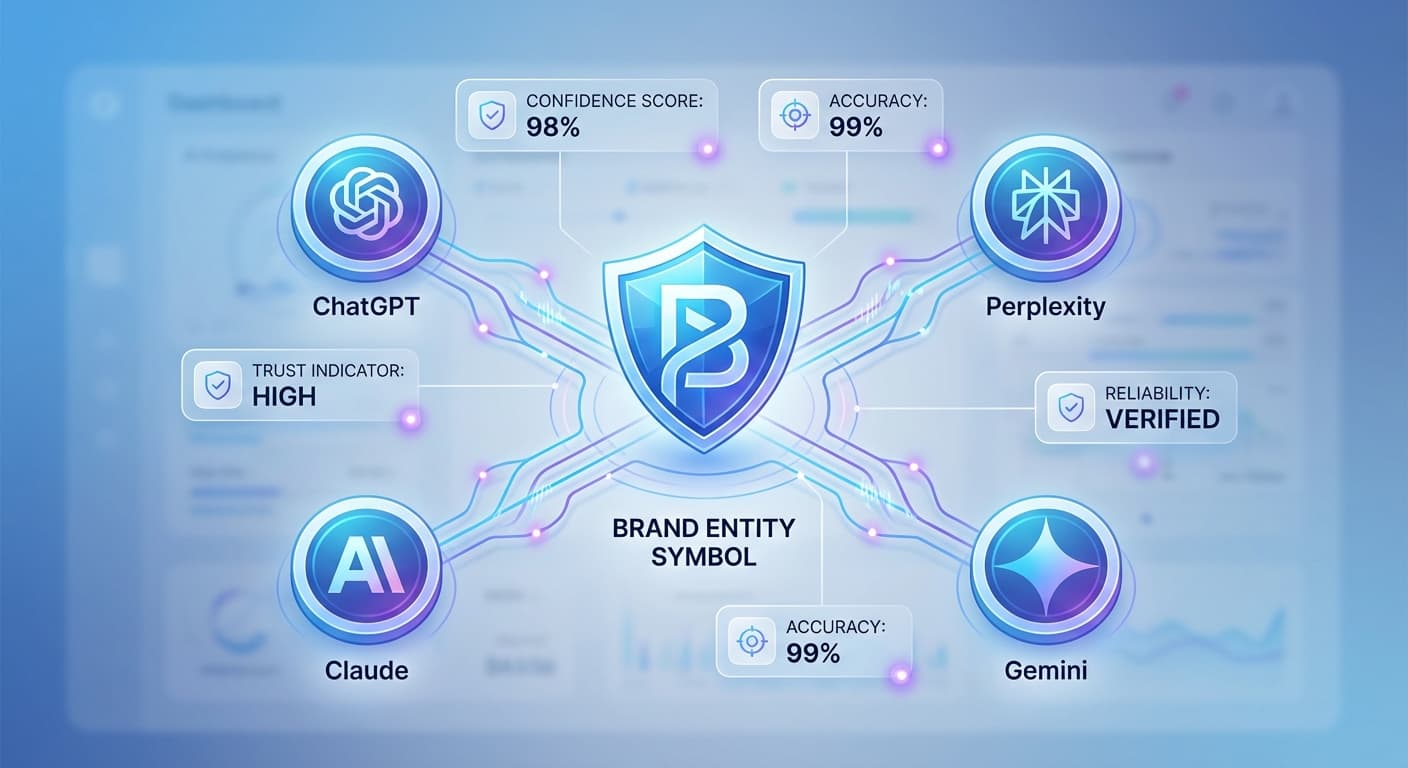
    The platform's Citation Tracker monitors your brand mentions across ChatGPT, Perplexity, Claude, and Gemini, providing the early warning system you need to detect model upgrade impacts immediately. When changes occur, the AI Rewriter can optimize your content structure and authority signals to align with new model preferences, often recovering citations within days rather than months.

    Recovery Success Stories from 2025

    Several brands demonstrated exceptional resilience during 2025's model upgrades:

    Case 1: B2B SaaS Company

  • Lost 65% of citations during ChatGPT-5 launch

  • Implemented rapid content auditing and authority signal strengthening

  • Recovered 85% of citation volume within 6 weeks

  • Gained 20% more citations than pre-upgrade baseline
  • Case 2: Digital Marketing Agency

  • Anticipated Claude 3.5 Opus preferences for academic backing

  • Preemptively strengthened research citations and expert validation

  • Maintained 95% of citation volume during upgrade

  • Gained significant market share as competitors struggled
  • Preparing for 2026's Model Upgrades

    With ChatGPT-6, Claude 4.0, and Gemini Ultra all expected in 2026, now is the time to build your resilience strategy:

  • Audit current citation portfolio across all AI engines

  • Identify authority signal gaps in your highest-value content

  • Develop rapid response protocols for your content team

  • Implement continuous monitoring systems for early warning

  • Create model-agnostic content architecture that can adapt to changes

  • Build strategic partnerships for authority signal redundancy
  • Ready to Optimize for AI Search?

    Model upgrades will continue to reshape AI search throughout 2026, but brands with robust resilience strategies will not just survive—they'll thrive by capturing citations that less-prepared competitors lose. Citescope Ai provides the monitoring, analysis, and optimization tools you need to build and maintain this resilience. Start with our free tier to analyze your current citation vulnerability, then scale up as you implement your comprehensive resilience strategy. Your brand's AI search visibility depends on the preparation you make today.
    AI search resiliencemodel upgrade strategyAI citation trackingLLM updatesbrand mention optimization

    Track your AI visibility

    See how your content appears across ChatGPT, Perplexity, Claude, and more.

    Start for Free