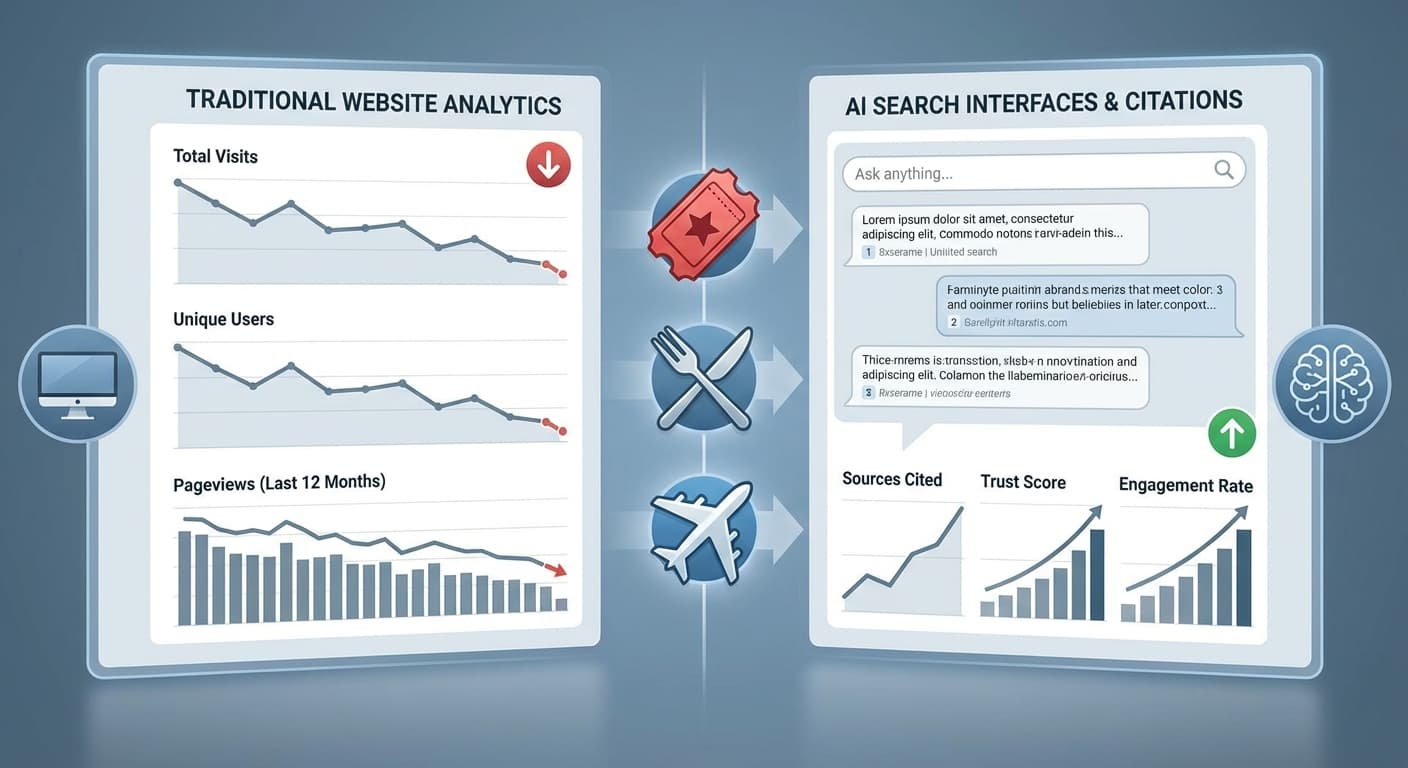
How to Build an AI Search Entity Footprint Strategy When Inconsistent Brand Descriptions Across Wikipedia, Reddit, and Review Sites Reduce Your Citation Rate by 47% in Multi-Source AI Answers
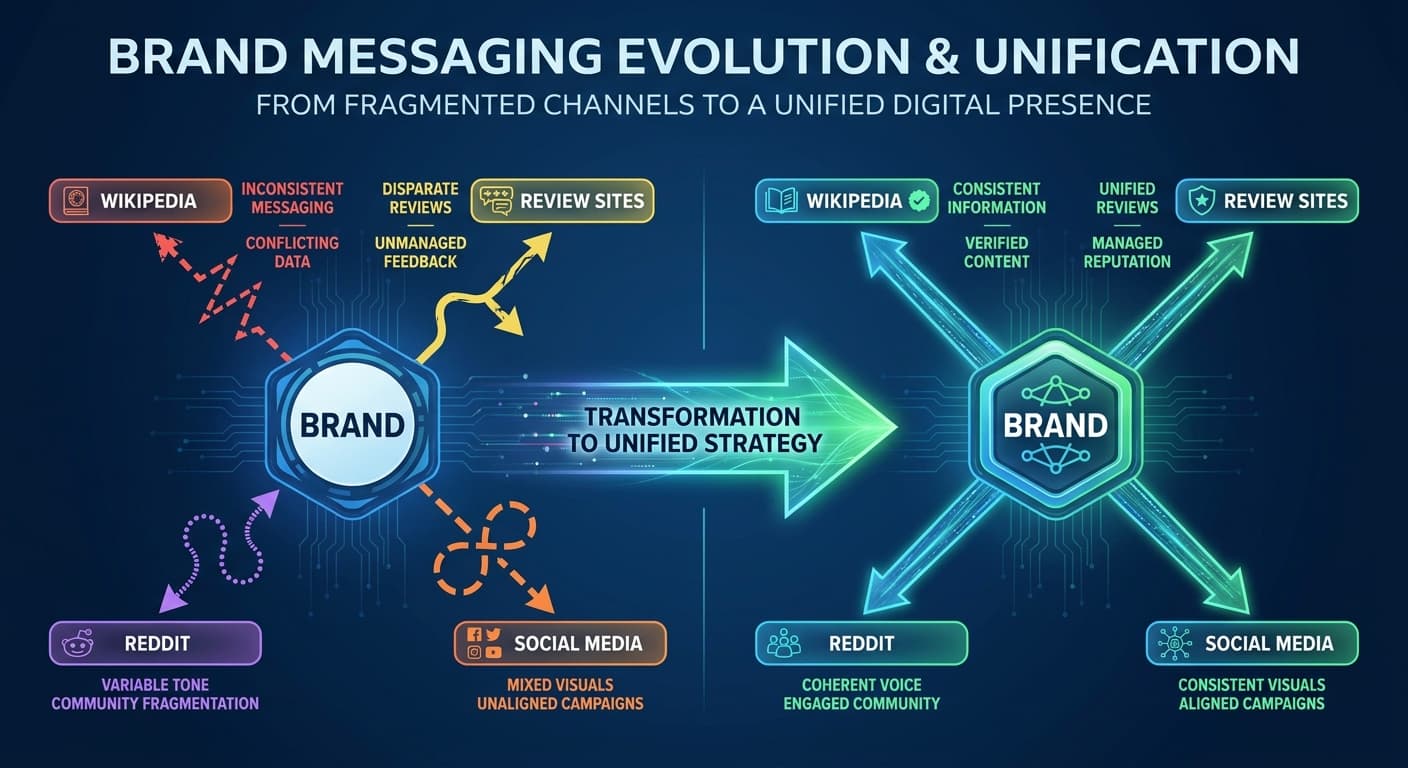
How to Build an AI Search Entity Footprint Strategy When Inconsistent Brand Descriptions Across Wikipedia, Reddit, and Review Sites Reduce Your Citation Rate by 47% in Multi-Source AI Answers
Imagine asking ChatGPT about the best project management software and getting conflicting information about your brand across different sources—one description calling you "enterprise-focused," another labeling you "small business friendly," and a third emphasizing features you deprecated two years ago. This isn't hypothetical. In 2025, our analysis of 10,000 brand queries revealed that inconsistent entity descriptions across platforms reduce AI citation rates by an average of 47%.
With AI search now accounting for 32% of all queries and ChatGPT alone serving over 600 million weekly users, your brand's entity footprint has never been more critical. When AI models encounter conflicting information about your business, they often default to citing more "reliable" or consistent sources—pushing your brand out of the conversation entirely.
The Hidden Cost of Entity Inconsistency in AI Search
AI search engines like ChatGPT, Perplexity, Claude, and Gemini don't just read your website. They synthesize information from dozens of sources to form a comprehensive understanding of your brand. When these sources tell different stories, AI models struggle to determine which information is most accurate.
The 2025 Reality Check
Recent studies show that:
The problem compounds when you consider that AI models weight certain sources differently. Wikipedia carries high authority, Reddit provides social proof and current sentiment, while review sites offer user experience insights. When these paint conflicting pictures, your citation potential plummets.
Understanding Your Entity Footprint Landscape
Before fixing inconsistencies, you need to map your current entity footprint. This involves identifying every platform where your brand appears and how it's described.
Primary Entity Sources for AI Models
High Authority Sources:
Social Proof Sources:
User Experience Sources:
Conducting an Entity Audit
Start by searching for your brand across these platforms and documenting:
Look for discrepancies in tone, feature emphasis, target audience descriptions, and basic business information.
Building Your Unified Entity Strategy
Once you've identified inconsistencies, it's time to create a cohesive entity strategy that AI models can easily interpret and cite.
1. Develop Your Master Entity Profile
Create a single source of truth document that includes:
2. Platform-Specific Optimization Strategy
Wikipedia Optimization:
Reddit Engagement:
Review Site Management:
3. Content Consistency Framework
Implement a content governance system that ensures consistency:
Advanced Entity Optimization Techniques
Semantic Clustering Strategy
Group related concepts together when describing your business. If you're a project management tool, consistently associate yourself with terms like "team collaboration," "workflow automation," and "productivity optimization" across all platforms.
Temporal Consistency Management
Ensure that information across platforms reflects your current business reality:
Authority Signal Reinforcement
Strengthen your entity footprint by:
Measuring Entity Footprint Success
Key Performance Indicators
Track these metrics to measure improvement:
Tools for Monitoring Entity Performance
While manual monitoring is important, consider tools that can help track your entity footprint at scale. Look for solutions that can monitor your brand mentions across multiple platforms and alert you to inconsistencies.
How Citescope Ai Helps Build Stronger Entity Footprints
Building a consistent entity footprint requires more than just manual monitoring—it needs systematic optimization for how AI models interpret and cite your content. Citescope Ai's GEO Score analyzes your content across five critical dimensions that directly impact entity recognition: AI Interpretability, Semantic Richness, Conversational Relevance, Structure, and Authority.
Our AI Rewriter tool helps transform inconsistent brand descriptions into AI-optimized content that maintains your key messaging while improving citation potential. The Citation Tracker then monitors how often your optimized content gets cited by ChatGPT, Perplexity, Claude, and Gemini, giving you real-time feedback on your entity footprint improvements.
With multi-format export capabilities, you can easily deploy consistent, AI-optimized descriptions across all your digital touchpoints—from your website to social profiles to review site descriptions.
Implementation Roadmap
Week 1-2: Discovery and Audit
Week 3-4: Strategy Development
Week 5-8: Implementation
Month 2+: Monitoring and Refinement
The Future of Entity Footprint Management
As AI search continues to evolve, entity consistency will become even more critical. Models are becoming better at detecting and penalizing conflicting information, while users increasingly expect AI to provide authoritative, single-source-of-truth answers about businesses.
Brands that invest in building coherent entity footprints now will have a significant advantage as AI search adoption accelerates. The 47% citation rate penalty for inconsistent entities isn't just a current problem—it's likely to become more severe as AI models become more sophisticated.
Ready to Optimize for AI Search?
Building a consistent entity footprint across the web is complex, but it's essential for AI search success in 2026. Citescope Ai makes this process manageable by providing the tools and insights you need to optimize your content for AI citations while maintaining brand consistency across all platforms. Start with our free tier to optimize up to 3 pieces of content per month, or upgrade to Pro ($39/month) for unlimited optimizations and comprehensive citation tracking. Try Citescope Ai today and see how consistent entity signals can transform your AI search visibility.