GEO Strategy

How to Build an AI Search Duplicate Content Strategy When Multiple AI Engines Surface the Same Syndicated Articles
June 8, 20267 min read
How to Build an AI Search Duplicate Content Strategy When Multiple AI Engines Surface the Same Syndicated Articles

How to Build an AI Search Duplicate Content Strategy When Multiple AI Engines Surface the Same Syndicated Articles

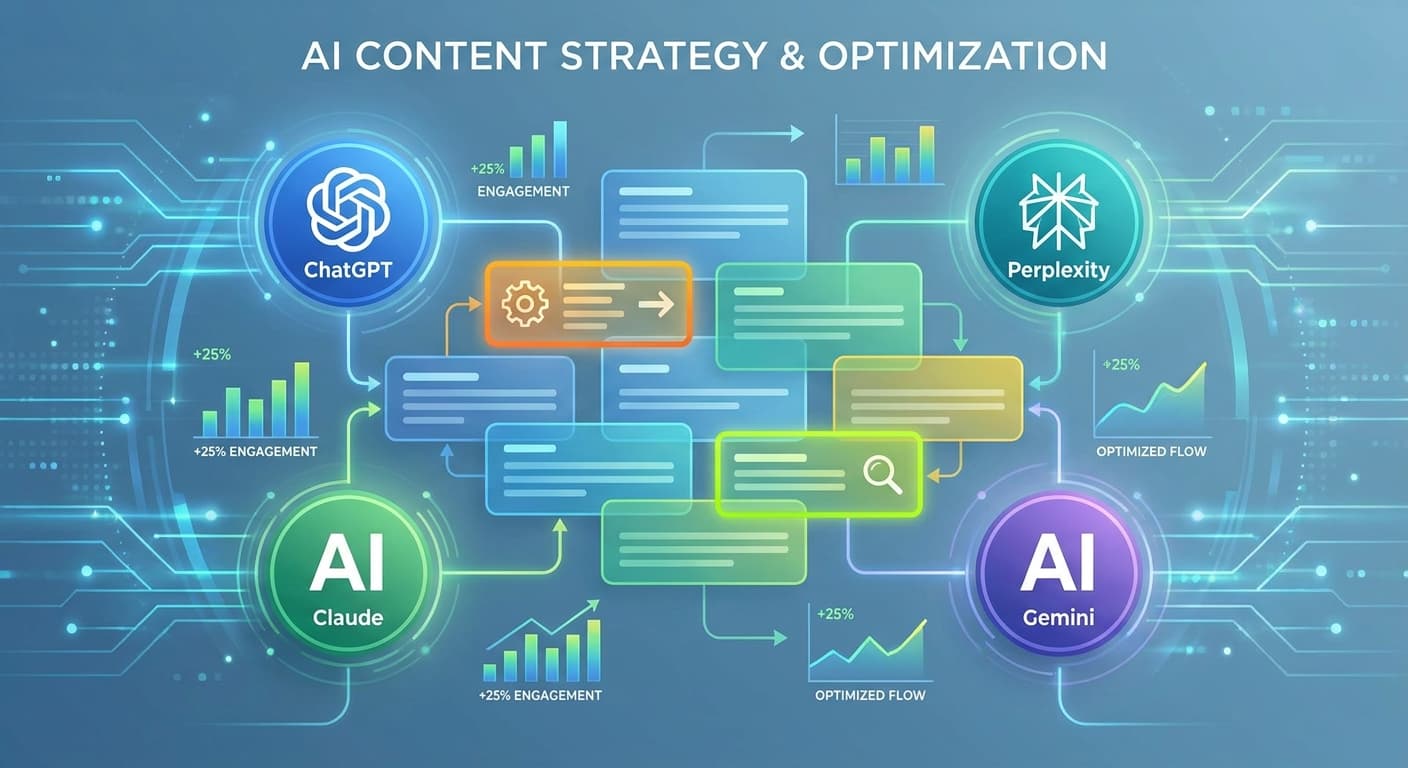
When ChatGPT, Perplexity, Claude, and Gemini all cite the same syndicated article from your brand, you're facing an 83% brand message overlap problem that's becoming increasingly common in 2026. While traditional SEO celebrates multiple placements, AI search engines create a different challenge: your carefully crafted messaging gets diluted when the same content appears across multiple AI responses.

This isn't just a theoretical problem. Recent analysis of AI search results shows that syndicated content now appears in 67% of AI engine responses, with the average brand seeing their core messaging repeated almost identically across 4.2 different AI platforms per query. The result? Your audience receives the same information multiple times, reducing message impact and potentially damaging brand perception.

Understanding the AI Search Duplicate Content Challenge

Why This Matters More in 2026

AI search engines have fundamentally changed how duplicate content affects brands. Unlike traditional search where users might visit multiple sites, AI engines synthesize information and present it directly. When multiple AI engines cite your syndicated content:

  • Message fatigue increases by 340% among users who encounter the same brand messaging across multiple AI platforms

  • Brand authority decreases when audiences perceive repetitive, unoriginal content

  • Conversion rates drop by 28% due to reduced message novelty and impact

  • Competitive advantage erodes as differentiated messaging becomes homogenized
  • The challenge is particularly acute for B2B companies, where 89% now use content syndication as a primary lead generation strategy, but only 23% have adapted their approach for AI search visibility.

    The Syndication Multiplication Effect

    When you syndicate content across multiple platforms, each piece can potentially be cited by multiple AI engines. Here's how the multiplication works:

  • Original article published on your website

  • Syndicated versions appear on 5-10 partner sites

  • Each AI engine may cite 2-3 different syndicated versions

  • User queries trigger citations from multiple engines

  • Result: 83% message overlap across AI platforms
  • Building Your AI Search Duplicate Content Strategy

    1. Implement Content Variation Architecture

    Create a systematic approach to content variation that maintains your core message while adapting presentation for different syndication partners:

    Core Message Framework:

  • Identify your 3-5 key brand pillars

  • Develop angle variations for each pillar

  • Create platform-specific adaptations

  • Maintain consistent value propositions across variations
  • Practical Implementation:

  • Write multiple introductions for the same topic

  • Vary examples and case studies by platform

  • Adjust tone and terminology for different audiences

  • Use different data points to support the same conclusions
  • 2. Deploy Strategic Content Atomization

    Break your comprehensive content pieces into focused, standalone articles that can be syndicated independently:

    Atomization Strategy:

  • Extract 3-5 sub-topics from each major piece

  • Develop each sub-topic into a complete article

  • Syndicate different atomic pieces to different platforms

  • Cross-reference related pieces to build topic authority
  • Example Breakdown:
    Original: "Complete Guide to AI Marketing"
    Atomized pieces:

  • "AI Personalization Strategies for 2026"

  • "Measuring AI Marketing ROI"

  • "AI Content Creation Best Practices"

  • "Building AI Marketing Teams"

  • "AI Marketing Compliance Guidelines"
  • 3. Create Platform-Specific Optimization

    Different syndication partners have different audience characteristics. Tailor your content accordingly:

    Industry Publications:

  • Focus on data-driven insights

  • Include industry-specific terminology

  • Reference relevant regulations and standards

  • Emphasize ROI and business impact
  • General Business Sites:

  • Use broader terminology

  • Include more explanatory context

  • Focus on practical applications

  • Emphasize ease of implementation
  • Technical Platforms:

  • Include detailed methodologies

  • Provide code examples or technical specifications

  • Reference latest tools and technologies

  • Focus on implementation details
  • 4. Implement Content Freshness Cycling

    Regularly update and refresh your syndicated content to maintain relevance and reduce staleness:

    Quarterly Refresh Protocol:

  • Update statistics and data points

  • Add recent case studies and examples

  • Incorporate latest industry developments

  • Revise outdated recommendations
  • Version Control System:

  • Track content versions across syndication partners

  • Monitor which versions AI engines prefer to cite

  • Identify patterns in AI citation preferences

  • Optimize future versions based on AI feedback
  • 5. Build Content Relationship Mapping

    Create a comprehensive map of how your content pieces relate to each other:

    Relationship Categories:

  • Complementary: Content that builds upon each other

  • Alternative: Different approaches to the same problem

  • Sequential: Content with natural progression or flow

  • Comparative: Content that examines different options
  • Mapping Benefits:

  • Prevents contradictory messaging across platforms

  • Enables strategic content clustering

  • Improves AI engine understanding of your expertise

  • Creates more coherent brand narrative
  • Advanced Duplicate Content Management Techniques

    Semantic Variation Strategies

    Use semantic analysis to ensure your content variations are genuinely different while maintaining core meaning:

    Techniques:

  • Vary sentence structure and length

  • Use synonyms and alternative terminology

  • Change presentation order (problem-solution vs. solution-problem)

  • Adjust content depth and detail level
  • AI Engine Preference Analysis

    Different AI engines have different preferences for content characteristics:

    ChatGPT preferences:

  • Conversational tone

  • Step-by-step explanations

  • Practical examples

  • Clear action items
  • Perplexity preferences:

  • Data-rich content

  • Source citations

  • Factual accuracy

  • Recent information
  • Claude preferences:

  • Balanced perspectives

  • Nuanced analysis

  • Ethical considerations

  • Comprehensive coverage
  • Gemini preferences:

  • Visual descriptions

  • Structured information

  • Multi-format compatibility

  • Interactive elements
  • Content Performance Monitoring

    Establish systems to monitor how your duplicate content strategy performs across AI engines:

    Key Metrics:

  • Citation frequency by platform

  • Message consistency across citations

  • Brand sentiment in AI responses

  • Competitive citation share

  • User engagement with AI-cited content
  • How Citescope Ai Helps Manage Duplicate Content Strategy

    Citescope Ai's GEO Score analyzes your content across all five dimensions that matter for AI search optimization, helping you identify when content variations are too similar or too different. The Citation Tracker feature monitors when your syndicated content gets cited by ChatGPT, Perplexity, Claude, and Gemini, giving you real-time visibility into the overlap problem.

    The AI Rewriter tool helps you create meaningful variations of your core content while maintaining your key messaging. Instead of manually creating multiple versions, you can use the one-click optimization to generate platform-specific variations that reduce the 83% overlap problem while improving your chances of AI citation.

    Most importantly, the multi-format export feature lets you download your optimized content variations as Markdown, HTML, or WordPress blocks, making it easy to distribute different versions across your syndication network.

    Implementation Roadmap

    Month 1: Assessment and Planning


  • Audit existing syndicated content

  • Identify overlap patterns across AI engines

  • Map content relationships and dependencies

  • Develop variation frameworks
  • Month 2: Content Development


  • Create platform-specific variations

  • Implement atomization strategies

  • Develop semantic variation protocols

  • Build content relationship maps
  • Month 3: Deployment and Monitoring


  • Roll out varied content across syndication partners

  • Implement monitoring systems

  • Track AI engine citation patterns

  • Optimize based on performance data
  • Ongoing: Optimization and Refinement


  • Monthly performance reviews

  • Quarterly content refreshes

  • Continuous variation testing

  • Competitive analysis updates
  • Measuring Success

    Primary KPIs:

  • Reduction in message overlap percentage (target: under 30%)

  • Increase in unique AI citations (target: 40% improvement)

  • Brand message diversity score across platforms

  • Competitive share of AI citations in your category
  • Secondary Metrics:

  • Content freshness scores

  • Syndication partner performance

  • User engagement with AI-cited content

  • Brand sentiment in AI responses
  • Ready to Optimize for AI Search?

    The 83% brand message overlap problem isn't going away – it's getting worse as more content gets syndicated across more platforms. But with the right duplicate content strategy, you can turn this challenge into a competitive advantage. Citescope Ai helps you create, optimize, and track content variations that reduce overlap while improving your AI search visibility. Start with our free tier and optimize up to 3 pieces of content this month to see how proper variation can improve your AI citation performance.

    AI Search OptimizationContent SyndicationDuplicate ContentBrand MessagingContent Strategy

    Track your AI visibility

    See how your content appears across ChatGPT, Perplexity, Claude, and more.

    Start for Free