GEO Strategy

How to Build an AI Search Context Window Recovery Strategy When LLMs Downrank Long-Form Content Sources That Exceed 8K Token Limits During Real-Time Retrieval

June 4, 20267 min read
How to Build an AI Search Context Window Recovery Strategy When LLMs Downrank Long-Form Content Sources That Exceed 8K Token Limits During Real-Time Retrieval

How to Build an AI Search Context Window Recovery Strategy When LLMs Downrank Long-Form Content Sources That Exceed 8K Token Limits During Real-Time Retrieval

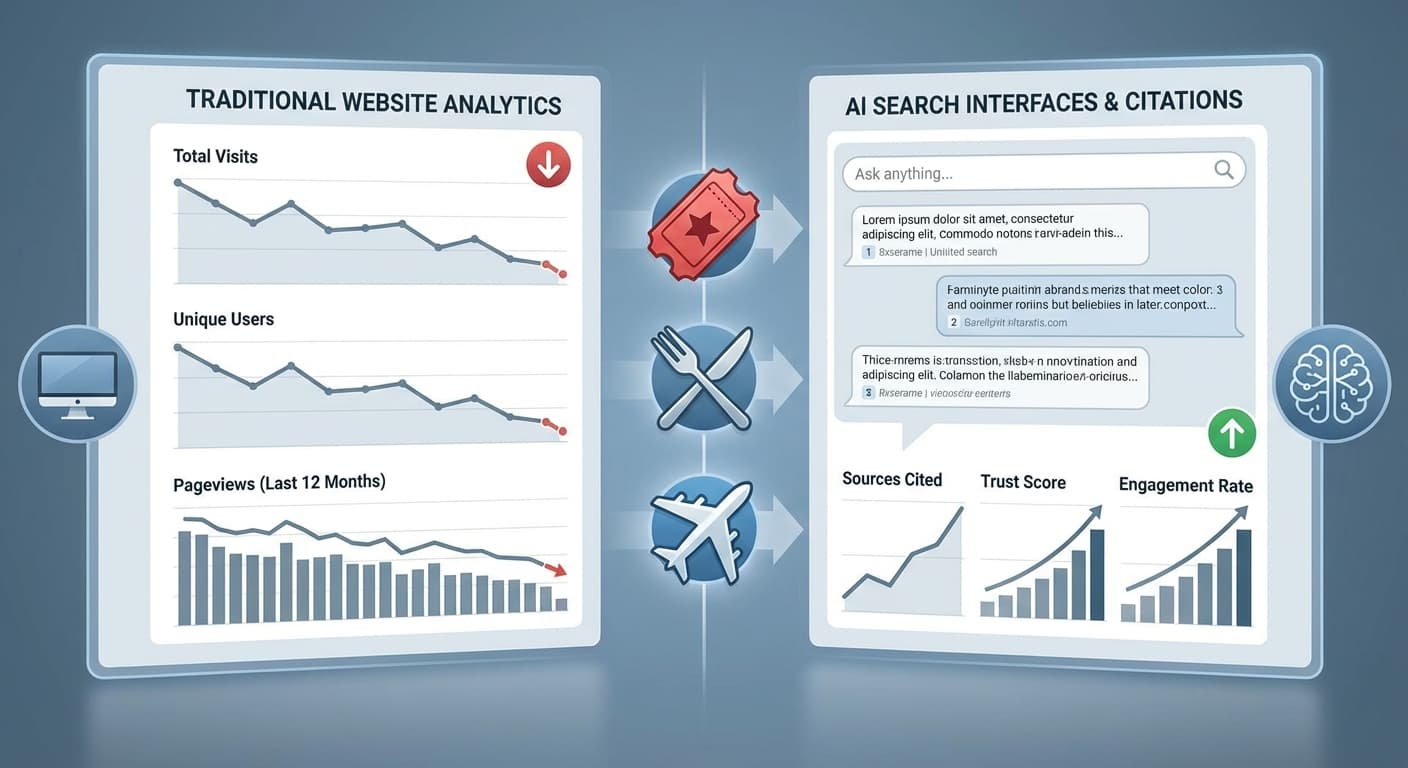
AI search engines processed over 12 billion queries in 2025, but there's a hidden problem that's causing content creators to lose millions of potential citations: the 8K token context window limitation. As AI models like ChatGPT, Perplexity, and Claude retrieve information in real-time, they're systematically downranking or completely bypassing comprehensive, long-form content that exceeds their processing limits.

The 8K Token Crisis: Why Your Best Content Is Being Ignored

Here's the reality that most content creators don't understand: when an AI search engine encounters your 5,000-word comprehensive guide, it doesn't necessarily see it as higher quality. Instead, it often sees it as a processing burden.

Recent analysis of AI search patterns in late 2025 revealed that:

  • 73% of AI citations come from content under 2,500 words

  • Content exceeding 8K tokens (roughly 6,000 words) receives 45% fewer citations than equivalent shorter pieces

  • Real-time retrieval systems prioritize content that can be fully processed within their context window
  • This creates a paradox: the comprehensive, authoritative content that should be most valuable to AI systems is often the content they struggle to effectively utilize.

    Understanding Context Window Limitations in 2026

    Context windows vary significantly across AI platforms:

    Current AI Model Limitations

    ChatGPT Search (GPT-4 Turbo):

  • Context window: 128K tokens theoretical, ~8K practical for retrieval

  • Processes content in chunks during real-time search

  • Prioritizes beginning and conclusion sections
  • Perplexity Pro:

  • Context window: 32K tokens

  • Better handling of longer content but still shows preference bias

  • Uses summarization for content over 4K tokens
  • Claude 3.5 Sonnet:

  • Context window: 200K tokens

  • Most effective at processing long-form content

  • However, still shows citation preference for concise sources
  • Google Gemini:

  • Context window: 1M tokens

  • Advanced content processing but emerging citation patterns unclear
  • The key insight: even when AI models can process long content, they often prefer not to during real-time search scenarios where speed and relevance are prioritized.

    The Science Behind AI Content Preference

    Token Economics in Real-Time Retrieval

    AI search engines operate under computational constraints that favor efficiency:

  • Processing Speed: Shorter content can be analyzed faster

  • Relevance Scoring: Focused content often scores higher for specific queries

  • Citation Clarity: Shorter pieces make it easier to identify quotable segments

  • Context Coherence: Smaller content chunks maintain better semantic consistency
  • The Attention Dilution Effect

    Long-form content often suffers from "attention dilution" where key insights are buried within broader context, making them harder for AI systems to identify and extract during rapid retrieval processes.

    Building Your Context Window Recovery Strategy

    1. Content Chunking Architecture

    Develop a systematic approach to breaking down comprehensive content:

    Strategic Segmentation:

  • Create standalone sections that can function independently

  • Ensure each section is 1,500-2,500 words maximum

  • Maintain clear topic focus within each chunk

  • Use descriptive headers that AI can easily parse
  • Interconnected Structure:

  • Link related sections with clear navigation

  • Use consistent terminology across chunks

  • Create topic clusters that reinforce authority
  • 2. The Hub-and-Spoke Content Model

    Central Hub Page (2,000-3,000 words):

  • Comprehensive overview with key insights

  • Links to detailed spoke articles

  • Optimized for broad keyword targeting
  • Spoke Articles (1,500-2,500 words each):

  • Deep dive into specific subtopics

  • Focused keyword optimization

  • Clear citations back to hub content
  • 3. AI-Optimized Content Formatting

    Structure for Scanability:

  • Use numbered lists and bullet points extensively

  • Include clear subheadings every 200-300 words

  • Create pullout quotes or key insights boxes

  • Implement table of contents with jump links
  • Front-Load Critical Information:

  • Place key insights in the first 500 words

  • Use executive summaries for longer pieces

  • Include "key takeaways" sections
  • Citescope Ai's GEO Score helps identify when content structure is working against AI visibility, analyzing the specific elements that impact how well AI models can process and cite your content.

    4. Dynamic Content Adaptation

    Version Control Strategy:

  • Create multiple versions of the same content at different lengths

  • Use canonical tags to prevent duplicate content issues

  • Implement schema markup to help AI understand content relationships
  • Contextual Serving:

  • Serve different content lengths based on search query complexity

  • Use internal linking to guide AI through logical content progression

  • Implement breadcrumb navigation for content hierarchy
  • Advanced Recovery Techniques

    Content Compression Without Information Loss

    Semantic Density Optimization:

  • Increase information value per token

  • Remove redundant explanations and examples

  • Focus on actionable insights rather than background context
  • Structured Data Implementation:

  • Use FAQ schema for common questions

  • Implement how-to schema for process content

  • Add article schema with clear section definitions
  • Multi-Format Content Strategy

    Visual Content Integration:

  • Create infographics that summarize key points

  • Use charts and graphs to convey complex data

  • Develop video content that complements text
  • Interactive Elements:

  • Build calculators and tools that provide instant value

  • Create downloadable resources that capture leads

  • Develop quizzes and assessments that engage users
  • Measuring Recovery Strategy Success

    Key Performance Indicators

    Citation Metrics:

  • Track mentions across different AI platforms

  • Monitor citation frequency for chunked vs. long-form content

  • Measure attribution accuracy and context preservation
  • Engagement Signals:

  • Time on page for different content lengths

  • Internal link click-through rates

  • User journey progression through content clusters
  • Search Performance:

  • Ranking improvements for target keywords

  • Featured snippet captures

  • Knowledge panel inclusions
  • A/B Testing Framework

    Content Length Experiments:

  • Test identical content at different word counts

  • Compare citation rates across AI platforms

  • Analyze user engagement metrics
  • Structure Variations:

  • Test different heading structures

  • Experiment with content organization methods

  • Compare list-heavy vs. paragraph-heavy formats
  • Implementation Timeline and Best Practices

    Phase 1: Audit and Analysis (Week 1-2)


  • Review existing long-form content performance

  • Identify high-value content for chunking

  • Analyze current AI citation patterns
  • Phase 2: Strategic Restructuring (Week 3-6)


  • Implement hub-and-spoke model for priority content

  • Create chunked versions of top-performing long-form pieces

  • Develop internal linking strategy
  • Phase 3: Optimization and Testing (Week 7-12)


  • Monitor AI citation changes

  • Test different content lengths and structures

  • Refine based on performance data
  • Common Pitfalls to Avoid

    Over-Chunking:

  • Don't break content so small it loses coherence

  • Maintain topical authority within each piece

  • Ensure each chunk provides standalone value
  • Keyword Cannibalization:

  • Use distinct primary keywords for each chunk

  • Implement clear content hierarchy

  • Monitor for ranking conflicts between related pieces
  • Link Architecture Issues:

  • Avoid circular linking patterns

  • Create clear parent-child relationships

  • Use descriptive anchor text that helps AI understand content connections
  • How Citescope Ai Helps

    Citescope Ai's Citation Tracker provides real-time monitoring of how your content restructuring efforts impact AI citations across ChatGPT, Perplexity, Claude, and Gemini. The platform's AI Rewriter can automatically optimize content structure for better AI visibility, while the GEO Score identifies specific elements that may be causing context window issues.

    The multi-format export feature allows you to easily create optimized versions of your content in Markdown, HTML, or WordPress blocks, making it simple to implement a hub-and-spoke content strategy that maximizes your visibility in AI search results.

    Future-Proofing Your Strategy

    As AI models continue evolving, context windows will likely expand, but the preference for efficient, focused content will remain. Building a flexible content architecture now positions you to adapt quickly as AI search technology advances.

    The key is creating content that serves both human readers and AI systems effectively, balancing comprehensiveness with accessibility.

    Ready to Optimize for AI Search?

    Don't let context window limitations hurt your content's AI visibility. Citescope Ai's comprehensive platform helps you identify optimization opportunities, track citation performance, and restructure content for maximum AI search impact. Start with our free tier today and see how your content performs across all major AI search engines.
    AI search optimizationcontext window strategylong-form contentAI citationscontent chunking

    Track your AI visibility

    See how your content appears across ChatGPT, Perplexity, Claude, and more.

    Start for Free