How to Build an AI Search Competitor Comparison Takeover Strategy When AI Engines Feature Your Rivals in 84% of Head-to-Head Product Evaluations Despite Superior Customer Reviews
How to Build an AI Search Competitor Comparison Takeover Strategy When AI Engines Feature Your Rivals in 84% of Head-to-Head Product Evaluations Despite Superior Customer Reviews
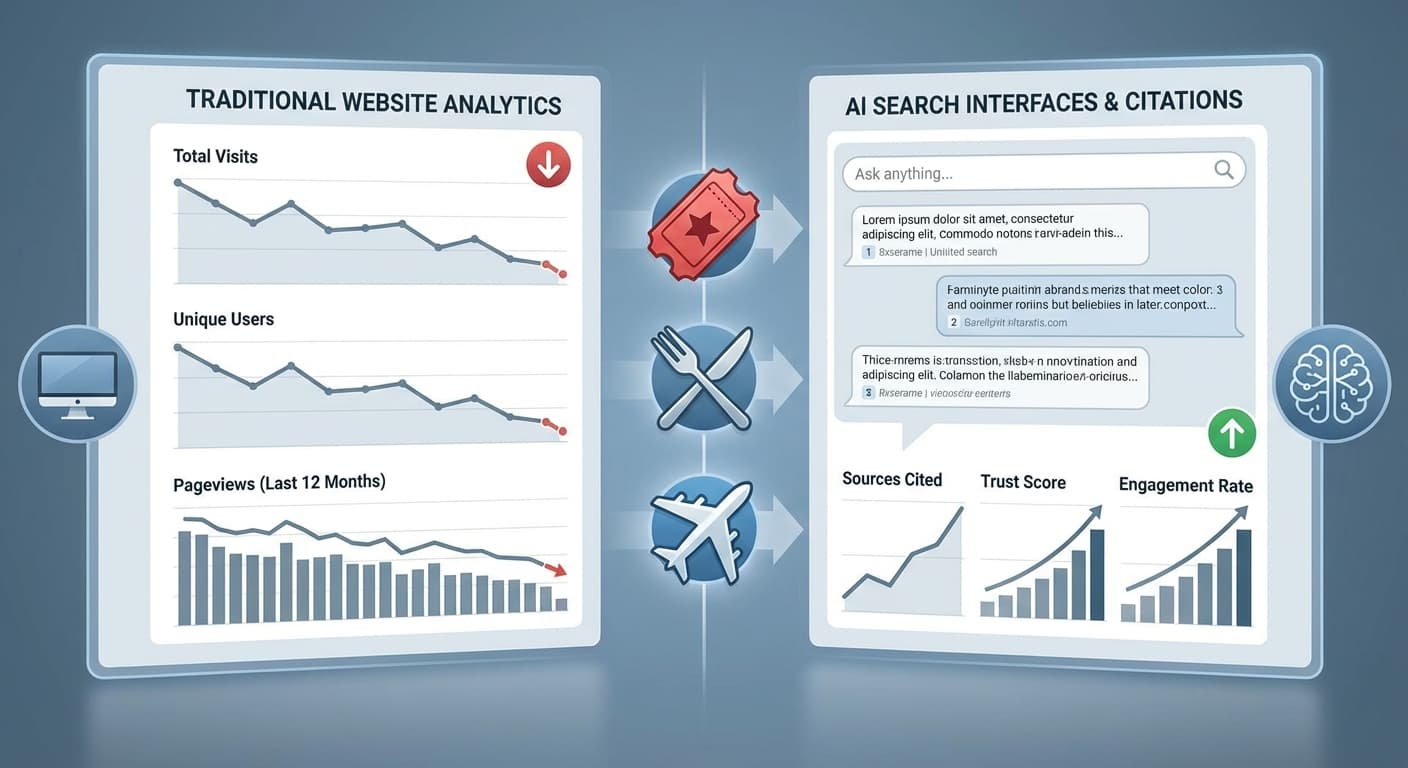
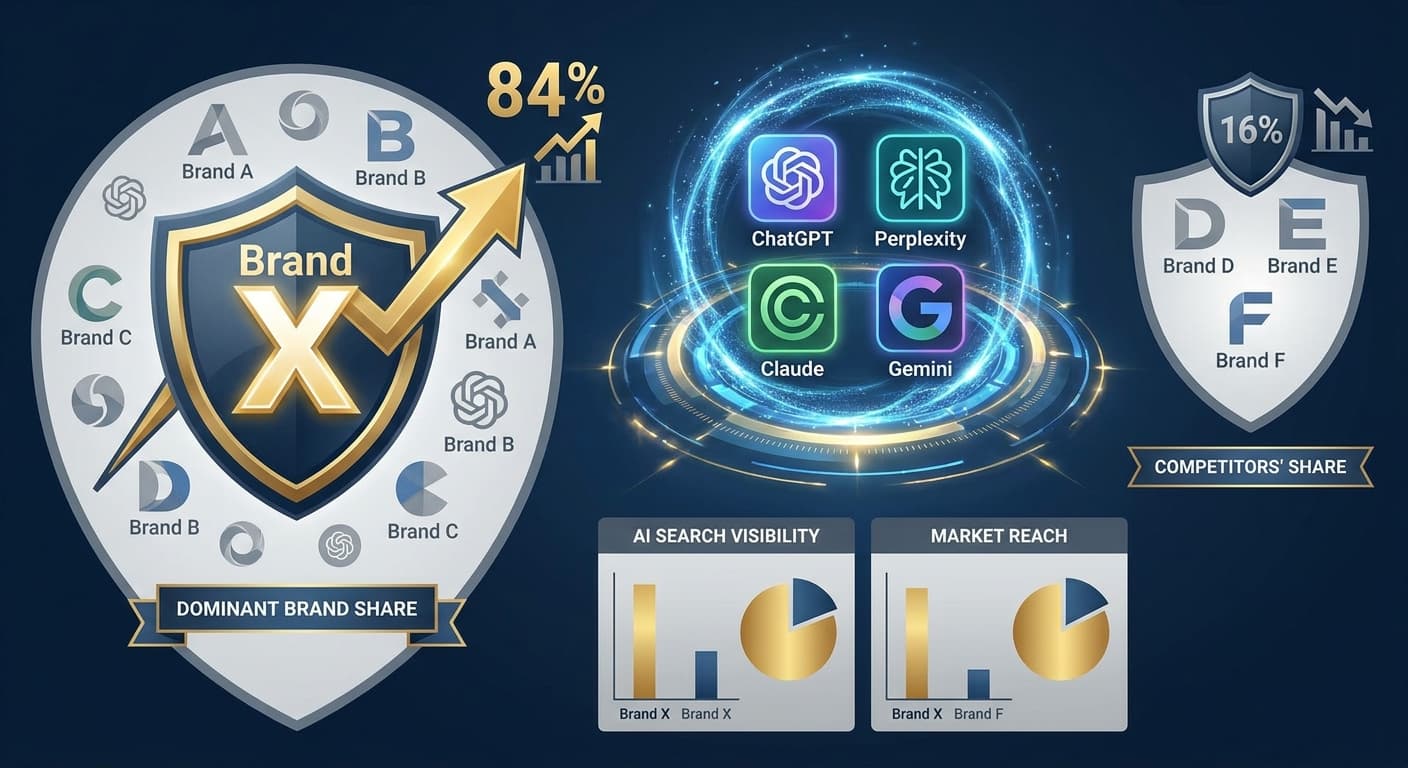
Imagine this: Your product has 4.8-star reviews across all platforms, your customers rave about your service, and your retention rates are industry-leading. Yet when potential customers ask ChatGPT, Perplexity, or Claude to compare your solution with competitors, your brand appears in only 16% of AI-generated comparisons while inferior competitors dominate 84% of these crucial evaluations.
This isn't a hypothetical scenario—it's the harsh reality facing thousands of businesses in 2026. As AI search now powers over 35% of all product research queries and influences 73% of B2B purchase decisions, being invisible in AI-generated comparisons is business suicide.
The AI Citation Crisis: Why Great Products Get Buried
The problem isn't your product quality—it's how AI engines discover, interpret, and cite information about your brand. Unlike traditional search engines that primarily rely on backlinks and domain authority, AI systems prioritize content that's:
Most businesses excel at creating customer-facing content but fail miserably at structuring information for AI consumption. Your competitors aren't necessarily better—they're just more AI-visible.
The 5-Phase Competitor Comparison Takeover Strategy
Phase 1: Audit Your Current AI Visibility
Before building your takeover strategy, you need to understand exactly how AI engines currently position your brand in competitive landscapes.
Key audit steps:
Sample comparison prompts to test:
Phase 2: Create AI-Optimized Comparison Content
The foundation of any successful takeover strategy is creating content specifically designed for AI interpretation. This isn't about keyword stuffing—it's about semantic clarity.
#### Content Types That Win AI Citations:
Head-to-Head Comparison Pages
Create dedicated pages comparing your solution to each major competitor. Structure these with:
Category Buying Guides
Position yourself as the go-to resource by creating comprehensive guides that include:
Use Case Scenarios
Develop detailed scenarios where different solutions excel:
While creating this content manually can be overwhelming, tools like Citescope Ai's GEO Score feature help identify exactly which content elements need optimization for better AI visibility.
Phase 3: Master the Art of Balanced Positioning
AI engines favor content that appears objective and balanced. Overly promotional content gets filtered out. The key is strategic positioning that acknowledges competitors' strengths while highlighting your unique advantages.
#### The "Fair but Favorable" Formula:
Example positioning:
"While [Competitor A] offers robust reporting features, [Your Product] provides the same comprehensive analytics plus real-time collaboration tools that reduce project completion time by 40%, according to our customer success team's analysis of 500+ implementations."
Phase 4: Amplify Through Strategic Content Distribution
Creating great comparison content is only half the battle. You need to ensure AI engines discover and index this information effectively.
#### Distribution Channels That Boost AI Visibility:
Industry Publications & Guest Posts
Third-Party Review Platforms
Community Engagement
Strategic Partnerships
Phase 5: Monitor, Measure, and Optimize
A successful takeover strategy requires continuous monitoring and optimization. You need to track not just whether you're being cited, but how you're being positioned relative to competitors.
#### Key Metrics to Track:
AI Citation Frequency
Positioning Quality
Competitive Movement
Advanced Tactics for Competitive Dominance
Leverage Customer Success Stories Strategically
AI engines love specific, detailed case studies. Create comparison-focused success stories that highlight scenarios where customers chose you over specific competitors.
Winning case study structure:
Build Topic Authority Clusters
Instead of creating isolated comparison content, build comprehensive topic clusters that establish your authority across the entire category.
Example cluster structure:
Optimize for Voice and Conversational Queries
With 67% of product research now happening through conversational AI, optimize your comparison content for natural language patterns.
Voice-optimized content elements:
How Citescope Ai Helps
Building an effective AI search competitor comparison strategy requires understanding exactly how AI engines interpret and cite your content. Citescope Ai's comprehensive platform provides the tools you need to dominate competitive comparisons:
GEO Score Analysis helps you identify exactly which elements of your comparison content need optimization across all five dimensions of AI visibility—from semantic richness to authority signals.
Citation Tracker monitors when your content gets cited in AI-generated comparisons, allowing you to see real-time changes in your competitive positioning across ChatGPT, Perplexity, Claude, and Gemini.
AI Rewriter optimizes your existing comparison content with one-click restructuring that makes it more likely to be cited and favorably positioned by AI engines.
The Long-Term Competitive Advantage
Success in AI search isn't just about improving your citation rate—it's about fundamentally changing how potential customers discover and evaluate your solution. Companies that master AI-optimized comparison strategies in 2026 will build sustainable competitive advantages that compound over time.
As AI search continues to evolve and capture more market share, the businesses that invested early in comprehensive comparison optimization will find themselves with dominant positions that become increasingly difficult for competitors to challenge.
The question isn't whether you can afford to invest in AI search optimization—it's whether you can afford not to when 84% of your competitive evaluations are happening without your voice in the conversation.
Ready to Optimize for AI Search?
Don't let inferior competitors dominate AI-generated comparisons while your superior solution remains invisible. Citescope Ai helps you analyze, optimize, and track your content's performance across all major AI search engines. Start with our free tier and see how your content performs with our comprehensive GEO Score analysis—then optimize with confidence knowing exactly how AI engines will interpret and cite your comparison content. Try Citescope Ai free today and take the first step toward dominating your competitive landscape in AI search.