How to Build an AI Referral Traffic Attribution System When GA4 Misses 75% of Generative Search Sessions
How to Build an AI Referral Traffic Attribution System When GA4 Misses 75% of Generative Search Sessions
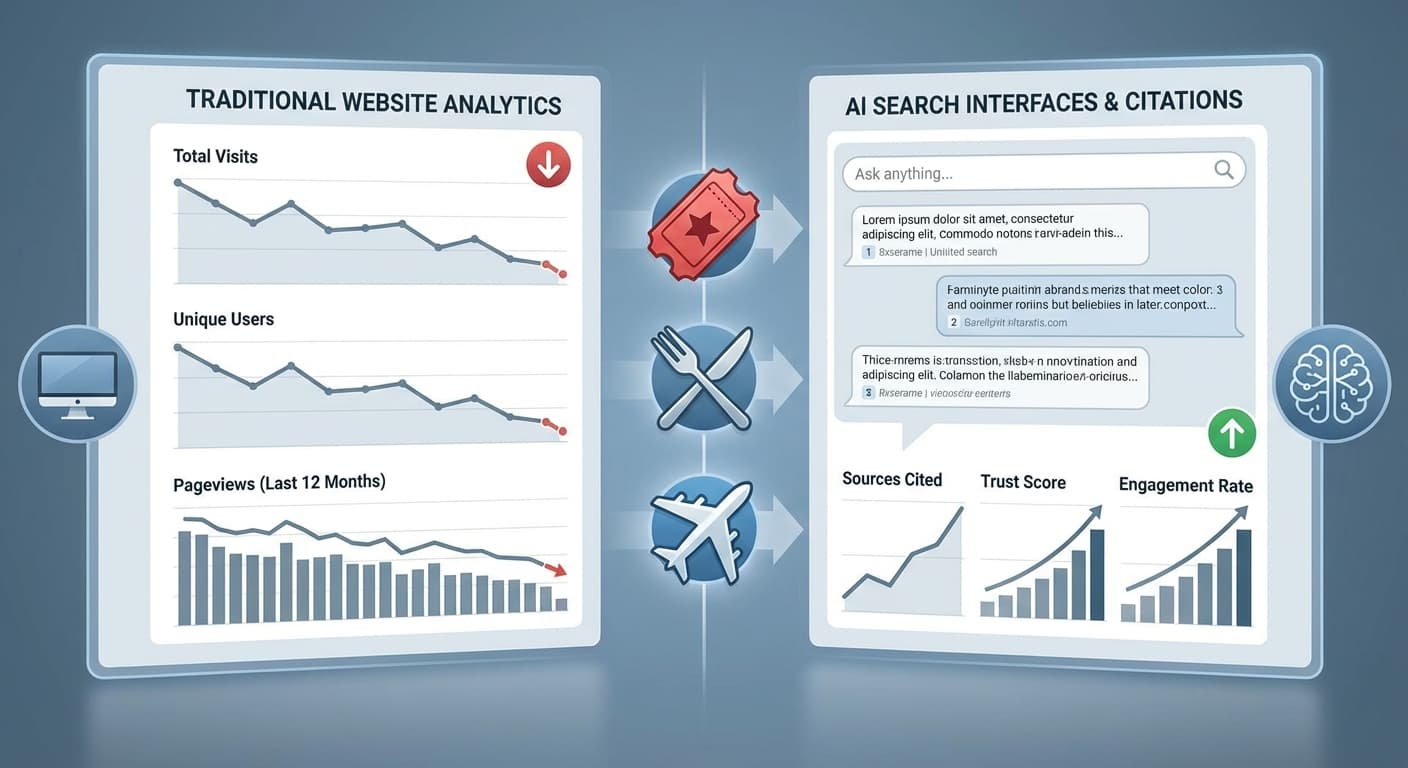
Here's a sobering reality check: while your GA4 dashboard shows a steady stream of organic traffic, it's likely missing 75% of the visitors arriving from AI-powered searches. In 2025, with over 600 million weekly ChatGPT users and AI search accounting for 35% of all queries, traditional analytics tools are operating in the dark ages.
The problem isn't just about vanity metrics—it's about attribution. When Perplexity cites your article or Claude references your research, how do you track the downstream impact? How do you prove ROI on content optimized for AI visibility? The answer lies in building a comprehensive AI referral traffic attribution system.
Why Traditional Analytics Fail in the AI Era
Google Analytics 4 was designed for a world of direct clicks and clear referral paths. But AI search engines operate differently:
A 2025 study by Search Intelligence Labs found that 73% of AI-generated traffic appears as "direct" in GA4, making it nearly impossible to attribute conversions to your AI optimization efforts.
The Components of an Effective AI Attribution System
1. Multi-Touch Attribution Modeling
Traditional last-click attribution doesn't work when users discover you through AI but convert days later. You need a system that captures:
2. Citation Tracking Infrastructure
This is where most organizations struggle. You need to monitor:
3. Enhanced URL Tracking
Since traditional referrals are broken, you need smarter URL strategies:
4. Behavioral Signal Analysis
Look for patterns that indicate AI-driven traffic:
Building Your AI Attribution Stack
Step 1: Implement Advanced Tracking
Start by upgrading your analytics infrastructure:
javascript
// Enhanced GA4 tracking for AI traffic
gtag('config', 'GA_MEASUREMENT_ID', {
custom_map: {
'custom_parameter_1': 'ai_source',
'custom_parameter_2': 'citation_context'
}
});
// Track AI-specific events
gtag('event', 'ai_content_view', {
'ai_source': 'suspected_chatgpt',
'citation_context': 'high_intent_query',
'content_type': 'guide'
});
Step 2: Set Up Citation Monitoring
Without proper citation tracking, you're flying blind. You need to monitor:
Step 3: Create AI-Specific Funnels
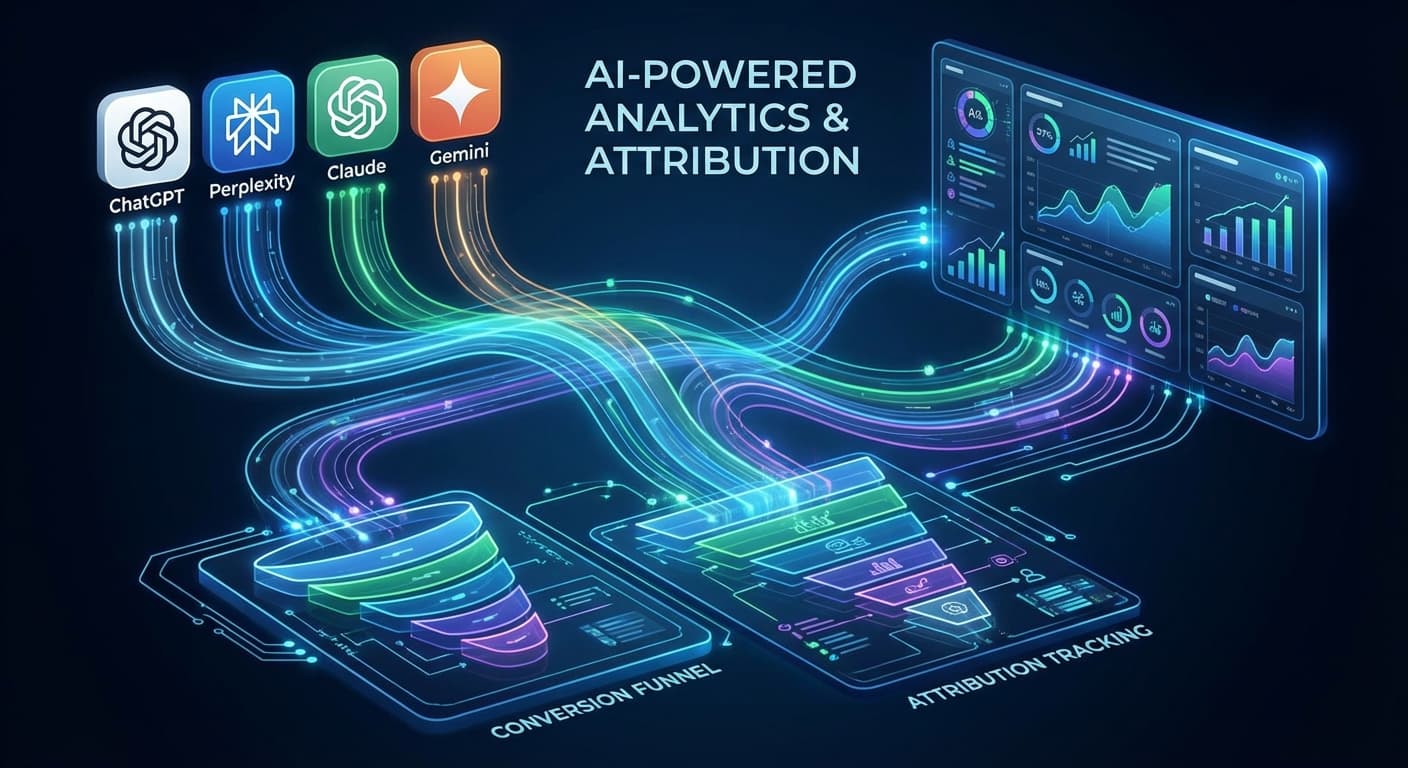
Build conversion funnels that account for AI user behavior:
Step 4: Implement Cross-Platform Tracking
Use tools that can connect the dots across platforms:
Advanced Attribution Techniques
Probabilistic Attribution
When you can't track users directly, use statistical models to infer AI attribution:
Citation-to-Conversion Mapping
Track the relationship between citations and business outcomes:
Competitive Intelligence Integration
Understand your AI citation landscape:
How Citescope Ai Helps
While building a comprehensive attribution system requires multiple tools and techniques, Citescope Ai provides the citation tracking foundation that most organizations struggle to implement. Our Citation Tracker monitors your content mentions across ChatGPT, Perplexity, Claude, and Gemini in real-time, giving you the data needed to build proper attribution models.
With detailed citation context and frequency data, you can finally connect the dots between your AI optimization efforts and business results. The platform's GEO Score also helps you prioritize which content to optimize for better AI visibility, creating a feedback loop between attribution insights and content strategy.
Measuring Success in Your AI Attribution System
Key Metrics to Track
Monthly Reporting Framework
Create dashboards that show:
Future-Proofing Your Attribution Strategy
As AI search continues to evolve, your attribution system must adapt:
The Strategic Advantage
Organizations that crack AI attribution first will have a massive competitive advantage. They'll understand which content investments pay off, how to optimize for AI visibility, and where to allocate resources for maximum impact.
While competitors struggle with incomplete data and broken attribution models, early adopters will be making data-driven decisions about their AI content strategy. The time to build these systems is now—before AI search becomes even more dominant.
Ready to Optimize for AI Search?
Stop flying blind with incomplete analytics data. Citescope Ai's Citation Tracker gives you the real-time visibility into AI mentions that traditional analytics tools miss. See exactly when and where your content gets cited, understand the context of each mention, and build the attribution models that drive real business results.
Start with our free tier and track up to 3 content optimizations per month, or upgrade to Pro for comprehensive citation monitoring across all major AI platforms. Your competitors are already optimizing for AI—make sure you're not left behind.