How to Build an AI-Powered Content Supply Chain Strategy When Fragmented Blog Posts and Missing Product Docs Cost You 62% of Multi-Format Citation Opportunities
How to Build an AI-Powered Content Supply Chain Strategy When Fragmented Blog Posts and Missing Product Docs Cost You 62% of Multi-Format Citation Opportunities
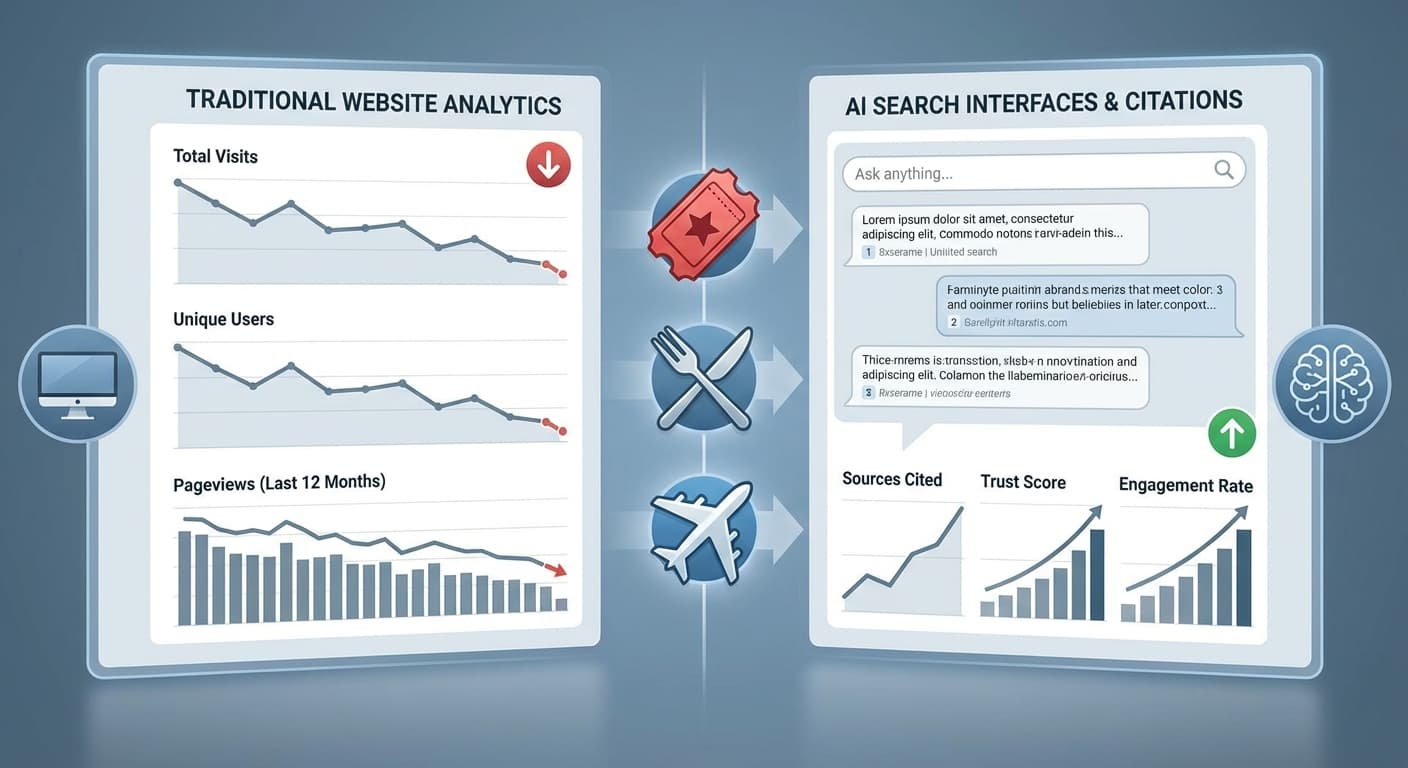
By 2025, AI search engines process over 40 billion queries monthly across ChatGPT, Perplexity, Claude, and Google's AI Overviews. Yet research shows that 62% of brands are losing citation opportunities simply because their content exists in silos—disconnected blog posts, buried product documentation, and fragmented knowledge bases that AI engines struggle to piece together into coherent, citable answers.
The cost of this fragmentation is staggering. Companies with unified content supply chains see 3.4x more AI citations than those with scattered content approaches. As AI search now accounts for 35% of all search queries in 2026, the question isn't whether you need an AI-powered content supply chain—it's how quickly you can build one.
The Hidden Cost of Content Fragmentation in AI Search
AI engines like ChatGPT and Perplexity don't just crawl individual pages—they synthesize information across your entire digital ecosystem. When your product documentation lives in one silo, your blog content in another, and your FAQ scattered across multiple pages, AI engines can't form the complete picture needed for authoritative citations.
Consider this scenario: A potential customer asks ChatGPT, "What's the ROI of implementing automated customer support?" Your company has:
Instead of citing your comprehensive expertise, ChatGPT pulls fragmented information from competitors who present unified, interconnected content that tells a complete story.
What Is an AI-Powered Content Supply Chain?
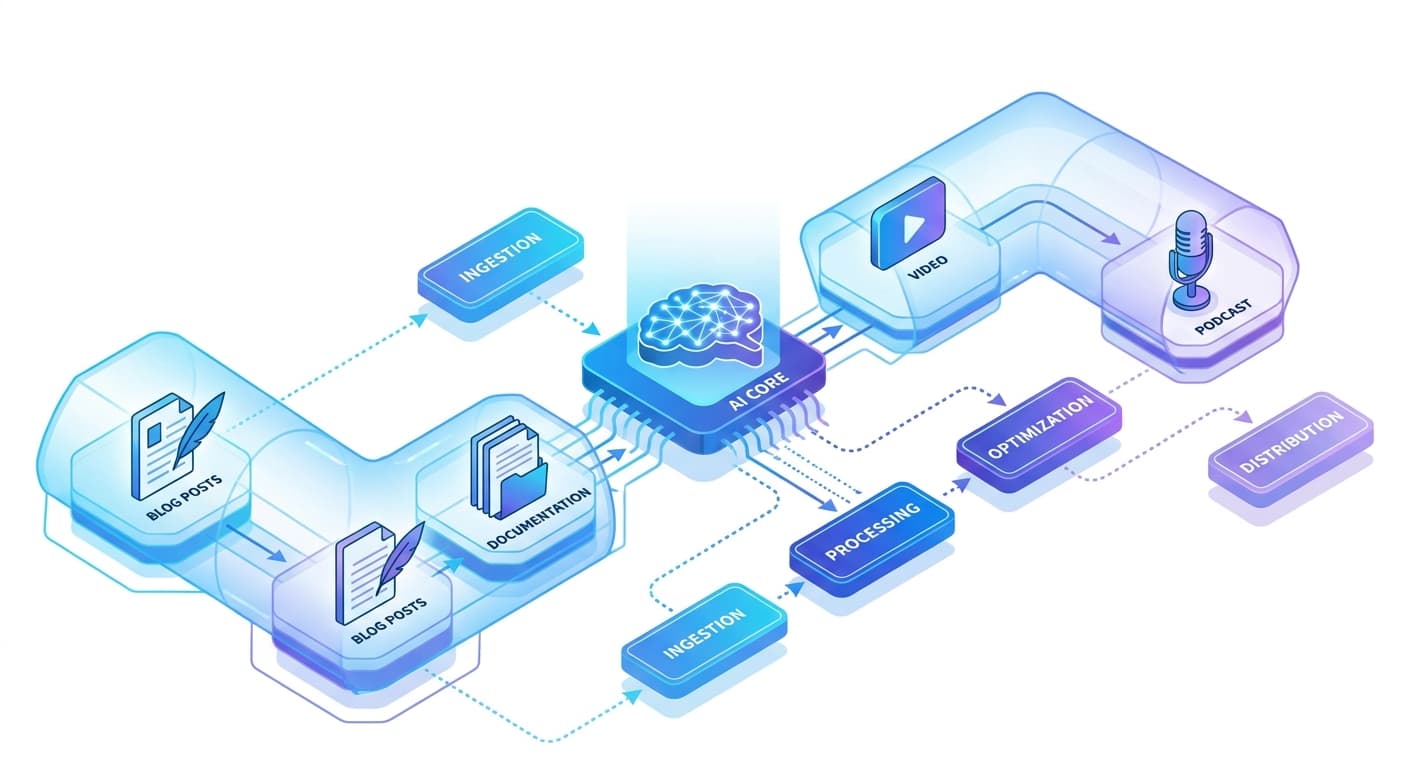
An AI-powered content supply chain is a systematic approach to creating, organizing, and connecting content that maximizes visibility across AI search engines. Unlike traditional content marketing, which focuses on individual pieces, this strategy treats all content as interconnected nodes in a comprehensive knowledge network.
Key components include:
1. Content Dependency Mapping
Identify how different content pieces support and reference each other. Your product documentation should connect to relevant case studies, which link to explanatory blog posts, which reference detailed technical guides.
2. Multi-Format Content Orchestration
Ensure the same core information exists in multiple formats optimized for different AI consumption patterns:
3. Cross-Content Signal Reinforcement
Use consistent terminology, metrics, and messaging across all content formats to strengthen topical authority signals that AI engines recognize.
The 5-Pillar Framework for AI Content Supply Chain Success
Pillar 1: Content Audit and Gap Analysis
Start by mapping your existing content ecosystem:
Tools like Citescope Ai's GEO Score can help you analyze how well your current content performs across AI interpretability, semantic richness, and structural optimization dimensions.
Pillar 2: Strategic Content Architecture
Design your content hierarchy to support AI understanding:
Hub and Spoke Model:
Semantic Clustering:
Pillar 3: Cross-Format Content Templates
Develop standardized templates that ensure consistency across content types:
The PACE Framework:
This framework works whether you're creating a blog post, product documentation, or FAQ entry, ensuring AI engines can easily extract and synthesize key information.
Pillar 4: Content Interconnection Strategy
Internal Linking Architecture:
Content Tagging System:
Pillar 5: Continuous Optimization and Monitoring
Performance Tracking:
Iterative Improvement:
Implementing Your AI Content Supply Chain: A 90-Day Roadmap
Days 1-30: Foundation and Audit
Days 31-60: Architecture and Creation
Days 61-90: Optimization and Scaling
Common Pitfalls to Avoid
Over-Optimization: Don't sacrifice readability for AI optimization. AI engines favor content that serves human readers well.
Inconsistent Messaging: Ensure all content pieces support the same core messages and value propositions.
Neglecting Technical Documentation: Product docs and technical content often provide the specific, authoritative information AI engines prefer to cite.
Ignoring User Intent: Different AI queries have different intents. Ensure your content supply chain addresses informational, transactional, and navigational queries.
How Citescope Ai Helps Streamline Your Content Supply Chain
Building an AI-powered content supply chain requires sophisticated analysis and optimization capabilities. Citescope Ai's platform provides:
The platform's analytics help you identify which content connections are driving the most citations, enabling data-driven decisions about where to invest in content development and optimization efforts.
Measuring Success: KPIs for AI Content Supply Chains
Track these metrics to gauge the effectiveness of your strategy:
Citation Volume and Quality:
Content Performance:
Operational Efficiency:
Ready to Optimize for AI Search?
Fragmented content strategies are costing companies millions in lost AI citation opportunities. As AI search continues to dominate how people discover information, brands with unified, interconnected content supply chains will capture disproportionate visibility and authority.
Citescope Ai makes it simple to transform your scattered content into a powerful, AI-optimized ecosystem. Start with our free tier to analyze your current content performance, then scale with our AI Rewriter and Citation Tracker to build the content supply chain that drives results.
Try Citescope Ai free today and discover how a unified content strategy can unlock the 62% of citation opportunities you're currently missing.