GEO Strategy

How to Build an AI-Generated Brand Misinformation Correction Strategy When 38% of AI Search Answers Contain Outdated Product Features or Pricing That Cost You High-Intent Conversions
May 21, 20266 min read
How to Build an AI-Generated Brand Misinformation Correction Strategy When 38% of AI Search Answers Contain Outdated Product Features or Pricing That Cost You High-Intent Conversions

How to Build an AI-Generated Brand Misinformation Correction Strategy When 38% of AI Search Answers Contain Outdated Product Features or Pricing That Cost You High-Intent Conversions

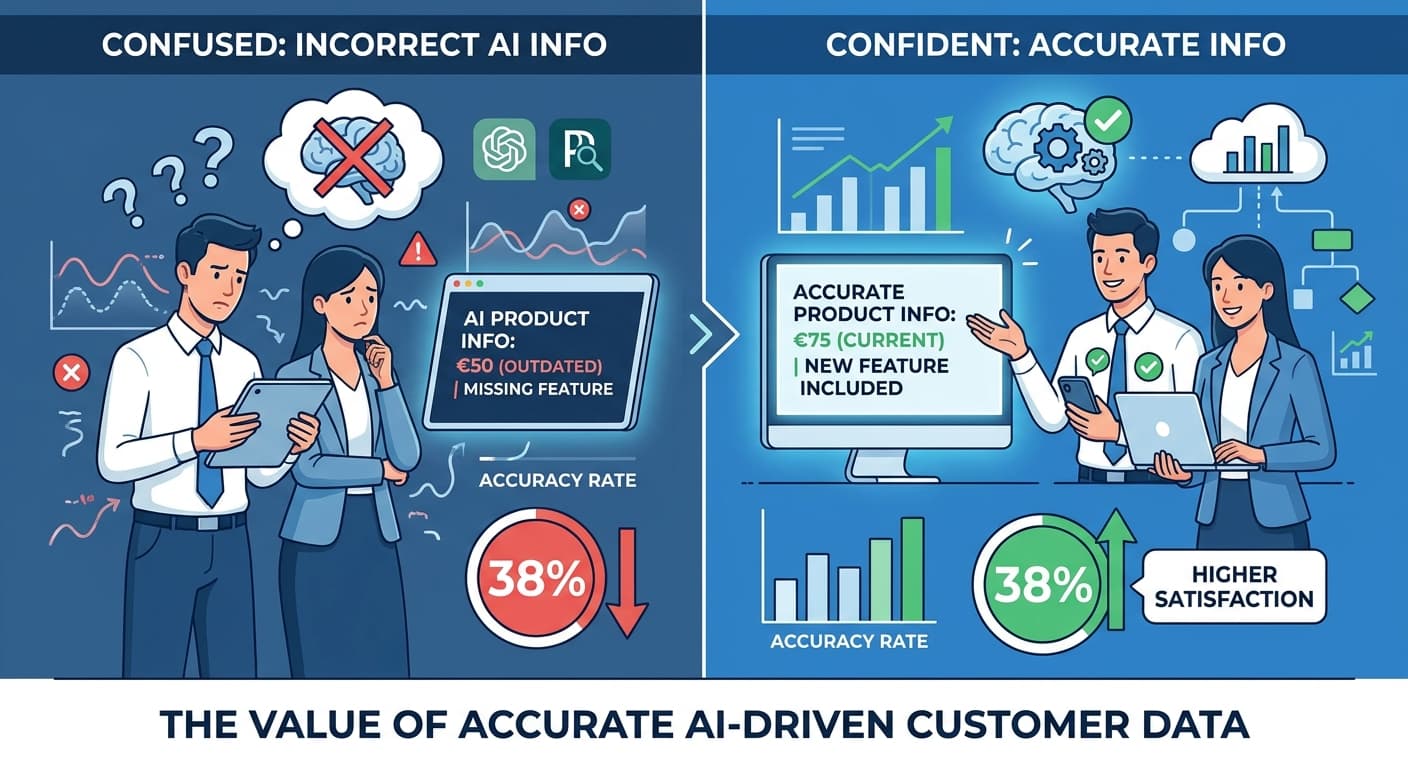
Imagine this: A potential customer asks ChatGPT about your product's pricing, and it confidently tells them about a plan that you discontinued six months ago. Or worse, it mentions features you never offered. With AI search now handling over 35% of all search queries in 2026 and 73% of Gen Z relying on AI for product research, this isn't a hypothetical scenario—it's happening to your brand right now.

Recent studies reveal that 38% of AI-generated responses about commercial products contain outdated or inaccurate information, directly impacting high-intent purchase decisions. When AI engines like ChatGPT, Perplexity, and Claude provide incorrect details about your offerings, you're not just losing potential customers—you're actively confusing them and damaging your brand credibility.

The Hidden Cost of AI Misinformation

The impact of AI-generated misinformation extends far beyond simple confusion. Here's what's at stake:

Immediate Revenue Loss


  • Conversion rate drops: When AI provides outdated pricing, customers arrive with wrong expectations, leading to immediate abandonment

  • Support ticket surge: Teams spend countless hours correcting misinformation instead of closing deals

  • Lost high-intent traffic: Customers who receive incorrect information often don't return to verify
  • Long-Term Brand Damage


  • Trust erosion: Customers lose confidence when they encounter conflicting information

  • Competitive disadvantage: Competitors with accurate AI presence capture your confused prospects

  • SEO impact: Mixed signals to search engines can hurt your traditional search rankings
  • Why AI Engines Struggle with Current Information

    Understanding why this happens is crucial for building an effective correction strategy:

    Training Data Lag


    AI models are trained on historical data, creating an inevitable information gap. Even with real-time browsing capabilities, AI engines often prioritize older, more established sources over recent updates.

    Source Authority Confusion


    AI engines struggle to identify which sources contain the most current information about your brand, especially when:
  • Press releases and news articles contain outdated details

  • Product review sites haven't updated their comparisons

  • Social media mentions reference discontinued features
  • Contextual Misunderstanding


    AI engines may correctly identify recent information but fail to understand that it represents a change from previous offerings, leading to conflated responses that mix old and new details.

    Building Your AI Misinformation Correction Strategy

    Phase 1: Audit and Identify

    Map Your AI Presence
    Start by systematically querying AI engines about your:

  • Product features and specifications

  • Pricing tiers and plans

  • Service offerings

  • Company policies and terms

  • Contact information and locations
  • Document discrepancies between AI responses and your current offerings. Tools like Citescope Ai's Citation Tracker can help automate this monitoring process across multiple AI platforms.

    Identify High-Impact Misinformation
    Not all inaccuracies are created equal. Prioritize corrections for:

  • Pricing information (highest conversion impact)

  • Core product features that drive purchase decisions

  • Availability and shipping details

  • Support and warranty information
  • Phase 2: Source Control Strategy

    Update Authoritative Sources First

  • Your website: Ensure all product pages, pricing tables, and FAQ sections reflect current information

  • Official documentation: Update API docs, user manuals, and help centers

  • Press kit and media pages: Refresh company boilerplates and fact sheets

  • Third-party listings: Update information on review sites, directories, and partner pages
  • Create AI-Optimized Content
    Develop content specifically designed for AI consumption:

  • FAQ pages that directly answer common queries

  • Structured data markup for key product information

  • Regular blog posts announcing changes and updates

  • Comparison tables that clearly differentiate current vs. previous offerings
  • Phase 3: Proactive Content Distribution

    Multi-Channel Announcement Strategy
    When making significant changes:

  • Immediate updates: Push changes to all owned properties simultaneously

  • Press release distribution: Use newswire services to ensure widespread coverage

  • Social media campaigns: Create posts specifically mentioning the changes

  • Email notifications: Inform your subscriber base about important updates
  • SEO-Optimized Correction Content
    Create content that explicitly addresses common misinformation:

  • "[Product Name] Pricing Update: What Changed in 2026"

  • "Discontinued Features: What Replaced Them"

  • "Current vs. Previous: A Complete Comparison"
  • Phase 4: Ongoing Monitoring and Response

    Real-Time Tracking System
    Implement monitoring for:

  • Brand mentions across AI platforms

  • Accuracy of information in AI responses

  • New sources that might contain outdated information

  • Customer feedback indicating confusion from AI misinformation
  • Rapid Response Protocol
    Develop a system to quickly address new misinformation:

  • Detection: Automated alerts when inaccurate information spreads

  • Assessment: Determine the potential impact and urgency

  • Correction: Deploy appropriate correction strategies

  • Follow-up: Monitor effectiveness of correction efforts
  • Advanced Correction Techniques

    Semantic Anchoring


    Create content that helps AI engines understand temporal context:
  • Use phrases like "As of [current date]" or "Updated in 2026"

  • Include version numbers and release dates

  • Reference previous versions explicitly when explaining changes
  • Citation Optimization


    Structure your content to become the preferred source for AI engines:
  • Use clear, definitive language

  • Provide comprehensive information in single sources

  • Include relevant context and background

  • Format information for easy extraction
  • Cross-Platform Consistency


    Ensure uniform messaging across all platforms where AI might source information:
  • Maintain consistent terminology

  • Use identical numerical data

  • Coordinate timing of updates across channels
  • Measuring Success

    Key Performance Indicators


    Track the effectiveness of your correction strategy:

    Accuracy Metrics

  • Percentage of AI responses containing correct information

  • Time between update publication and AI adoption

  • Reduction in customer confusion incidents
  • Business Impact Metrics

  • Conversion rate improvements

  • Reduction in support tickets related to misinformation

  • Customer satisfaction scores

  • Revenue attribution from corrected information
  • Continuous Improvement


    Regularly assess and refine your strategy:
  • Monthly accuracy audits across AI platforms

  • Quarterly review of correction effectiveness

  • Annual strategy updates based on AI engine evolution
  • How Citescope Ai Helps

    Managing AI misinformation correction manually is time-consuming and error-prone. Citescope Ai streamlines this process through:

  • Automated Citation Monitoring: Track when AI engines cite your content and identify inaccuracies in real-time

  • GEO Score Analysis: Optimize your correction content for maximum AI visibility and adoption

  • Multi-Platform Tracking: Monitor your brand accuracy across ChatGPT, Perplexity, Claude, and Gemini from one dashboard

  • AI-Optimized Rewriting: Ensure your correction content is structured for AI engines to prefer and cite accurately
  • With features designed specifically for brand protection in the AI era, Citescope Ai transforms misinformation management from reactive damage control to proactive brand protection.

    Ready to Optimize for AI Search?

    Don't let outdated information cost you high-intent conversions. Citescope Ai's comprehensive suite of tools helps you monitor, correct, and optimize your brand presence across all major AI search engines. Start protecting your brand accuracy today with our free tier—no credit card required. Your customers (and your conversion rates) will thank you.

    [Try Citescope Ai Free →]
    AI misinformationbrand protectionAI search optimizationconversion optimizationcontent strategy

    Track your AI visibility

    See how your content appears across ChatGPT, Perplexity, Claude, and more.

    Start for Free