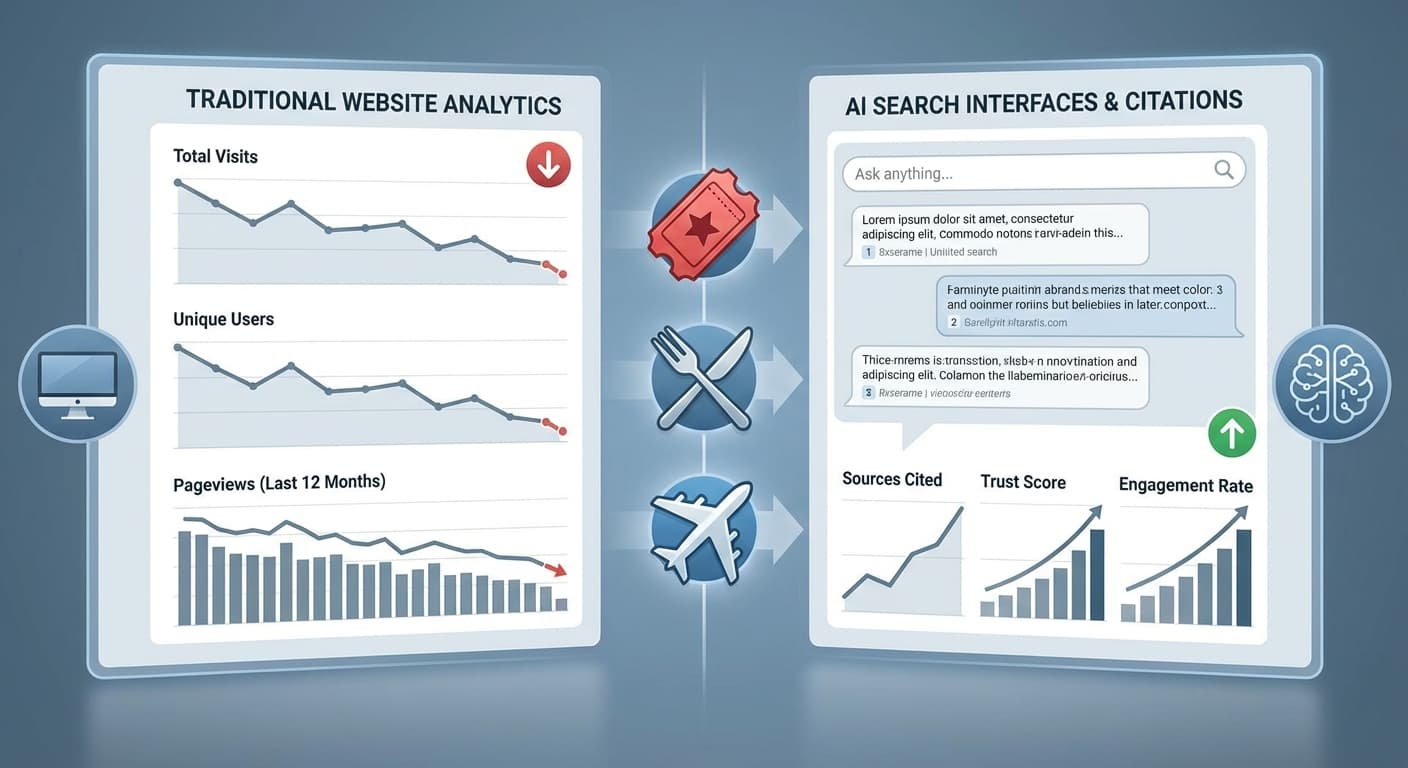
How to Build an AI Agentic Shopping Visibility Strategy When 25% of Customers Use ChatGPT for Purchase Research
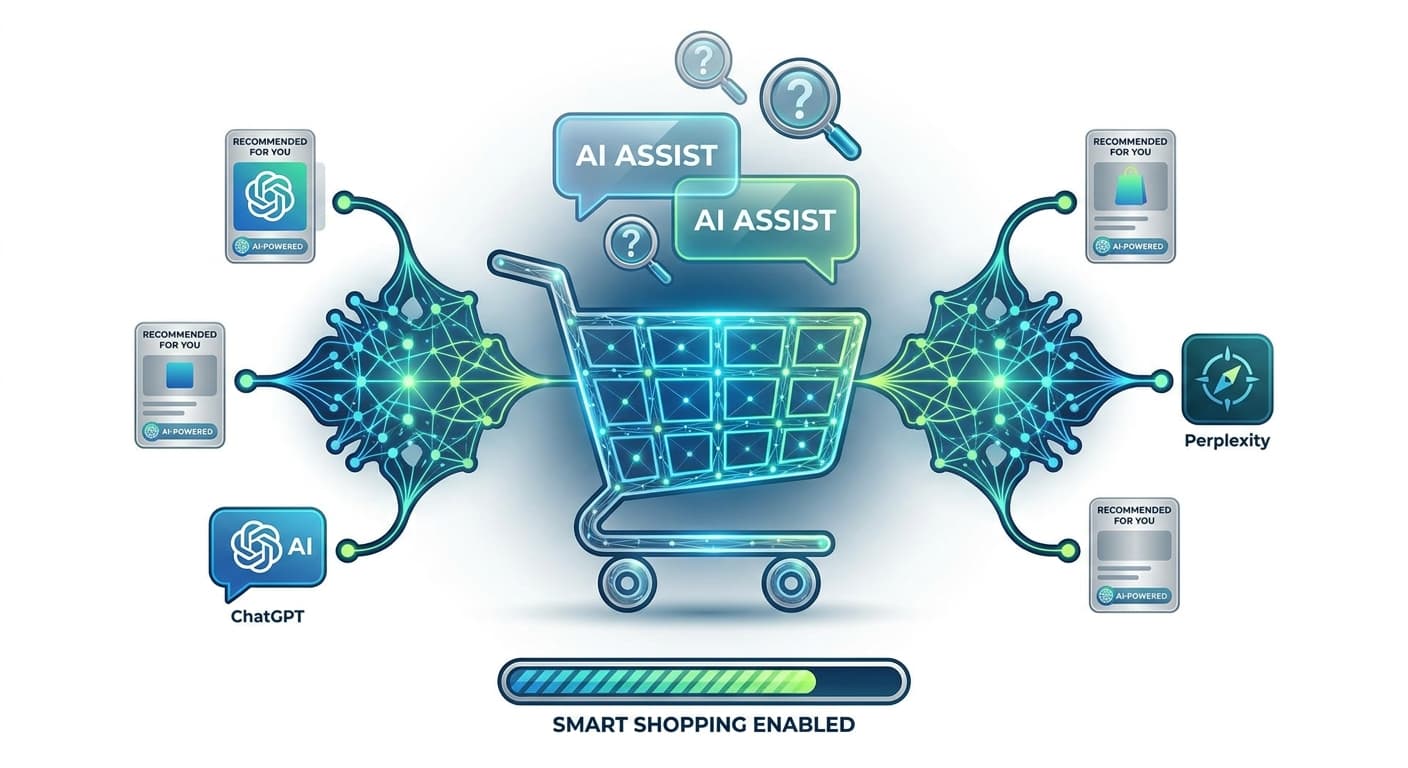
How to Build an AI Agentic Shopping Visibility Strategy When 25% of Customers Use ChatGPT for Purchase Research
A staggering 25% of customers now use ChatGPT and other AI agents for purchase research, yet most e-commerce brands remain invisible in these conversations. Even more concerning? When AI agents suggest "instant checkout" options or make direct product recommendations, your products are nowhere to be found while competitors dominate these valuable recommendation slots.
This isn't just about missing out on visibility—it's about losing customers at the exact moment they're ready to buy. When someone asks ChatGPT "What's the best wireless headphones under $200?" and your product doesn't appear in the response, you've lost a potential sale to a competitor who optimized for AI search.
The shift toward AI-powered shopping assistance has accelerated dramatically in 2025-2026. With over 500 million weekly ChatGPT users and similar growth across Perplexity, Claude, and Gemini, these platforms have become the new storefront windows. The question isn't whether you should optimize for AI shopping—it's how quickly you can implement a strategy before your competitors dominate this space entirely.
Understanding AI Agentic Shopping Behavior
AI agentic shopping represents a fundamental shift in how consumers research and purchase products. Unlike traditional search where users browse multiple results, AI agents provide curated recommendations with specific reasoning, often including direct links to purchase.
The New Shopping Journey
Traditional Path:
AI Agentic Path:
This compressed journey means you have one chance to be included in the AI's recommendation. Miss it, and the customer never discovers your product exists.
Key AI Shopping Behaviors in 2026
The AI Recommendation Algorithm: What Really Matters
Unlike Google's traditional PageRank system, AI agents evaluate products and services based on different criteria altogether. Understanding these factors is crucial for building your visibility strategy.
Content Authority and Freshness
AI models heavily weight recent, authoritative information. This means your 2024 product descriptions and reviews may not carry the same weight as fresh, detailed content from 2025-2026.
Key Elements:
Conversational Context Alignment
Your content must match how people naturally ask questions to AI agents. This is fundamentally different from keyword optimization for traditional search.
Traditional SEO: "wireless bluetooth headphones noise canceling"
AI Query: "What are the best wireless headphones that block out noise for my daily commute?"
Semantic Richness and Detail
AI agents prefer comprehensive information that answers follow-up questions before they're asked. Surface-level product descriptions won't cut it.
Building Your AI Shopping Visibility Strategy
1. Audit Your Current AI Presence
Before optimizing, understand where you currently stand across major AI platforms.
Manual Testing Process:
Questions to Test:
2. Optimize Product Content for AI Interpretation
#### Create Conversational Product Descriptions
Transform feature lists into narrative descriptions that answer customer questions naturally.
Before (Traditional):
After (AI-Optimized):
"These headphones deliver 50 hours of continuous playback, perfect for week-long trips without charging. The IPX7 waterproof rating means you can wear them during intense workouts or caught in rain without worry. Bluetooth 5.3 ensures stable connection with your phone even when it's in your bag."
#### Develop Comprehensive FAQ Content
Create detailed FAQ sections that address every possible customer question. AI agents frequently cite this content when providing recommendations.
Essential FAQ Categories:
3. Build Citation-Worthy Authority Content
AI agents prefer citing authoritative, comprehensive resources. Create content that becomes the go-to reference in your category.
#### In-Depth Buyer's Guides
Develop comprehensive guides that compare your products alongside competitors fairly. AI agents appreciate balanced, informative content.
Structure Example:
#### Expert Reviews and Testing
Create detailed testing content that demonstrates real-world product performance. Include specific metrics, scenarios, and honest assessments.
Tools like Citescope Ai can help you optimize this content by analyzing how well it aligns with AI interpretation patterns. The platform's GEO Score evaluates your content across five key dimensions that matter most to AI agents: interpretability, semantic richness, conversational relevance, structure, and authority.
4. Optimize for Local AI Shopping
Many AI shopping queries include location-based intent. Ensure your products appear for local purchase queries.
#### Location-Aware Product Information
#### Partnership and Retailer Integration
Ensure your product information is consistently represented across all retail partners. AI agents often cite multiple sources, so consistency is crucial.
5. Monitor and Iterate Your Strategy
AI recommendation patterns shift as models update and training data changes. Continuous monitoring is essential.
#### Track Key Metrics
#### Regular Content Updates
Refresh your optimized content regularly to maintain AI visibility. This includes:
Advanced Tactics for AI Shopping Dominance
Create Decision-Tree Content
Develop content that helps AI agents guide customers through decision-making processes.
Example Structure:
"If you need [specific feature], consider [Product A]. However, if [different priority] is more important, [Product B] would be better because [specific reasoning]."
Leverage User-Generated Content
AI agents frequently cite customer reviews and real-world usage examples. Encourage and optimize user-generated content.
Strategies:
Build Semantic Content Clusters
Create interconnected content that covers every aspect of your product category. This helps AI agents understand your comprehensive expertise.
How Citescope Ai Helps
Building an effective AI shopping visibility strategy requires understanding how AI agents interpret and prioritize content. Citescope Ai's specialized tools are designed exactly for this challenge.
The platform's Citation Tracker monitors when your products get mentioned across ChatGPT, Perplexity, Claude, and Gemini, giving you real-time insight into your AI shopping visibility. More importantly, the AI Rewriter can transform your existing product content with one-click optimization, restructuring it for better AI agent interpretation.
The GEO Score feature analyzes your product content across the five dimensions that matter most for AI visibility, providing specific recommendations for improvement. This takes the guesswork out of optimization and ensures your content aligns with how AI agents evaluate and recommend products.
Measuring Success in AI Shopping Visibility
Key Performance Indicators
Direct Metrics:
Indirect Metrics:
Long-term Strategy Considerations
AI shopping behavior will continue evolving rapidly. Build your strategy with flexibility for adaptation:
Ready to Optimize for AI Search?
The shift toward AI-powered shopping research isn't coming—it's here. With 25% of customers already using ChatGPT for purchase research, every day you delay optimization is another day of lost sales to competitors who are already visible in AI recommendations.
Citescope Ai makes it simple to build and maintain your AI shopping visibility strategy. Start with our free tier to optimize your most important product content, then scale your efforts as you see results. Our Citation Tracker will show you exactly when and how AI agents recommend your products, while the AI Rewriter ensures your content is always optimized for maximum visibility.
Don't let your products remain invisible when customers are ready to buy. Try Citescope Ai free today and start capturing the growing market of AI-powered shoppers.