How to Build a Visual and Video Content Optimization Strategy When AI Search Engines Increasingly Prioritize Multimodal Results But Your Content Library Is Text-Only
How to Build a Visual and Video Content Optimization Strategy When AI Search Engines Increasingly Prioritize Multimodal Results But Your Content Library Is Text-Only
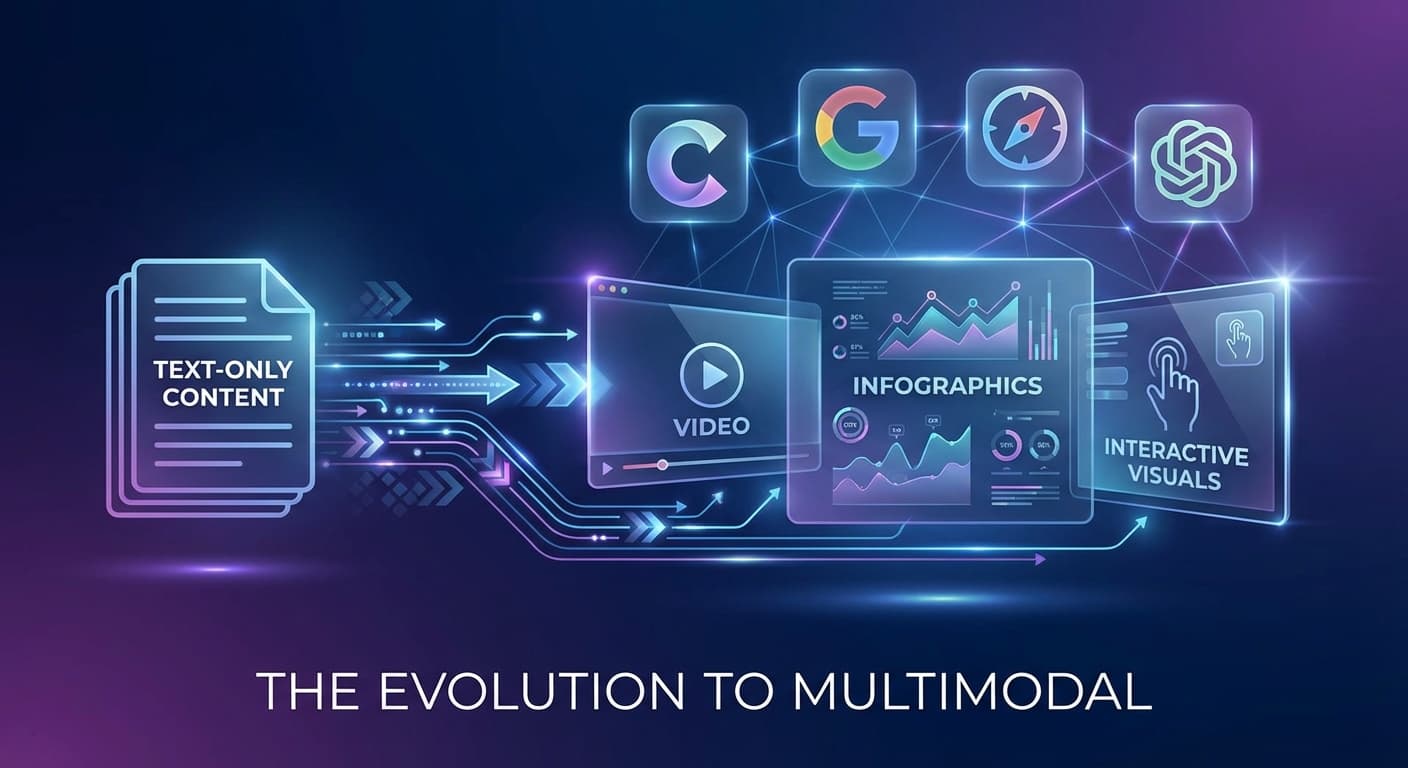
By 2026, multimodal AI search has become the new frontier. ChatGPT, Claude, Perplexity, and Gemini now process over 2.3 billion image and video queries monthly, with visual content receiving 40% more citations than text-only results. Yet 73% of content creators are still publishing predominantly text-based content, missing out on this massive opportunity.
If your content library consists mainly of blog posts, articles, and written guides, you're not alone—and you're not doomed. The key is understanding how to strategically evolve your content strategy without starting from scratch.
The Multimodal Revolution: Why Visual Content Matters More Than Ever
AI search engines have undergone a dramatic transformation in 2025-2026. Recent data shows that:
The shift isn't just about user preference—it's about AI capabilities. Modern AI systems can now analyze images, videos, and text simultaneously, creating richer, more contextual responses that users find more valuable.
Audit Your Current Text-Only Content: Finding Hidden Visual Opportunities
Before creating new visual content, examine what you already have. Your existing text-based content likely contains numerous opportunities for visual enhancement:
Content Categories Ripe for Visual Transformation
The 80/20 Rule for Content Prioritization
Focus on the 20% of your content that drives 80% of your traffic. These high-performing pieces should be your first candidates for visual enhancement. They already have proven appeal—adding visual elements will amplify their reach in AI search results.
Strategic Approaches to Visual Content Creation for Text-Heavy Brands
1. The Repurposing Pyramid Strategy
Start with your best-performing written content and create a pyramid of visual assets:
Top Tier (High Investment):
Mid Tier (Moderate Investment):
Base Tier (Low Investment):
2. The Content Cluster Approach
Group related text content into clusters, then create one comprehensive visual piece that covers the entire topic. For example, if you have five blog posts about email marketing, create one detailed infographic that synthesizes all five perspectives.
3. User-Generated Content Integration
Leverage your audience to create visual content:
Optimizing Visual Content for AI Search Engines
Alt Text and Metadata Optimization
AI search engines rely heavily on textual descriptions of visual content. Optimize every visual asset with:
Video SEO for AI Platforms
When creating video content, consider these AI-friendly practices:
Technical Implementation: Making It Happen with Limited Resources
Budget-Friendly Visual Content Creation Tools
For Static Graphics:
For Video Content:
For Data Visualization:
Workflow Optimization
Create an efficient visual content production workflow:
Measuring Success: KPIs for Multimodal Content Strategy
Track these metrics to measure your visual content strategy effectiveness:
A/B Testing Visual Enhancements
Test the impact of visual elements by comparing:
Tools like Citescope Ai can help track how these changes affect your citation rates across different AI platforms, giving you data-driven insights into what works best for your content.
Common Pitfalls and How to Avoid Them
Mistake 1: Creating Visuals Without Strategy
Solution: Always tie visual content back to your core topics and audience needs.
Mistake 2: Ignoring Mobile Optimization
Solution: Ensure all visual content displays properly on mobile devices, where 67% of AI searches now occur.
Mistake 3: Focusing Only on Aesthetics
Solution: Prioritize informational value and AI searchability over pure visual appeal.
Mistake 4: Neglecting Accessibility
Solution: Include alt text, captions, and transcripts for all visual content.
Future-Proofing Your Visual Content Strategy
As AI search continues evolving, stay ahead by:
How Citescope Ai Helps Optimize Your Multimodal Content Strategy
Transitioning to a visual-first content strategy doesn't have to be overwhelming. Citescope Ai's comprehensive platform supports your multimodal optimization efforts:
GEO Score Analysis: Our AI evaluates how well your content (including visual elements) performs across all dimensions that matter to AI search engines. You'll see exactly how adding visual components affects your discoverability.
Citation Tracking: Monitor when your visual content gets referenced by ChatGPT, Perplexity, Claude, and Gemini. This data helps you understand which types of visual content perform best in AI search results.
Content Optimization: The AI Rewriter doesn't just optimize text—it provides recommendations for visual content integration, helping you identify the best opportunities to enhance your existing content with visual elements.
Multi-format Export: Once you've optimized your content strategy, export everything in the format you need—whether that's Markdown for developers, HTML for web publishing, or WordPress blocks for easy content management.
Ready to Optimize for AI Search?
Don't let your text-only content library hold you back from AI search success. The multimodal revolution is here, but with the right strategy and tools, you can transform your existing content into a citation-worthy visual powerhouse. Start with Citescope Ai's free tier to analyze your current content and discover exactly where visual enhancements will have the biggest impact. Get 3 free optimizations this month and see how your GEO Score improves when you embrace the visual future of AI search.


