How to Build a Third-Party Cookie Replacement Strategy When AI Search Engines Launch Privacy-First Behavioral Targeting
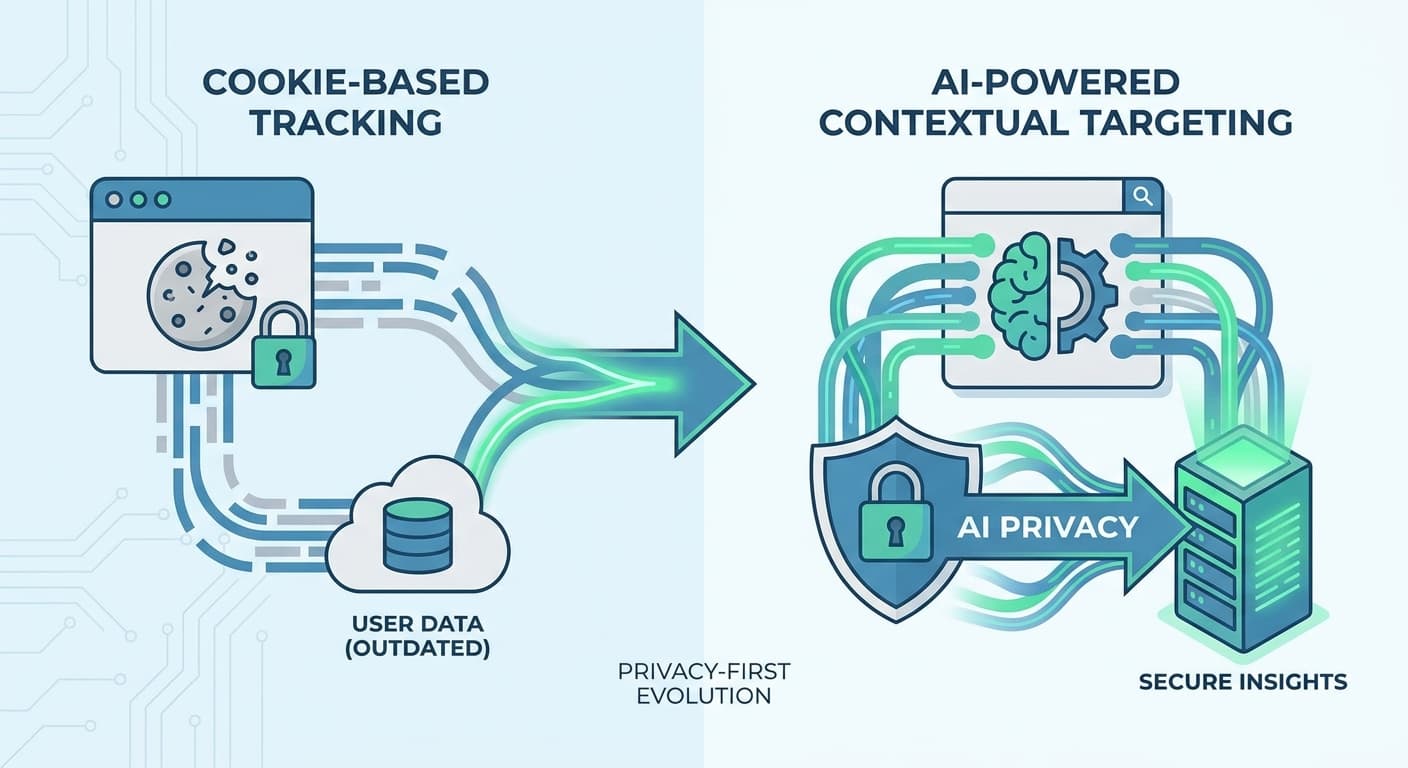
How to Build a Third-Party Cookie Replacement Strategy When AI Search Engines Launch Privacy-First Behavioral Targeting
What if I told you that 73% of digital marketers saw their retargeting campaign effectiveness drop by over 40% in late 2025, not because of iOS updates or Chrome's cookie deprecation, but because AI search engines fundamentally changed how users discover and engage with content? Welcome to the new reality of 2026, where ChatGPT, Perplexity, Claude, and Gemini have collectively captured 35% of all search traffic while simultaneously launching privacy-first behavioral targeting that makes traditional retargeting feel like shouting into the void.
The Great Disruption: Why Traditional Retargeting Is Becoming Obsolete
The digital marketing playbook we've relied on for the past decade is being rewritten in real-time. While marketers spent years preparing for Chrome's third-party cookie phase-out, AI search engines quietly built something far more sophisticated: contextual understanding systems that predict user intent without tracking individual behavior across the web.
Here's what's happening right now:
The shift isn't just technical—it's behavioral. Users who engage with AI search engines expect personalized, contextually relevant responses without feeling surveilled. This creates both a massive challenge and an unprecedented opportunity for forward-thinking marketers.
Understanding AI Search Engine Behavioral Targeting
Unlike traditional retargeting that follows users across websites, AI search engines use three sophisticated targeting mechanisms:
1. Contextual Intent Mapping
AI engines analyze the semantic meaning behind queries to understand user intent without storing personal data. When someone asks ChatGPT about "sustainable running shoes under $150," the system understands price sensitivity, environmental values, and product category simultaneously.
2. Session-Based Personalization
Rather than tracking users across sessions, AI platforms optimize responses based on conversation flow within individual interactions. This creates highly relevant experiences while maintaining privacy.
3. Content Authority Weighting
AI search engines prioritize content from sources they deem authoritative and comprehensive for specific topics. This means your content's visibility depends more on topical expertise than advertising spend.
Building Your Cookie-Free Strategy: The Four Pillars
Pillar 1: First-Party Data Amplification
The foundation of post-cookie marketing lies in maximizing the value of data you collect directly from customers. Here's how to build a robust first-party data ecosystem:
Expand Data Collection Touchpoints:
Create Value-Driven Data Exchanges:
Instead of demanding email addresses for basic content, offer genuine value:
Pillar 2: AI-Optimized Content Strategy
Since AI search engines prioritize comprehensive, authoritative content, your content strategy must evolve to capture AI citations and recommendations.
Essential Content Optimization Tactics:
Content Formats That AI Engines Favor:
Citescope Ai's GEO Score analyzes your content across five critical dimensions that AI search engines evaluate, giving you actionable insights to improve your content's visibility and citation potential.
Pillar 3: Contextual Advertising Evolution
With traditional retargeting becoming less effective, smart marketers are shifting toward contextual advertising that aligns with AI search behavior.
Advanced Contextual Strategies:
Pillar 4: Community-Driven Growth
AI search engines increasingly value content that demonstrates genuine user engagement and community validation.
Building Citation-Worthy Community Assets:
Practical Implementation Timeline
Month 1-2: Foundation Building
Month 3-4: Strategy Deployment
Month 5-6: Optimization and Scale
Measuring Success in the Post-Cookie World
Traditional metrics like click-through rates and impression frequency become less meaningful when AI search engines mediate user interactions. Focus on these evolved KPIs:
AI Search Visibility Metrics:
Engagement Quality Indicators:
Business Impact Measurements:
Common Pitfalls to Avoid
How Citescope Ai Helps Navigate This Transition
As AI search engines reshape digital marketing, tools like Citescope Ai become essential for staying competitive. The platform's AI Rewriter automatically restructures your existing content to maximize visibility in AI search results, while the Citation Tracker monitors when ChatGPT, Perplexity, Claude, and Gemini reference your content.
The GEO Score provides a comprehensive analysis of how well your content performs across the five dimensions that matter most to AI search engines: AI Interpretability, Semantic Richness, Conversational Relevance, Structure, and Authority. This data-driven approach helps you prioritize optimization efforts and track improvement over time.
With multi-format export capabilities, you can seamlessly integrate optimized content into your existing workflows, whether you're publishing to WordPress, managing content in Markdown, or need HTML for email campaigns.
Ready to Optimize for AI Search?
The transition away from third-party cookies isn't just about privacy compliance—it's about building a more sustainable, customer-centric marketing approach that thrives in an AI-first world. Start by analyzing your current content's AI search visibility and identifying optimization opportunities.
Try Citescope Ai's free tier with 3 content optimizations to see how your content performs in the new AI search landscape. Upgrade to Pro ($39/month) for unlimited optimizations and comprehensive citation tracking across all major AI platforms.
Start your free analysis today and discover how to build a marketing strategy that doesn't just survive the post-cookie world—it dominates it.


