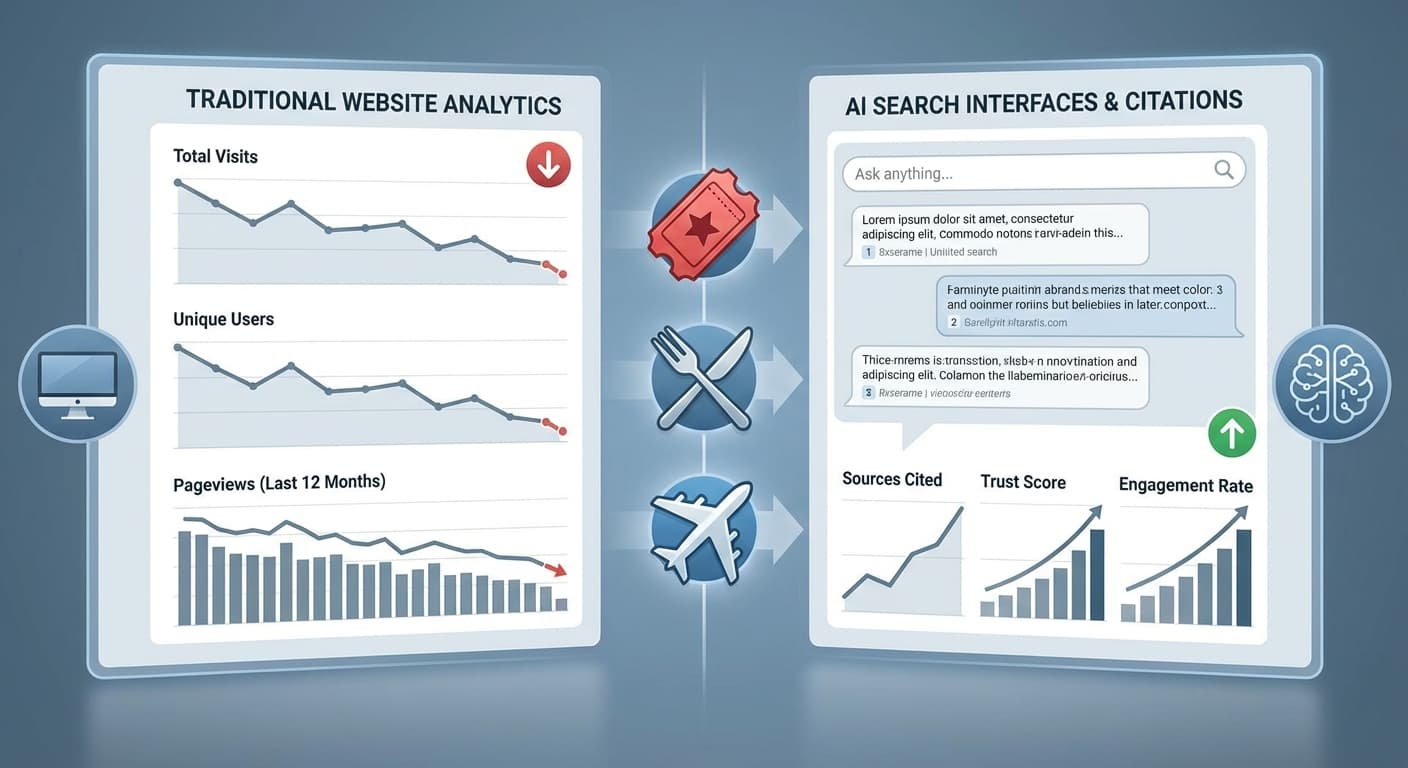
How to Build a Seasonal Demand Prediction Strategy When AI Search Engines Use Behavioral Forecasting to Answer Pre-Intent Queries Before Your Target Customers Know They Need Your Product
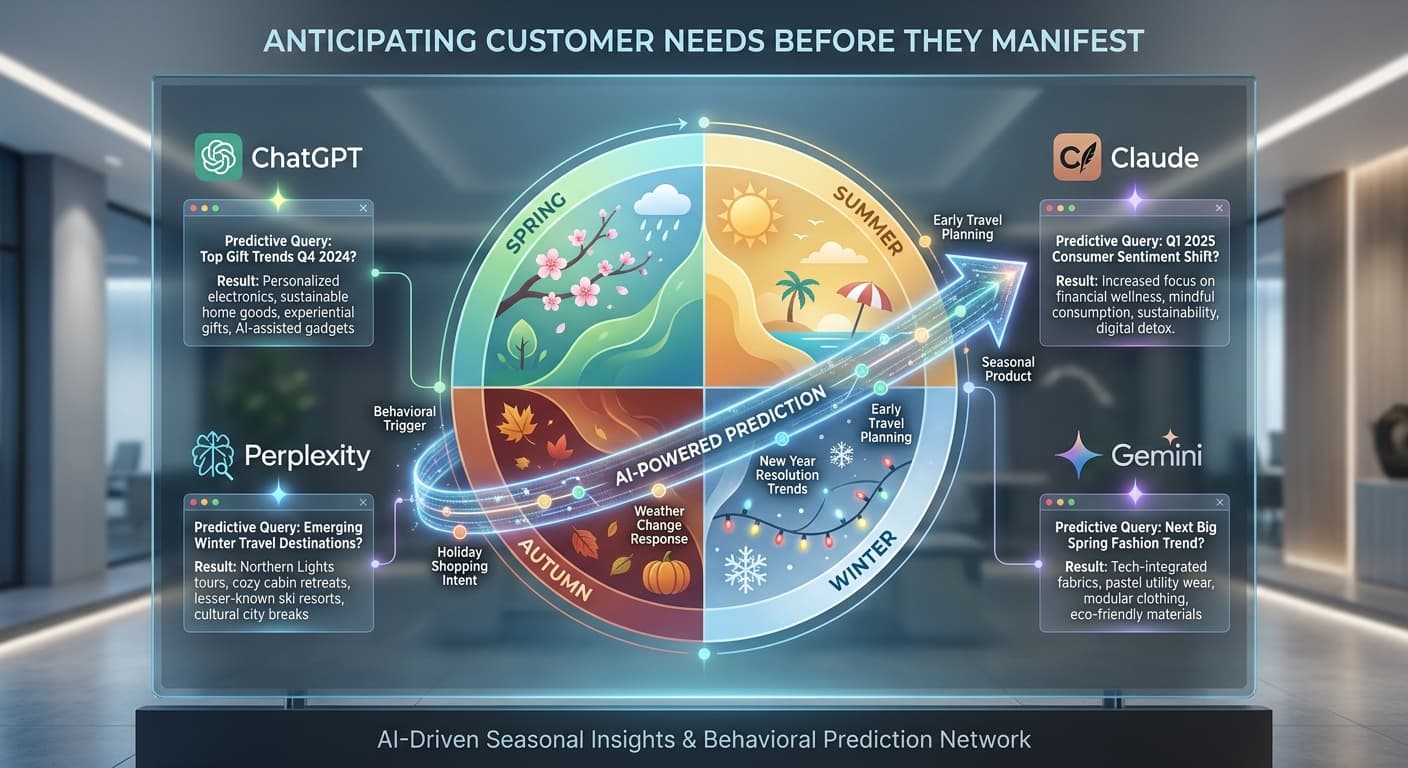
How to Build a Seasonal Demand Prediction Strategy When AI Search Engines Use Behavioral Forecasting to Answer Pre-Intent Queries Before Your Target Customers Know They Need Your Product
Imagine this: It's early March 2026, and your potential customers aren't yet thinking about summer pool maintenance. But ChatGPT is already recommending pool cleaning services to users who searched for "spring home improvement projects," and Perplexity is surfacing pool safety equipment in response to queries about "preparing backyard for kids' activities." Welcome to the era of predictive AI search, where algorithms don't just respond to what people search for—they anticipate what they'll need next.
With AI search engines now handling over 35% of all online queries and behavioral forecasting becoming increasingly sophisticated, traditional seasonal marketing strategies are being turned upside down. The challenge? Your competitors who master pre-intent optimization are capturing customers before they even know they're customers.
Understanding Pre-Intent Behavioral Forecasting in AI Search
AI search engines in 2026 have evolved far beyond keyword matching. They now analyze:
This means when someone searches for "spring cleaning tips," AI engines might proactively suggest:
The result? A 40% increase in pre-intent conversions for businesses that optimize for behavioral forecasting, according to 2025 AI search analytics data.
The New Seasonal Demand Prediction Framework
1. Map Your Behavioral Trigger Ecosystem
Start by identifying the broader behavioral patterns that precede demand for your product or service:
Traditional Approach: Wait for "pool cleaning services near me" searches in May
Behavioral Forecasting Approach: Target users searching for:
2. Create Content Clusters Around Pre-Intent Signals
Develop comprehensive content that addresses the full customer journey before intent crystalizes:
#### Early Signal Content (3-4 months before peak season)
#### Mid-Signal Content (1-2 months before peak season)
#### Late-Signal Content (Peak season approaches)
3. Optimize for AI Engine Context Understanding
AI search engines excel at understanding context and intent beyond explicit keywords. Your content needs to:
Use Natural Language Processing Patterns:
Example: Instead of just writing about "pool maintenance," create content like:
"As you plan your spring home improvements, don't overlook the hidden maintenance tasks that could turn into costly summer emergencies. Your pool's winter dormancy might have masked developing issues that, left unaddressed, could disrupt your family's summer plans."
Advanced Seasonal Demand Prediction Tactics
Leverage Cross-Seasonal Intelligence
AI engines now connect seasonal patterns across different timeframes. Build content that bridges seasons:
Implement Behavioral Trigger Keywords
Beyond traditional seasonal keywords, optimize for behavioral indicators:
Traditional Keywords: "summer lawn care," "spring cleaning"
Behavioral Trigger Keywords: "preparing for warmer weather," "getting organized before busy season," "avoiding summer maintenance disasters"
Create Predictive Content Calendars
Develop content calendars that align with AI behavioral forecasting:
Geographic and Demographic Considerations
AI search engines factor location and user demographics into their behavioral forecasting. Tailor your strategy accordingly:
Geographic Variations
Demographic Targeting
Measuring Behavioral Forecasting Success
Track these advanced metrics to gauge your pre-intent optimization:
Leading Indicators
Conversion Metrics
Common Pitfalls in Behavioral Forecasting Optimization
Over-Anticipating Intent
Creating content too far ahead of natural user behavior can feel pushy and irrelevant. Balance early optimization with authentic timing.
Ignoring Micro-Seasons
AI engines recognize micro-seasonal patterns (like "back-to-school" or "post-holiday") that traditional seasonal strategies miss.
Neglecting Year-Round Relevance
Even seasonal businesses have year-round touchpoints. Don't go completely dark during off-seasons.
Building Your Behavioral Forecasting Content Strategy
Phase 1: Research and Analysis (Month 1)
Phase 2: Content Planning (Month 2)
Phase 3: Implementation (Month 3)
Phase 4: Optimization (Ongoing)
How Citescope AI Helps
Building an effective seasonal demand prediction strategy requires understanding how AI search engines interpret and prioritize your content across different behavioral contexts. Citescope AI's GEO Score analyzes your content's AI Interpretability and Conversational Relevance—two critical factors for behavioral forecasting optimization.
The platform's Citation Tracker helps you monitor when AI engines reference your content for pre-intent queries, allowing you to identify which behavioral triggers are working and adjust your seasonal strategy accordingly. With the AI Rewriter, you can optimize existing seasonal content to better address the contextual patterns that AI engines use for behavioral forecasting.
Advanced Implementation Tips
Content Depth Optimization
AI engines favor comprehensive content that addresses multiple aspects of seasonal planning. Create in-depth resources that cover:
Authority Building Through Prediction Accuracy
Build trust with AI engines by:
Technical SEO for Behavioral Forecasting
Ready to Optimize for AI Search?
Mastering seasonal demand prediction in the age of behavioral forecasting requires more than traditional SEO tactics—it demands a deep understanding of how AI search engines interpret context and predict user needs. Citescope AI provides the tools and insights you need to optimize your content for pre-intent queries and track your performance across all major AI search engines. Start with our free tier to analyze your seasonal content's AI readiness, or upgrade to Pro for comprehensive behavioral forecasting optimization. Transform your seasonal strategy from reactive to predictive—your future customers are waiting to discover you before they even know they need you.