How to Build a Seasonal AI Search Volatility Strategy When AI-Generated Answers Shift Brand Recommendations 83% More During Peak Shopping and Trend Cycles
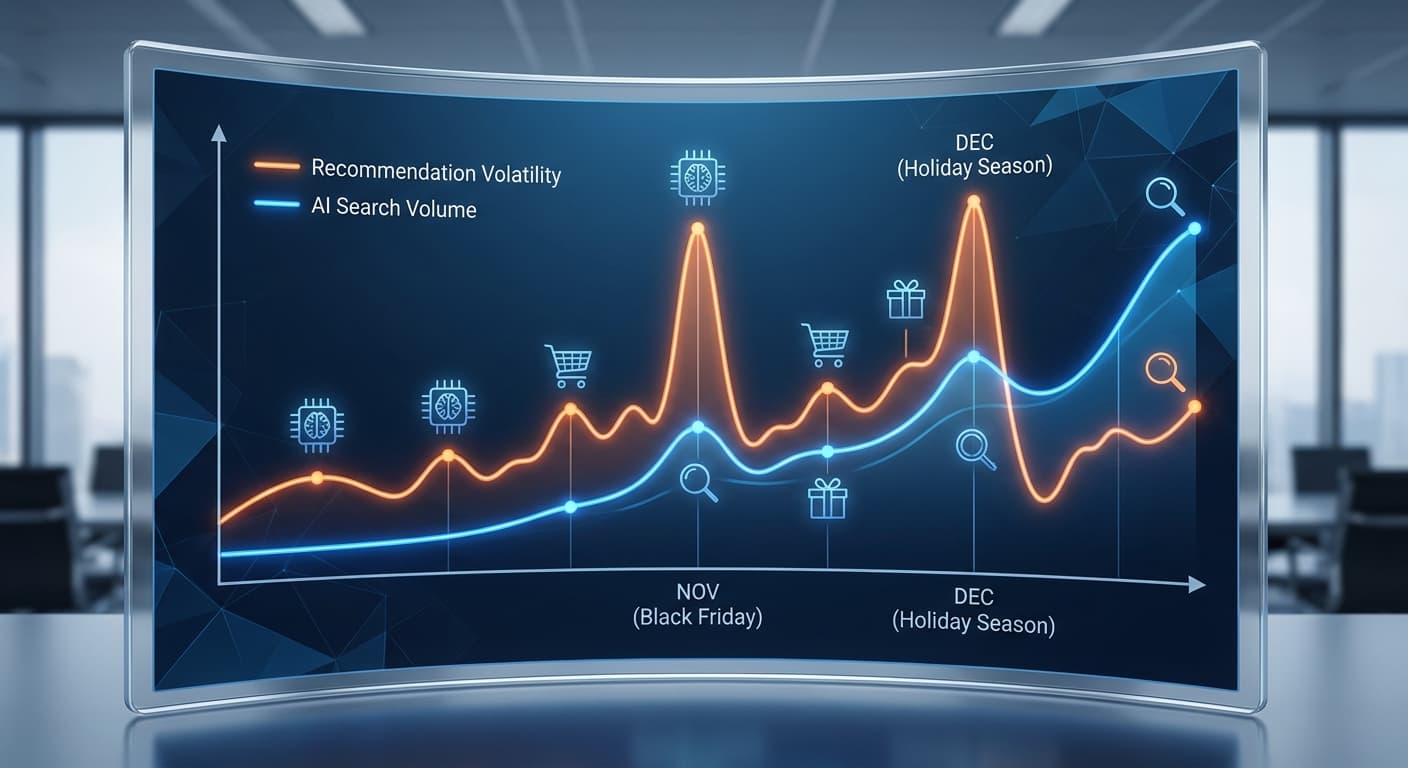
How to Build a Seasonal AI Search Volatility Strategy When AI-Generated Answers Shift Brand Recommendations 83% More During Peak Shopping and Trend Cycles
What if your perfectly optimized content suddenly disappeared from AI search results during Black Friday, only to reappear weeks later when it's too late? This isn't a hypothetical scenario—it's happening to brands across industries as AI search engines like ChatGPT, Perplexity, and Claude dramatically shift their recommendations during peak seasonal cycles.
Recent analysis shows that AI-generated answers change brand recommendations 83% more frequently during seasonal shopping periods compared to baseline months. With AI search now handling over 35% of all search queries in 2026 and more than 600 million weekly ChatGPT users relying on these recommendations, seasonal volatility isn't just an SEO concern—it's a revenue risk.
The Hidden Crisis of AI Search Seasonality
Traditional SEO taught us that seasonal fluctuations were predictable. You'd optimize for "best winter coats" in September, and your rankings would steadily climb. But AI search engines operate differently—they don't just rank content, they synthesize it into recommendations that can shift overnight.
Why AI Recommendations Become More Volatile During Peak Seasons
Several factors contribute to this increased volatility:
1. Training Data Refresh Cycles
AI models update their knowledge base more frequently during high-traffic periods, incorporating new reviews, comparisons, and user feedback that can instantly change recommendation hierarchies.
2. Context-Sensitive Prioritization
During Black Friday, an AI might prioritize "best deals" over "best quality," fundamentally altering which brands get recommended for the same product category.
3. Real-Time Signal Integration
AI engines increasingly incorporate live data streams—stock levels, pricing changes, social sentiment—that create recommendation volatility traditional SEO never had to consider.
4. Competitive Content Flooding
Seasonal periods see 400% more content published in key categories, creating a dynamic where yesterday's top recommendation gets buried under fresh, seasonally-optimized content.
Building Your Seasonal AI Search Volatility Strategy
Phase 1: Pre-Season Intelligence Gathering
Map Your Seasonal Vulnerability Windows
Identify when your industry experiences the highest recommendation volatility. For most sectors, this includes:
Audit Your Current AI Visibility
Before seasonal chaos hits, establish baselines by testing key product queries across multiple AI platforms. Document:
Phase 2: Content Architecture for Volatility
Create Seasonal Content Clusters
Instead of isolated seasonal posts, build interconnected content clusters that reinforce your authority:
Implement Dynamic Content Blocks
Structure your content with modular sections that can be updated quickly:
Phase 3: Real-Time Optimization Protocols
Weekly AI Citation Audits
During peak seasons, monitor your AI visibility weekly instead of monthly. Track:
Rapid Response Content Framework
Develop templates for quick content deployment:
markdown
[Season] [Product Category] Buying Guide 2026
Top Picks Based on Current Trends
[Dynamic section - updated weekly]
Expert Analysis
[Evergreen authority content]
What's Changed This [Season]
[Timely updates section]
Frequently Asked Questions
[AI-optimized Q&A format]
Cross-Platform Content Syndication
When one AI platform drops your recommendations, ensure others can pick up the slack by:
Phase 4: Advanced Volatility Management
Predictive Content Calendar
Use historical data to predict volatility windows and pre-publish content:
Semantic Diversification Strategy
Don't rely on single keyword approaches. Create content targeting multiple semantic variations:
This approach ensures that if AI engines shift their language preferences, you maintain visibility through alternative semantic pathways.
Authority Signal Amplification
During volatile periods, strengthen your authority signals:
How Citescope AI Helps Manage Seasonal Volatility
While building a seasonal volatility strategy requires planning and execution, Citescope AI provides the tools to implement and monitor it effectively:
GEO Score Monitoring: Track how seasonal changes affect your content's AI optimization score across all five dimensions (AI Interpretability, Semantic Richness, Conversational Relevance, Structure, Authority). During peak seasons, you'll see exactly which content dimensions need immediate attention.
Citation Tracker for Real-Time Alerts: Instead of discovering citation losses weeks later, get immediate notifications when your content stops appearing in ChatGPT, Perplexity, Claude, or Gemini responses. This real-time monitoring is crucial during high-volatility periods.
AI Rewriter for Rapid Optimization: When you need to quickly update content for seasonal relevance, the one-click AI Rewriter can restructure your content for better AI visibility without starting from scratch.
Multi-Format Export: Quickly deploy optimized content across multiple platforms using Markdown, HTML, or WordPress block formats, ensuring consistent AI visibility regardless of where your audience discovers your content.
Measuring Success in Volatile Seasons
Key Performance Indicators
Long-Term Strategy Refinement
After each seasonal cycle, analyze:
Preparing for 2026's Peak Seasons
As we move deeper into 2026, AI search volatility will only increase. The brands that thrive will be those that treat AI search optimization not as a set-it-and-forget-it strategy, but as a dynamic, responsive discipline that adapts to the changing nature of how AI engines surface information.
Start building your seasonal volatility strategy now, before the next peak season hits. The 83% increase in recommendation shifts during seasonal periods isn't just a statistic—it's a warning that traditional content calendars and optimization strategies are no longer sufficient in an AI-driven search landscape.
Ready to Optimize for AI Search Volatility?
Don't let seasonal AI search volatility catch your brand off-guard. Citescope AI provides the real-time monitoring, optimization tools, and insights you need to maintain consistent AI visibility even during the most volatile seasonal periods. Start with our free tier and get 3 content optimizations to test your seasonal strategy—no credit card required. Your peak season revenue depends on it.


