How to Build a Search Everywhere Optimization Strategy When AI Agents Are Stealing 52 Million Daily Purchase Decisions From Your Ecommerce Site

How to Build a Search Everywhere Optimization Strategy When AI Agents Are Stealing 52 Million Daily Purchase Decisions From Your Ecommerce Site
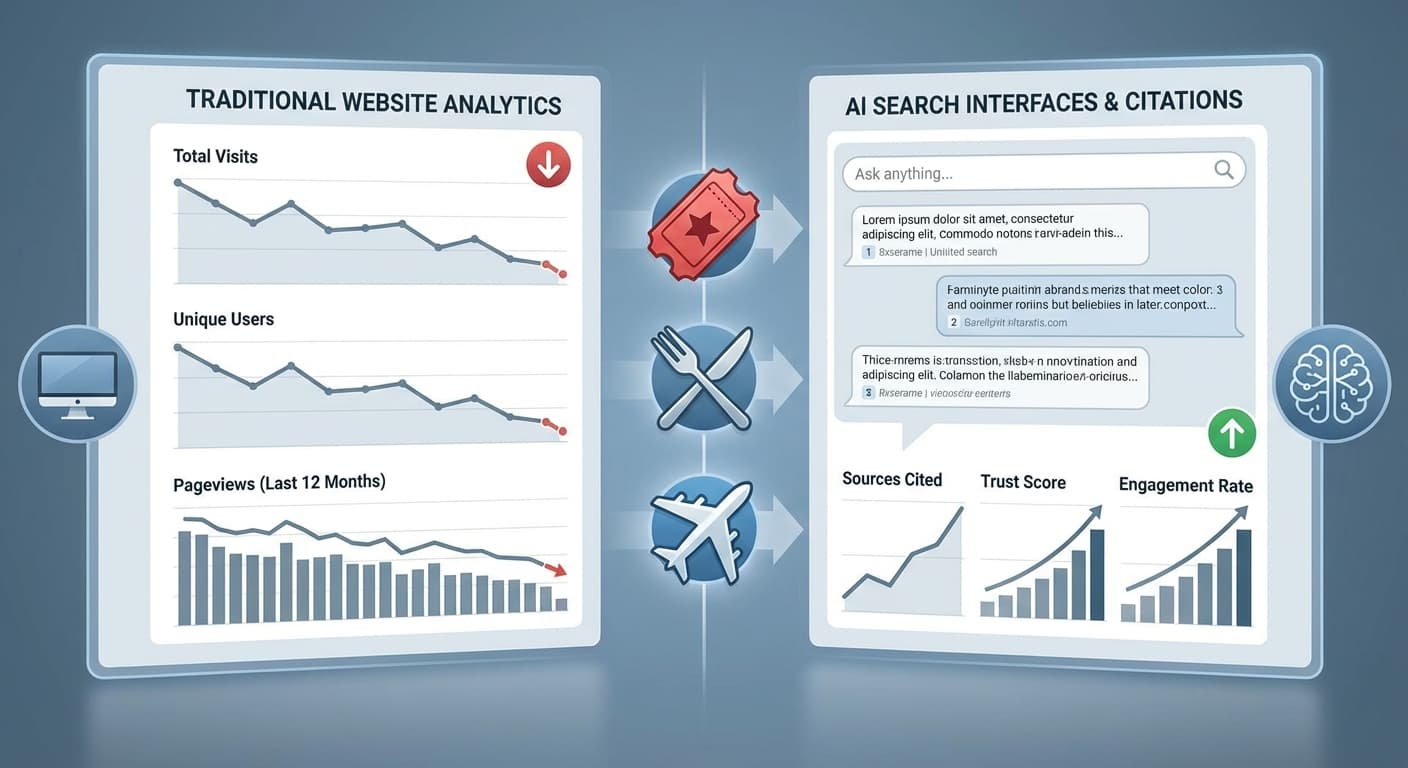
Every day, 52 million purchase decisions that would have happened on ecommerce websites are now being influenced—or outright stolen—by AI agents like ChatGPT, Perplexity, and Claude. These AI systems aren't just answering questions anymore; they're becoming the new shopping assistants, product researchers, and decision-makers for consumers who never make it to your actual website.
If you're an ecommerce business owner watching your organic traffic plateau while your competitors seem to vanish into thin air, you're not alone. The search landscape has fundamentally shifted, and traditional SEO strategies are no longer enough. Welcome to the era of Search Everywhere Optimization—where your content needs to perform not just on Google, but across every AI agent that's intercepting your potential customers.
The AI Agent Takeover: Why Your Traditional SEO Strategy Is Failing
By 2026, AI-powered search has exploded beyond anyone's wildest predictions. ChatGPT now processes over 500 million queries weekly, while Perplexity handles 2.3 billion searches monthly. More critically, 73% of Gen Z and 58% of Millennials now start their product research with AI agents rather than traditional search engines.
Here's what's happening to your ecommerce traffic:
The businesses thriving in this new landscape aren't just optimizing for Google—they're optimizing for everywhere their customers might encounter AI-powered search.
Understanding Search Everywhere: The New Customer Journey
The modern ecommerce customer journey looks radically different than it did even two years ago. Instead of following a linear path from search to site to purchase, customers now zigzag through multiple AI touchpoints:
The Multi-Agent Research Phase
Your content needs to be discoverable and valuable at every single stage of this journey.
Building Your Search Everywhere Optimization Strategy
1. Audit Your AI Visibility
Before optimizing, you need to understand how AI agents currently perceive and present your brand. Start by testing queries your customers would ask:
Document what AI agents say about your products, competitors, and category. Look for patterns in:
2. Create AI-Interpretable Content
AI agents excel at processing structured, well-organized content. Transform your existing product content using these principles:
Structure for Scannability:
Write for Context Understanding:
3. Develop Authoritative Product Resources
AI agents heavily favor comprehensive, authoritative content when making recommendations. Create resources that establish your expertise:
Comprehensive Buying Guides:
Comparison Content:
Problem-Solution Content:
4. Optimize for Conversational Queries
AI search is inherently conversational. Optimize your content for natural language patterns:
5. Build Citation-Worthy Authority
AI agents prefer citing authoritative sources. Build the credibility signals that make your content citation-worthy:
Enhance E-A-T Signals:
Create Linkable Assets:
Tools like Citescope Ai can help you analyze how well your content performs across these authority signals, measuring factors like AI Interpretability and Semantic Richness to identify specific optimization opportunities.
Advanced Tactics for Ecommerce AI Optimization
Semantic Product Clustering
Organize your products and content around semantic themes rather than traditional category structures. AI agents understand relationships between concepts, so create content hubs that connect:
Multi-Format Content Strategy
Different AI agents prefer different content formats. Diversify your approach:
Real-Time Optimization Feedback
Implement systems to monitor and respond to AI agent behavior:
Measuring Success in the Search Everywhere Era
Traditional ecommerce metrics only tell part of the story. Expand your measurement framework:
AI-Specific Metrics:
Indirect Impact Indicators:
Revenue Attribution Models:
How Citescope Ai Helps Ecommerce Brands Win the AI Search Game
Building a comprehensive Search Everywhere strategy requires sophisticated analysis and optimization capabilities. Citescope Ai provides ecommerce businesses with:
GEO Score Analysis: Evaluate your product pages across five critical dimensions that determine AI agent citation likelihood, identifying specific weaknesses in AI Interpretability, Semantic Richness, and Authority signals.
AI Rewriter Tool: Transform existing product descriptions and category pages with one-click optimization that restructures content for maximum AI visibility while maintaining your brand voice.
Citation Tracking: Monitor when ChatGPT, Perplexity, Claude, and Gemini cite your product content, giving you unprecedented visibility into AI agent behavior and content performance.
Multi-Format Export: Seamlessly integrate optimized content into your existing ecommerce platform with Markdown, HTML, or WordPress block exports.
With comprehensive citation tracking across all major AI platforms, you can finally measure and optimize your presence in the Search Everywhere ecosystem.
Ready to Optimize for AI Search?
The 52 million daily purchase decisions influenced by AI agents represent both a massive threat and an unprecedented opportunity. Ecommerce brands that adapt their content strategy for AI visibility today will dominate tomorrow's search landscape.
Citescope Ai helps you optimize, track, and measure your content's performance across ChatGPT, Perplexity, Claude, and Gemini. Start with our free tier to optimize 3 pieces of content, or unlock comprehensive AI search optimization with our Pro plan.
Start your free optimization today and reclaim your share of those 52 million daily purchase decisions.