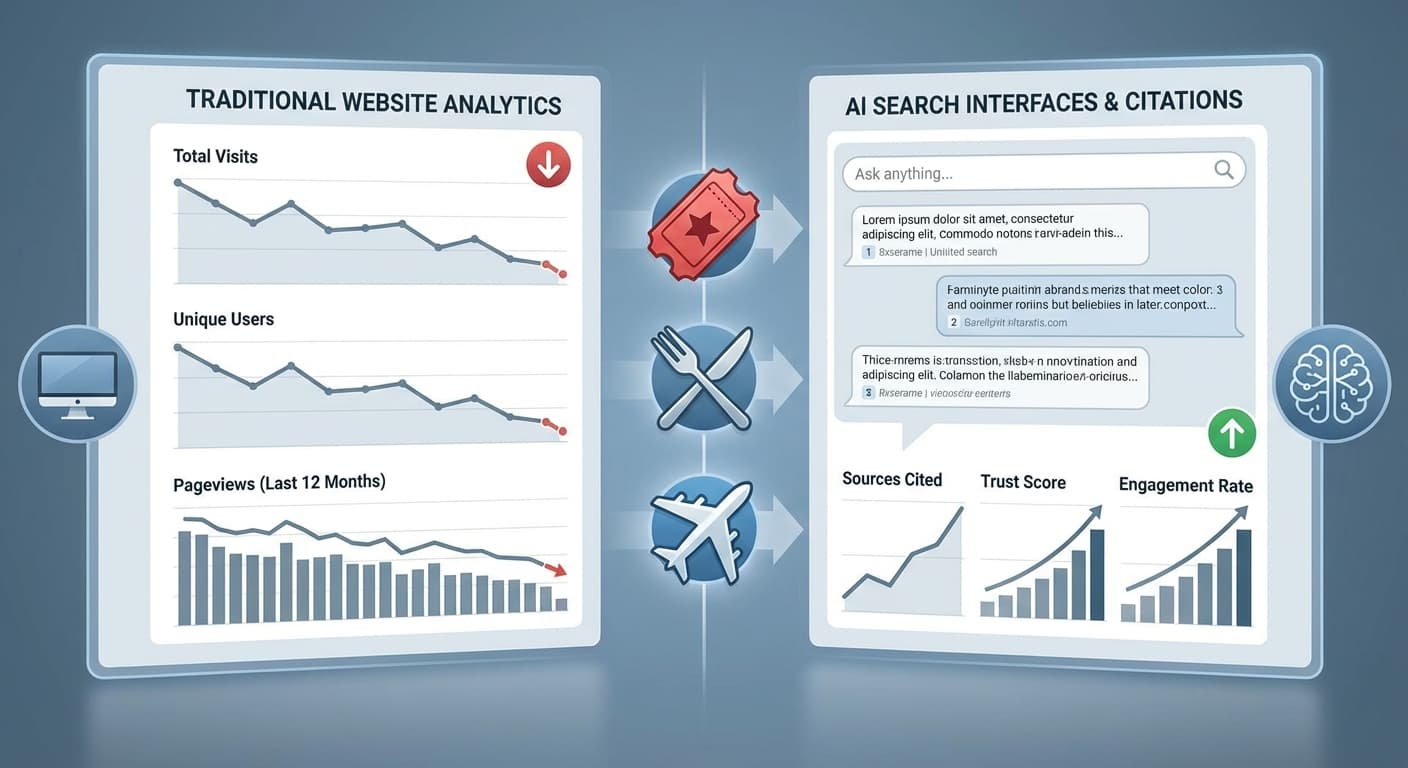
How to Build a Revenue Attribution System When AI Shopping Agents Process Conversions Through Closed-Loop Environments
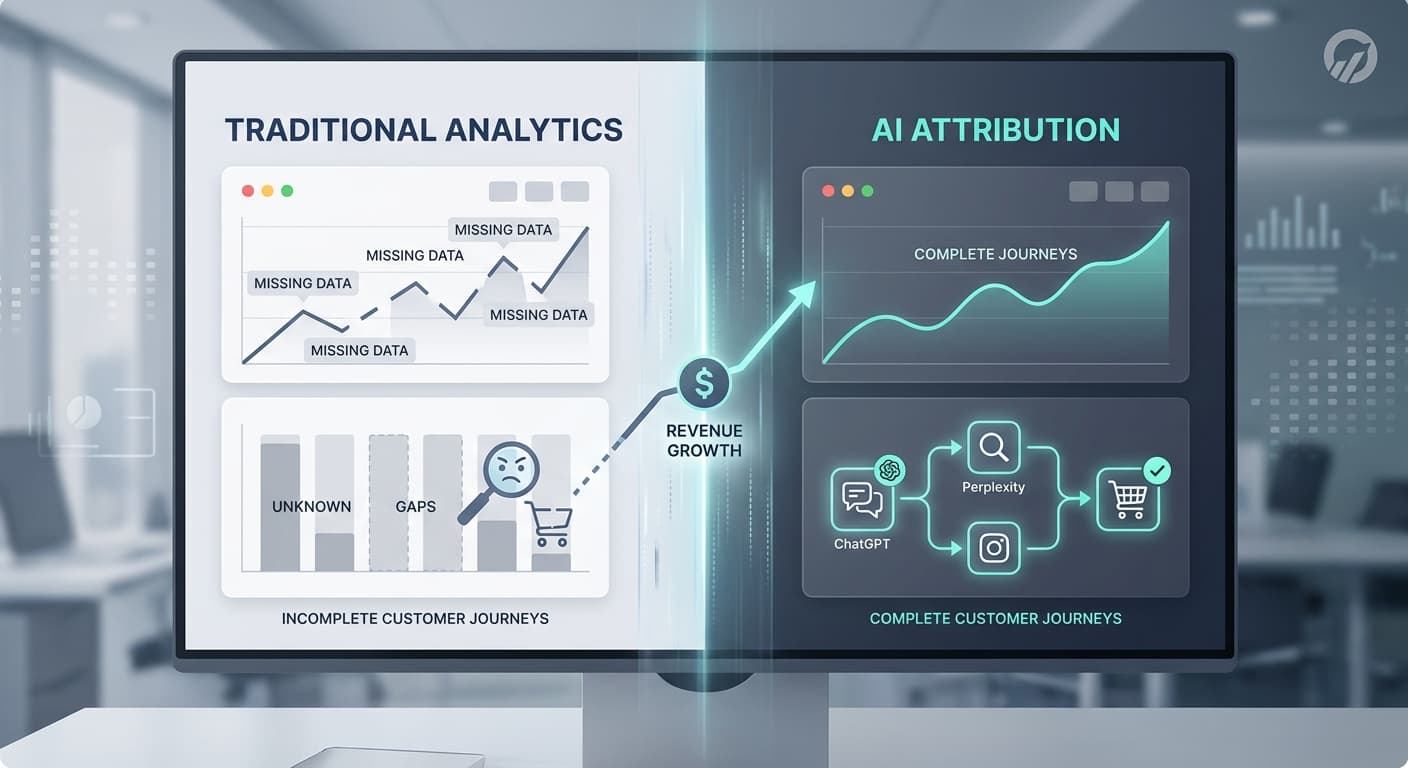
How to Build a Revenue Attribution System When AI Shopping Agents Process Conversions Through Closed-Loop Environments
If you're staring at your analytics dashboard wondering why 40% of your revenue seems to appear from thin air, you're not alone. In 2026, AI shopping agents like ChatGPT Commerce and Perplexity Shopping are processing over $180 billion in transactions annually—but traditional attribution systems can't see these conversions coming.
Here's the reality: When someone asks ChatGPT "find me the best wireless earbuds under $200" and makes a purchase through its integrated shopping interface, your CRM records show zero touchpoints. Meanwhile, your bank account shows real money from real customers who discovered you through AI recommendations.
The AI Attribution Black Hole
Traditional attribution models were built for a world of visible touchpoints—banner ads, social media clicks, email opens. But AI shopping agents operate in closed-loop environments where:
According to recent research from Commerce Intelligence Group, 68% of Gen Z consumers now use AI assistants for product research, but only 12% of those interactions are visible to traditional marketing attribution tools.
Why This Matters More Than Ever in 2026
AI-driven commerce isn't just growing—it's fundamentally changing how customers discover and purchase products. Consider these 2026 statistics:
Yet most businesses are still using attribution models designed for 2019. The disconnect between AI-driven revenue and visible attribution creates several critical problems:
Budget Allocation Blindness
Without proper attribution, marketing teams continue investing in channels they can measure while unknowingly starving the AI optimization efforts that drive actual revenue.
Customer Journey Gaps
Traditional customer journey mapping misses entire segments of the purchase process, leading to incomplete understanding of buyer behavior.
ROI Measurement Failures
Content marketing, SEO, and AI visibility efforts appear to have poor ROI when their true impact happens through unmeasurable AI recommendation engines.
Building an AI-Native Revenue Attribution System
Creating attribution visibility in an AI-dominated commerce landscape requires a multi-layered approach that combines traditional tracking with AI-specific measurement strategies.
Layer 1: Enhanced UTM and Referral Tracking
Start by expanding your existing tracking infrastructure to capture AI-specific signals:
Custom UTM Parameters for AI Channels:
utm_source=ai_assistantutm_medium=chatbot_recommendation utm_campaign=ai_shopping_agentutm_content=product_comparisonAI-Specific Referrer Detection:
Implement JavaScript that can identify when traffic originates from AI assistant interfaces, even when traditional referrer data is missing.
Voice Commerce Tracking:
Develop unique promotional codes or landing pages specifically for voice-based AI shopping recommendations.
Layer 2: First-Party Data Collection
Since AI shopping agents operate in closed environments, first-party data becomes crucial for attribution:
Customer Survey Integration:
Account-Based Tracking:
For B2B companies, implement account-level attribution that tracks AI research patterns across entire buying committees.
Progressive Profiling:
Gradually collect information about customers' AI usage patterns through their interactions with your brand.
Layer 3: AI Citation and Mention Tracking
This is where specialized tools become essential. You need systems that can:
Citescope Ai's Citation Tracker provides exactly this visibility, monitoring when your content gets cited across all major AI platforms and correlating those mentions with traffic and conversion spikes.
Layer 4: Behavioral Pattern Recognition
Develop systems that can identify AI-influenced customers through behavioral signals:
High-Intent, Low-Touch Patterns:
Question-Based Entry Points:
Layer 3: Statistical Modeling and Inference
When direct measurement isn't possible, statistical methods can help fill attribution gaps:
Lift Testing:
Run controlled experiments where you optimize content for AI visibility in some markets while maintaining baseline approaches in others.
Time-Series Analysis:
Correlate content optimization activities with revenue increases, accounting for typical delay patterns in AI recommendation systems.
Cross-Channel Attribution Modeling:
Use machine learning to identify patterns between visible touchpoints and AI-influenced conversions.
Implementation Roadmap
Phase 1: Foundation (Weeks 1-2)
Phase 2: Integration (Weeks 3-4)
Phase 3: Optimization (Weeks 5-8)
Measuring Success in an AI Attribution System
Key metrics for evaluating your AI attribution system include:
Attribution Coverage:
AI Influence Indicators:
Business Impact Metrics:
How Citescope Ai Helps
Building comprehensive AI attribution requires specialized tools designed for the modern AI search landscape. Citescope Ai provides the missing piece of the attribution puzzle through:
Citation Tracking Across All Major AI Platforms:
Monitor when ChatGPT, Perplexity, Claude, and Gemini cite your content, giving you visibility into AI recommendation patterns that drive revenue.
GEO Score Analysis:
Optimize your content across 5 key dimensions that influence AI visibility, ensuring your products and information appear in relevant AI recommendations.
Attribution-Friendly Content Optimization:
The AI Rewriter restructures your content to be more discoverable by AI systems while maintaining tracking-friendly elements for better attribution.
Correlation Analysis:
Connect AI citation data with your existing analytics to identify patterns between AI mentions and revenue spikes.
The Future of AI Attribution
As AI shopping agents become more sophisticated, attribution systems must evolve beyond traditional click-tracking models. The businesses that build comprehensive AI attribution capabilities now will have significant competitive advantages:
The shift to AI-dominated commerce isn't coming—it's here. Your attribution system needs to catch up.
Ready to Optimize for AI Search?
Stop losing revenue visibility to AI attribution blind spots. Citescope Ai helps you track citations across ChatGPT, Perplexity, Claude, and Gemini while optimizing your content for better AI visibility. Start with our free tier and get 3 content optimizations to see how AI attribution tracking can illuminate your revenue sources. Try Citescope Ai free today and finally understand where your AI-driven revenue really comes from.