How to Build a Revenue Attribution Model When AI Citations Drive Brand Awareness But Your Analytics Can't Connect Citations to Conversions
How to Build a Revenue Attribution Model When AI Citations Drive Brand Awareness But Your Analytics Can't Connect Citations to Conversions
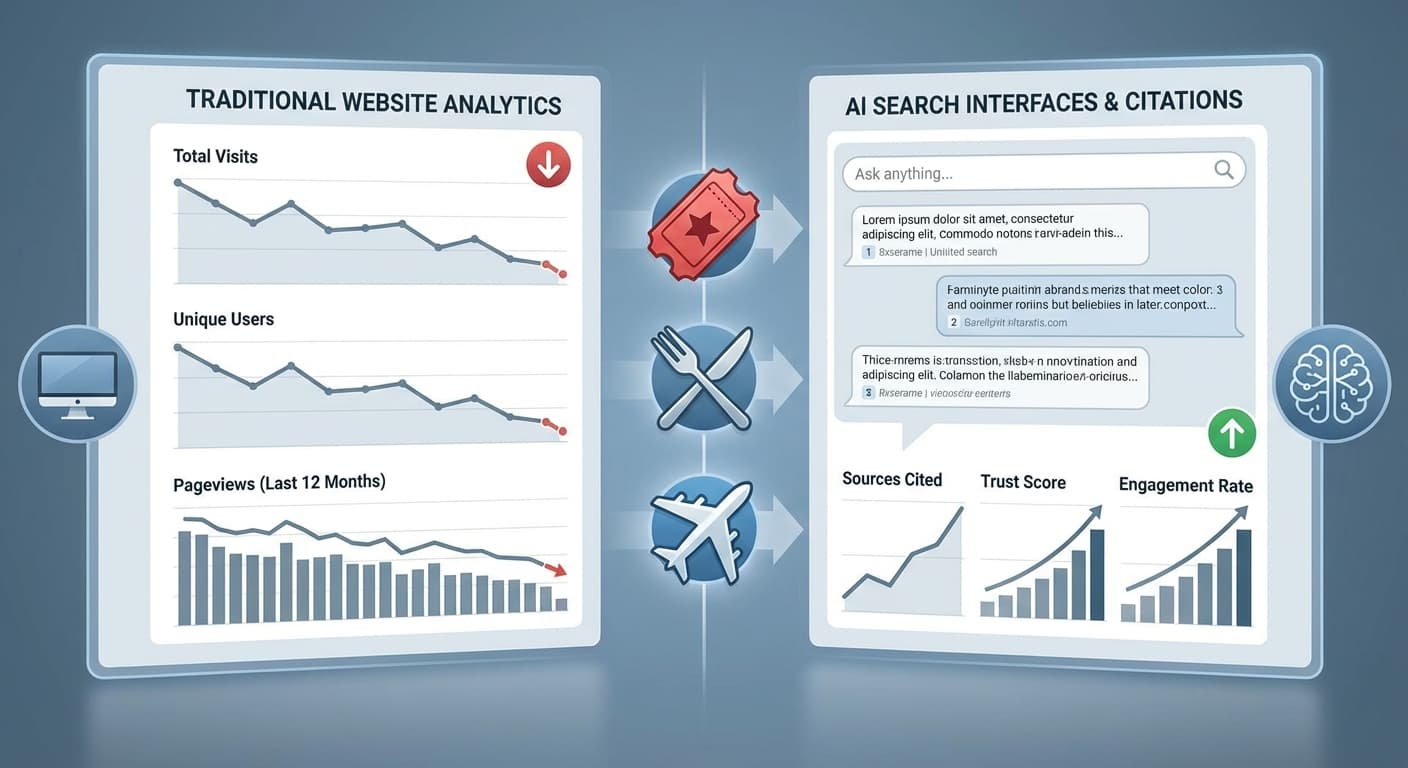
Here's a sobering reality: 73% of businesses report that AI citations are now driving significant brand awareness in 2025, yet only 18% can effectively track how these citations translate into actual revenue. If you're struggling to connect the dots between your ChatGPT mentions and your bottom line, you're not alone—and you're missing out on understanding one of your most valuable traffic sources.
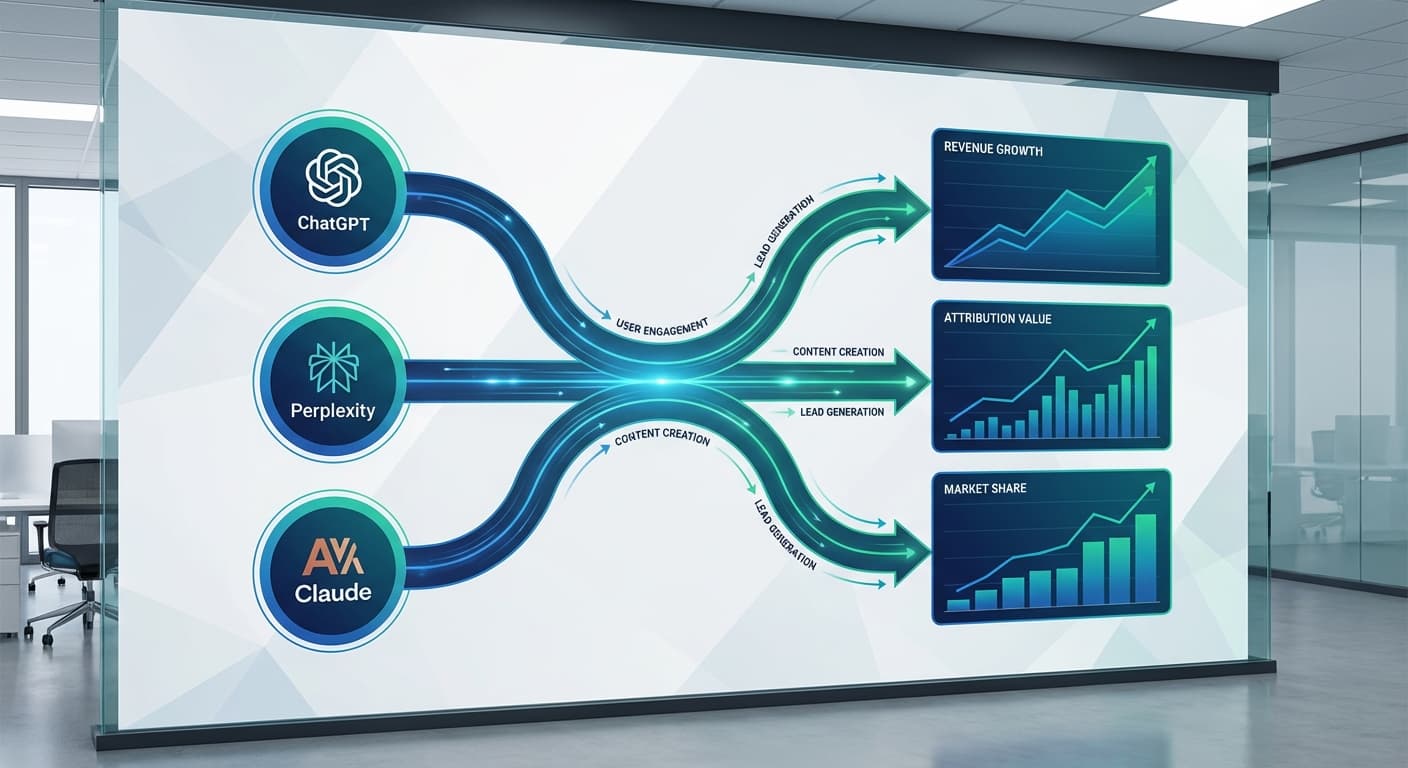
The rise of AI search engines has fundamentally changed how customers discover brands. When Perplexity cites your startup in response to "best project management tools," or Claude references your blog post about remote work trends, that citation creates a ripple effect of brand awareness that traditional analytics simply can't capture.
The Attribution Gap: Why Traditional Tracking Falls Short
Traditional web analytics were built for a direct-click world. User sees ad → clicks → converts. But AI citations work differently:
A recent study by AI Marketing Institute found that the average customer journey involving AI citations spans 3.2 touchpoints over 8.4 days before conversion—making traditional last-click attribution nearly useless.
Building Your AI Citation Attribution Framework
Step 1: Establish Your Baseline Metrics
Before you can measure AI citation impact, you need to understand your current attribution landscape:
Direct Traffic Analysis
Survey Your Customers
Implement post-purchase surveys asking:
Step 2: Create AI-Specific Tracking Infrastructure
Brand Mention Monitoring
Set up comprehensive tracking for when and where your brand appears in AI responses:
Landing Page Strategy
Create AI-specific landing pages:
Step 3: Implement Advanced Attribution Modeling
Multi-Touch Attribution
Move beyond last-click to understand the full customer journey:
Time-Decay Models
Give more credit to recent interactions while acknowledging AI citation influence:
Cohort Analysis
Track user behavior patterns:
Practical Implementation: The TRACER Method
T - Track AI Citations
Monitor your brand mentions across all major AI platforms. While manual checking was feasible in 2024, the volume of AI citations in 2025 demands automated monitoring.
R - Recognize Patterns
Identify correlation patterns:
A - Attribute Incrementally
Use incremental attribution testing:
C - Create Proxy Metrics
Develop intermediate metrics that bridge the gap:
E - Evolve Your Model
Continuously refine based on new data:
R - Report Holistically
Create executive dashboards that show:
Overcoming Common Attribution Challenges
Challenge: Long Attribution Windows
Solution: Use statistical modeling to identify AI citation influence even in extended purchase cycles.
Challenge: Multi-Platform Citations
Solution: Weight citations based on platform authority and user intent (Perplexity users often have higher commercial intent than ChatGPT users).
Challenge: Proving Incremental Impact
Solution: Run controlled tests by temporarily reducing content optimization for specific topics and measuring impact.
Setting Up Your Revenue Attribution Dashboard
Your AI citation attribution dashboard should include:
Top-Line Metrics
Funnel Metrics
Content Performance
How Citescope Ai Helps
Building an effective AI citation attribution model starts with understanding which of your content pieces are actually getting cited by AI engines. Citescope Ai's Citation Tracker monitors mentions across ChatGPT, Perplexity, Claude, and Gemini, giving you the foundational data needed for attribution modeling.
The platform's GEO Score also helps you identify which content optimizations are most likely to increase citation frequency, allowing you to build more predictable attribution models. When you can anticipate which content will get cited, you can better prepare your attribution infrastructure to capture that value.
Ready to Optimize for AI Search?
Building a robust AI citation attribution model is complex, but it's essential for understanding the true value of your content marketing efforts in 2025. Start by implementing basic citation tracking and correlation analysis, then gradually build more sophisticated attribution modeling.
Citescope Ai makes this process easier by providing the citation data and optimization tools you need to build effective attribution models. Try our free tier to start tracking your AI citations and see which content drives the most valuable mentions. Start your free trial today and take the first step toward understanding your AI citation ROI.