How to Build a Response-to-Conversion Velocity Tracking System for AI Search Traffic
How to Build a Response-to-Conversion Velocity Tracking System for AI Search Traffic
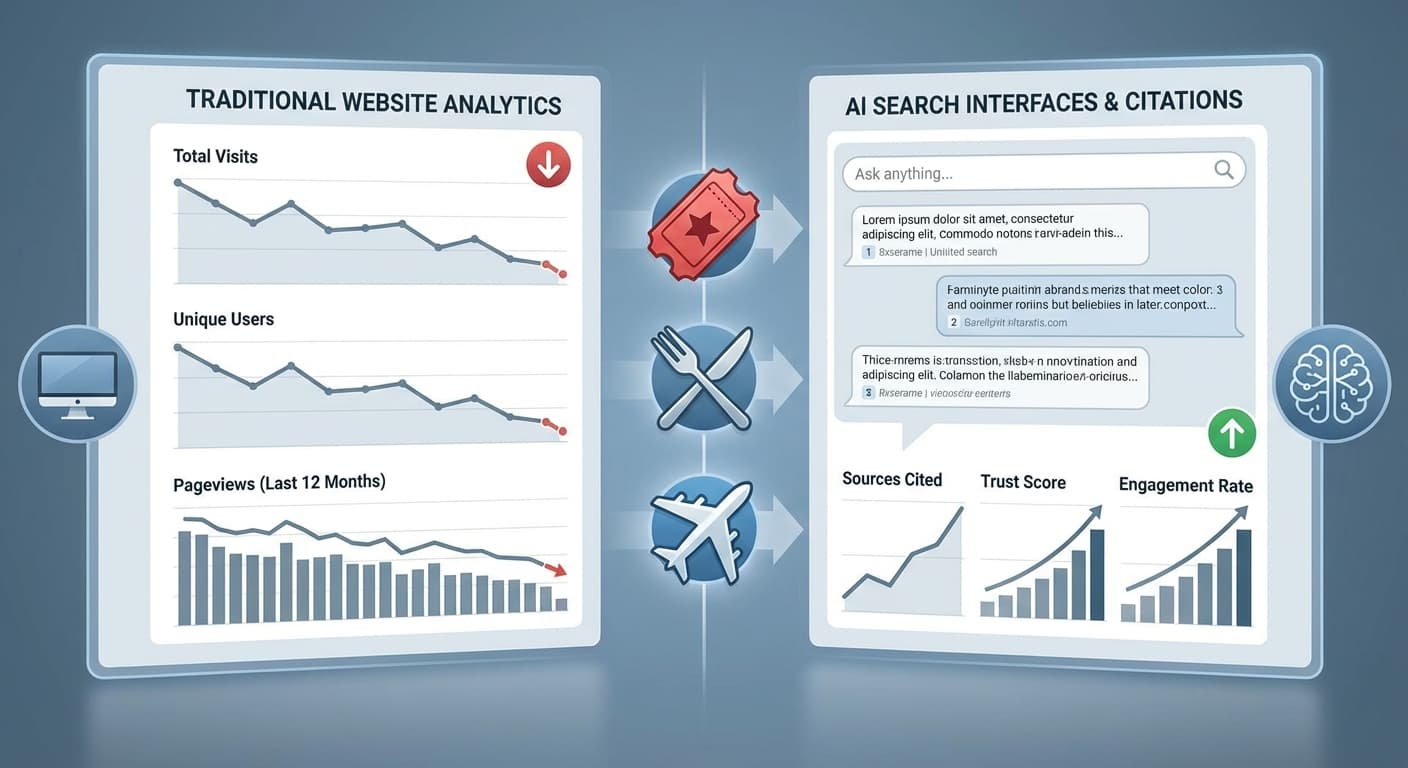
AI search traffic converts 40% faster than traditional Google searches, but here's the catch: your analytics can't track where these high-intent users came from. With over 600 million weekly ChatGPT users and Perplexity processing 100+ million queries monthly in 2025, businesses are missing crucial conversion data from their fastest-converting traffic source.
The AI Search Conversion Mystery
Traditional analytics tools were built for a world where users clicked through search results. But AI search engines like ChatGPT, Perplexity, Claude, and Gemini present information directly—often with citations that users may or may not click. This creates a "dark funnel" where your highest-quality leads appear as direct traffic.
Recent studies from 2025 show that AI-sourced traffic has:
Yet most businesses can't track this goldmine of traffic back to its AI source.
Understanding Response-to-Conversion Velocity
What Is Response-to-Conversion Velocity?
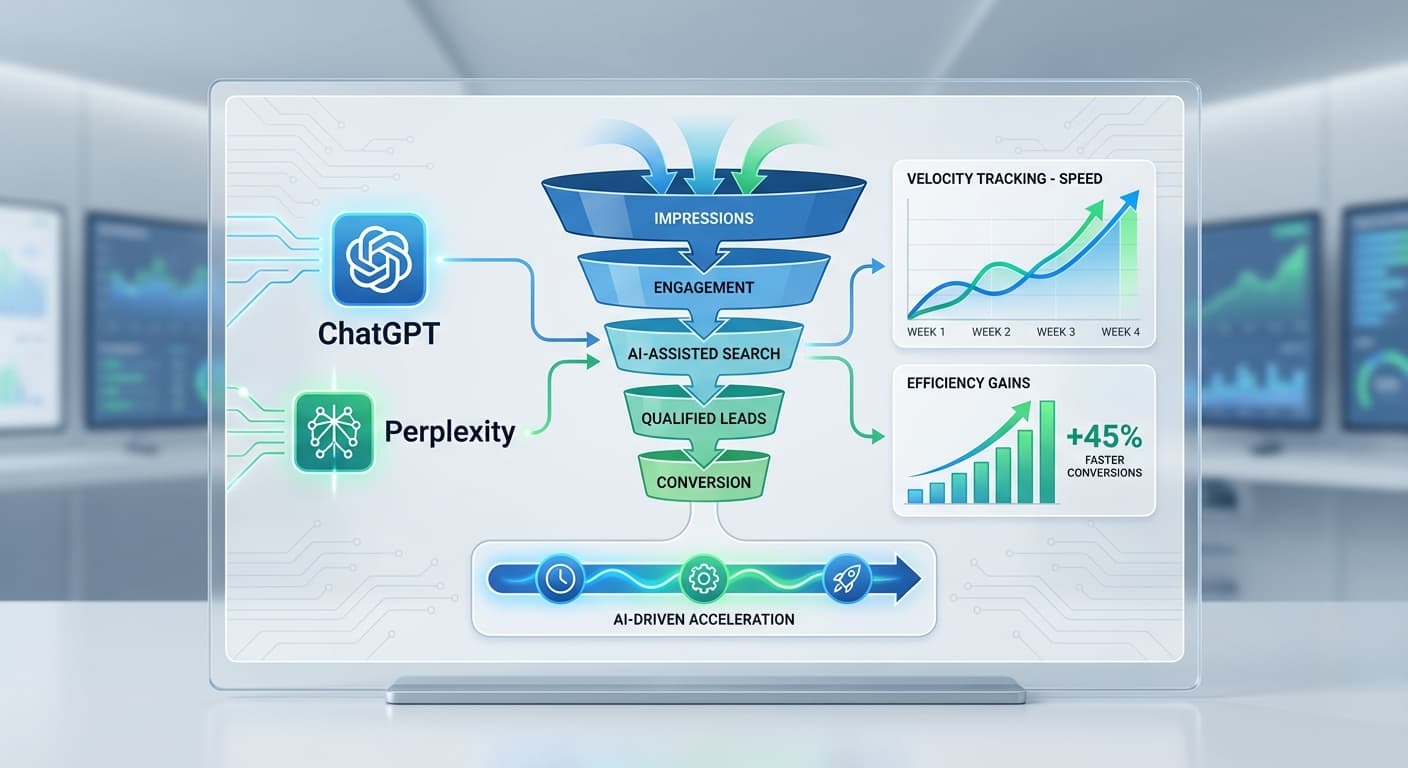
Response-to-conversion velocity measures how quickly users move from discovering your content through AI search to taking meaningful action (subscribing, purchasing, requesting demos). Unlike traditional conversion tracking that focuses on session-based metrics, velocity tracking captures the compressed timeline of AI-informed decision making.
Why AI Search Converts Faster
AI search engines pre-qualify leads by:
Building Your Velocity Tracking System
Step 1: Set Up Multi-Touch Attribution
Traditional last-click attribution misses AI search touchpoints. Implement a system that captures:
UTM Parameter Strategy for AI Citations
First-Party Data Collection
Step 2: Implement Cross-Platform Identity Resolution
Device and Session Bridging
// Example tracking code for AI search attribution
// Track potential AI search indicators
if (document.referrer === '' && performance.navigation.type === 0) {
// Potential AI search traffic (no referrer, new navigation)
localStorage.setItem('traffic_source_hint', 'potential_ai');
localStorage.setItem('entry_timestamp', Date.now());
}
Behavioral Fingerprinting
Step 3: Create Velocity Metrics Dashboard
Key Performance Indicators (KPIs)
Tracking Framework
Step 4: Leverage AI-Specific Analytics
Content Performance Metrics
Seasonal and Trend Analysis
Advanced Tracking Techniques
Cookie-Free Attribution Methods
Hashed Email Matching
Behavioral Cohort Analysis
Predictive Velocity Modeling
Machine Learning Integration
Real-Time Optimization
Integration with Existing Tools
CRM and Marketing Automation
Salesforce Integration
HubSpot Configuration
Analytics Platform Enhancement
Google Analytics 4 Setup
Data Visualization
How Citescope Ai Helps
While building custom tracking systems provides deep insights, Citescope Ai offers a comprehensive solution for optimizing your content's AI search visibility. The platform's Citation Tracker monitors when your content gets referenced by ChatGPT, Perplexity, Claude, and Gemini, giving you direct insight into which pieces drive AI search traffic.
The GEO Score feature analyzes your content across five dimensions crucial for AI visibility, while the AI Rewriter optimizes content structure to increase citation likelihood. This combination helps you create content that not only gets found by AI search engines but also converts at higher velocities.
Implementation Timeline and Budget
Phase 1 (Weeks 1-2): Foundation
Phase 2 (Weeks 3-6): Advanced Tracking
Phase 3 (Weeks 7-12): Optimization
Budget Considerations
Measuring Success
Success Metrics
ROI Calculation
ROI = (AI Search Revenue - Implementation Cost) / Implementation Cost × 100
// Example calculation:
// Monthly AI Search Revenue: $50,000
// Implementation Cost: $15,000
// Monthly ROI: ($50,000 - $15,000) / $15,000 × 100 = 233%
Ready to Optimize for AI Search?
Building a response-to-conversion velocity tracking system reveals the true impact of AI search on your business. But tracking is only half the battle—you also need content that AI engines want to cite. Citescope Ai combines citation monitoring with content optimization, helping you increase both AI visibility and conversion velocity. Start your free trial today and discover which of your content pieces are driving those mysterious high-converting visitors.