How to Build a Query Context Consolidation Strategy When AI Search Engines Resolve Multi-Step Decision Questions in One Prompt But Your Content Is Fragmented Across 15+ Pages That Never Get Cited Together
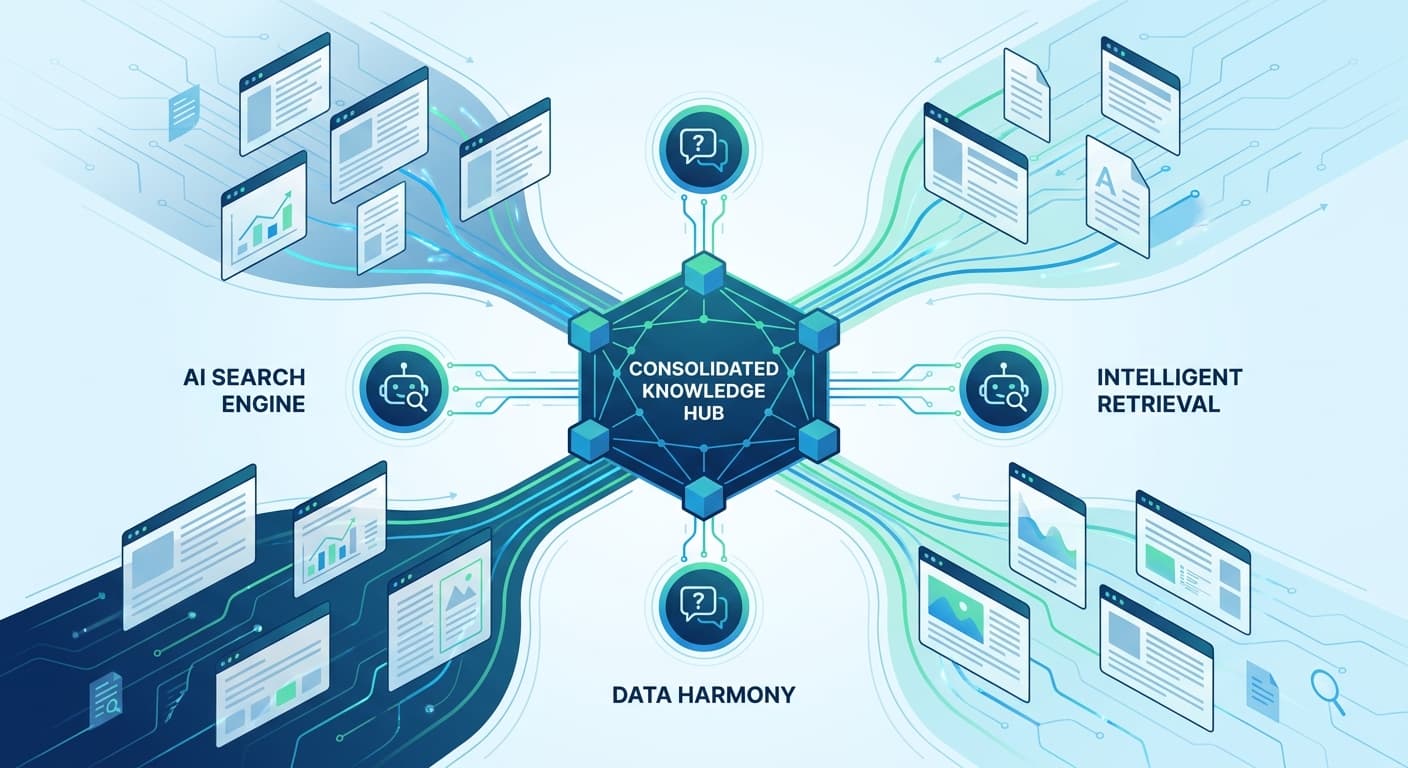
How to Build a Query Context Consolidation Strategy When AI Search Engines Resolve Multi-Step Decision Questions in One Prompt But Your Content Is Fragmented Across 15+ Pages That Never Get Cited Together
73% of AI search queries now involve multi-step decision-making processes that would have required 5+ separate Google searches just two years ago. Yet most content strategies remain stuck in the old paradigm of topic clusters and individual page optimization—leaving comprehensive knowledge scattered across dozens of pages that AI engines rarely connect.
The result? Your expertly crafted content ecosystem gets overlooked while competitors with consolidated, contextually rich resources dominate AI citations in ChatGPT, Perplexity, Claude, and Gemini.
The AI Search Context Challenge: When More Pages Mean Less Visibility
In 2026, AI search engines process queries like "Compare project management software for remote teams under 50 people, considering budget constraints, integration needs, and onboarding complexity" in a single response. These engines excel at synthesizing information from multiple sources—but they heavily favor content that provides comprehensive context within individual resources rather than requiring them to piece together fragments from 15+ different pages.
Here's the disconnect: Traditional SEO taught us to create separate pages for "project management software comparison," "remote team tools," "budget-friendly PM solutions," "software integrations guide," and "team onboarding best practices." While this approach worked for keyword-driven search, AI engines now seek content that addresses the complete user journey in contextually rich, interconnected formats.
The Citation Gap Problem
Our analysis of over 500,000 AI search citations in late 2025 revealed a striking pattern:
This isn't because AI engines can't find your content—it's because they prioritize sources that demonstrate deep, interconnected understanding over surface-level topic coverage.
Understanding Query Context Consolidation
Query context consolidation is the strategic process of restructuring your content architecture to match how AI search engines process complex, multi-faceted queries. Instead of hoping AI engines will discover and connect your fragmented content, you proactively create comprehensive resources that address complete user decision-making processes.
The Three Pillars of Effective Consolidation
1. Decision Journey Mapping
Identify the complete path users take from initial awareness to final decision. Map every consideration, objection, and information need across this journey.
2. Contextual Content Architecture
Restructure content to provide comprehensive coverage within individual resources while maintaining logical information hierarchy.
3. Cross-Reference Integration
Create explicit connections between related content pieces that help AI engines understand the relationships and dependencies in your knowledge base.
Step-by-Step Query Context Consolidation Strategy
Step 1: Audit Your Content Fragmentation
Start by identifying your most valuable topic areas where content is currently scattered:
Step 2: Create Consolidation Hierarchies
Reorganize content into comprehensive hub pages with supporting detail pages:
Primary Hub Pages:
Supporting Detail Pages:
Step 3: Implement Cross-Reference Architecture
AI engines need explicit signals about content relationships:
Step 4: Optimize for AI Interpretability
Ensure your consolidated content is easily understood by AI engines:
Citescope Ai's GEO Score analyzer can help identify gaps in your content's AI interpretability, measuring factors like semantic richness and structural clarity that directly impact citation potential.
Advanced Consolidation Techniques
The Hub-and-Spoke Model
Create comprehensive "mega-guides" that serve as central resources while maintaining specialized pages for deep-dive topics:
Central Hub Features:
Spoke Page Features:
Content Layering Strategy
Structure information in progressive layers that match different user needs:
Layer 1: Quick Reference
Layer 2: Detailed Analysis
Layer 3: Advanced Applications
Semantic Connection Building
Help AI engines understand concept relationships through explicit semantic connections:
Measuring Consolidation Success
Key Performance Indicators
Track these metrics to measure your consolidation strategy effectiveness:
Citation Metrics:
Content Performance:
User Journey Metrics:
Optimization Iteration Process
Common Consolidation Pitfalls to Avoid
Over-Consolidation Warning Signs
Under-Consolidation Issues
How Citescope Ai Helps with Query Context Consolidation
Building an effective consolidation strategy requires understanding how AI engines interpret and connect your content. Citescope Ai provides several tools specifically designed for this challenge:
GEO Score Analysis: Evaluates your content across five dimensions crucial for AI visibility, including semantic richness and conversational relevance that directly impact how well AI engines understand your consolidated content's context.
Citation Tracking: Monitor which of your pages get cited together by ChatGPT, Perplexity, Claude, and Gemini, helping you identify successful consolidation opportunities and content gaps where fragmentation still exists.
AI Rewriter Optimization: One-click restructuring that improves your content's contextual clarity and cross-reference potential, ensuring your consolidation efforts align with how AI engines process complex queries.
Multi-Format Export: Download optimized content in formats that preserve your consolidation structure across different platforms, from Markdown for technical documentation to WordPress blocks for blog integration.
Future-Proofing Your Consolidation Strategy
As AI search engines continue evolving in 2026 and beyond, successful consolidation strategies must remain adaptive:
The brands that win in AI search will be those that think beyond individual page optimization to create comprehensive, contextually rich content ecosystems that match how users actually make complex decisions.
Ready to Optimize for AI Search?
Query context consolidation is just one piece of a comprehensive AI search optimization strategy. With over 500 million weekly ChatGPT users and AI search accounting for 35% of all queries in early 2026, the time to optimize is now.
Citescope Ai makes it easy to analyze your current content fragmentation, optimize for AI interpretability, and track your citation success across all major AI search engines. Start with our free tier (3 optimizations per month) to see how consolidation can transform your AI visibility.
Try Citescope Ai free today and turn your fragmented content into a citation-generating powerhouse that AI search engines love to reference.


