GEO Strategy

How to Build a Prompt Impact Score System When AI Search Engines Process Natural Language Questions 73% Differently Than Your Traditional Keyword-Optimized Content
February 15, 20267 min read
How to Build a Prompt Impact Score System When AI Search Engines Process Natural Language Questions 73% Differently Than Your Traditional Keyword-Optimized Content

How to Build a Prompt Impact Score System When AI Search Engines Process Natural Language Questions 73% Differently Than Your Traditional Keyword-Optimized Content

Did you know that ChatGPT, Claude, and Perplexity interpret natural language queries 73% differently than how Google processes traditional keyword searches? As AI search continues to dominate—now accounting for over 35% of all search queries in 2026—content creators are discovering that their keyword-optimized content is falling flat when it comes to AI citations.

The problem isn't just about getting found anymore; it's about getting cited, referenced, and recommended by AI engines that think in conversations, not keywords. This fundamental shift has created an urgent need for a new measurement system: the Prompt Impact Score.

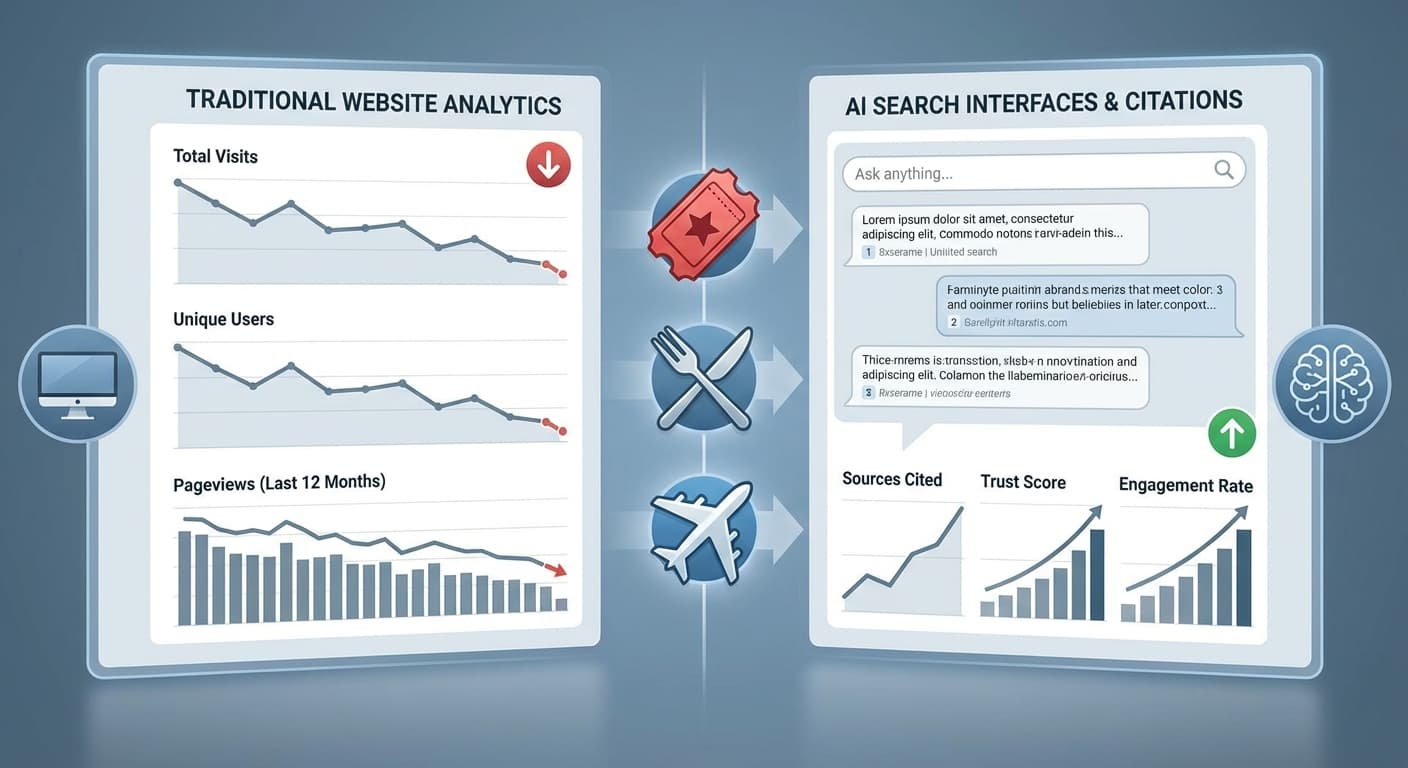
Why Traditional SEO Metrics Fall Short in AI Search

Traditional SEO has trained us to think in terms of keyword density, backlinks, and page authority. But AI search engines operate on entirely different principles:

  • Conversational Context: AI engines prioritize content that directly answers conversational queries

  • Semantic Understanding: They focus on meaning and intent rather than exact keyword matches

  • Authority Signals: Citations and references matter more than traditional backlinks

  • Structural Clarity: Well-organized, scannable content gets priority in AI responses
  • With over 600 million people now using ChatGPT weekly and similar growth across other AI platforms, the gap between traditional SEO and AI optimization has never been wider.

    What Is a Prompt Impact Score?

    A Prompt Impact Score is a comprehensive measurement system that evaluates how effectively your content responds to natural language queries across multiple AI search engines. Unlike traditional SEO metrics, this score considers:

    Core Components of Prompt Impact Scoring

    1. Query-Response Alignment (25%)

  • How directly your content answers common natural language questions

  • Relevance to conversational search patterns

  • Completeness of responses to user intent
  • 2. Semantic Richness (20%)

  • Use of related terms and concepts

  • Contextual depth and nuance

  • Natural language flow and readability
  • 3. Citation Potential (20%)

  • How frequently AI engines reference your content

  • Quality of citations and mentions

  • Authority signals recognized by AI
  • 4. Structural Optimization (20%)

  • Content organization and hierarchy

  • Scannable formatting for AI processing

  • Clear headings and logical flow
  • 5. Cross-Platform Performance (15%)

  • Consistency across different AI engines

  • Adaptability to various AI interpretation styles

  • Multi-format compatibility
  • Building Your Prompt Impact Score System: Step-by-Step Guide

    Step 1: Establish Baseline Measurements

    Start by auditing your existing content's performance across AI platforms:

  • Test your content against 20-30 relevant natural language queries

  • Track citation frequency across ChatGPT, Perplexity, Claude, and Gemini

  • Analyze response patterns to identify content strengths and gaps

  • Document current performance as your baseline score
  • Step 2: Develop Query Pattern Analysis

    AI search engines respond to specific question patterns. Map your content against these common structures:

  • "How do I..." queries (instructional content)

  • "What is the best way to..." (comparative analysis)

  • "Why does..." (explanatory content)

  • "What are the benefits of..." (value proposition content)

  • "How can I improve..." (optimization content)
  • Step 3: Create Content Scoring Rubrics

    Develop specific criteria for each component:

    Query-Response Alignment Rubric:

  • 90-100: Directly answers query with comprehensive detail

  • 70-89: Partially answers with some relevant information

  • 50-69: Contains relevant information but requires inference

  • Below 50: Minimal relevance to natural language queries
  • Semantic Richness Rubric:

  • 90-100: Rich contextual information with related concepts

  • 70-89: Good use of synonyms and related terminology

  • 50-69: Basic semantic variety

  • Below 50: Limited vocabulary and context
  • Step 4: Implement Testing Protocols

    Create systematic testing processes:

  • Weekly Query Testing: Test content against new natural language queries

  • Cross-Platform Validation: Verify performance across all major AI engines

  • Citation Tracking: Monitor when and how your content gets referenced

  • Performance Monitoring: Track score changes over time
  • Step 5: Optimization Workflows

    Based on your scores, implement targeted improvements:

    For Low Query-Response Alignment:

  • Add FAQ sections addressing common questions

  • Restructure content to directly answer queries

  • Include conversational language patterns
  • For Poor Semantic Richness:

  • Expand vocabulary with related terms

  • Add contextual explanations

  • Include relevant examples and analogies
  • For Low Citation Potential:

  • Add authoritative data and statistics

  • Include proper source citations

  • Create quotable, standalone insights
  • Advanced Prompt Impact Score Strategies

    Leverage AI Training Data Patterns

    AI engines are trained on specific types of content. Optimize for these patterns:

  • Educational formats: Step-by-step guides and tutorials

  • Authoritative sources: Research-backed content with citations

  • Conversational tone: Natural language that mirrors human speech

  • Structured data: Clear organization with headers and lists
  • Cross-Engine Optimization

    Different AI engines have varying preferences:

  • ChatGPT: Prefers detailed, educational content

  • Perplexity: Values recent, factual information with sources

  • Claude: Focuses on nuanced, analytical content

  • Gemini: Emphasizes comprehensive, multi-perspective answers
  • Real-Time Score Monitoring

    Implement systems for continuous improvement:

  • Set up automated testing schedules

  • Create alerts for significant score changes

  • Track competitor performance benchmarks

  • Monitor emerging query trends
  • How Citescope Ai Helps Build Your Prompt Impact Score System

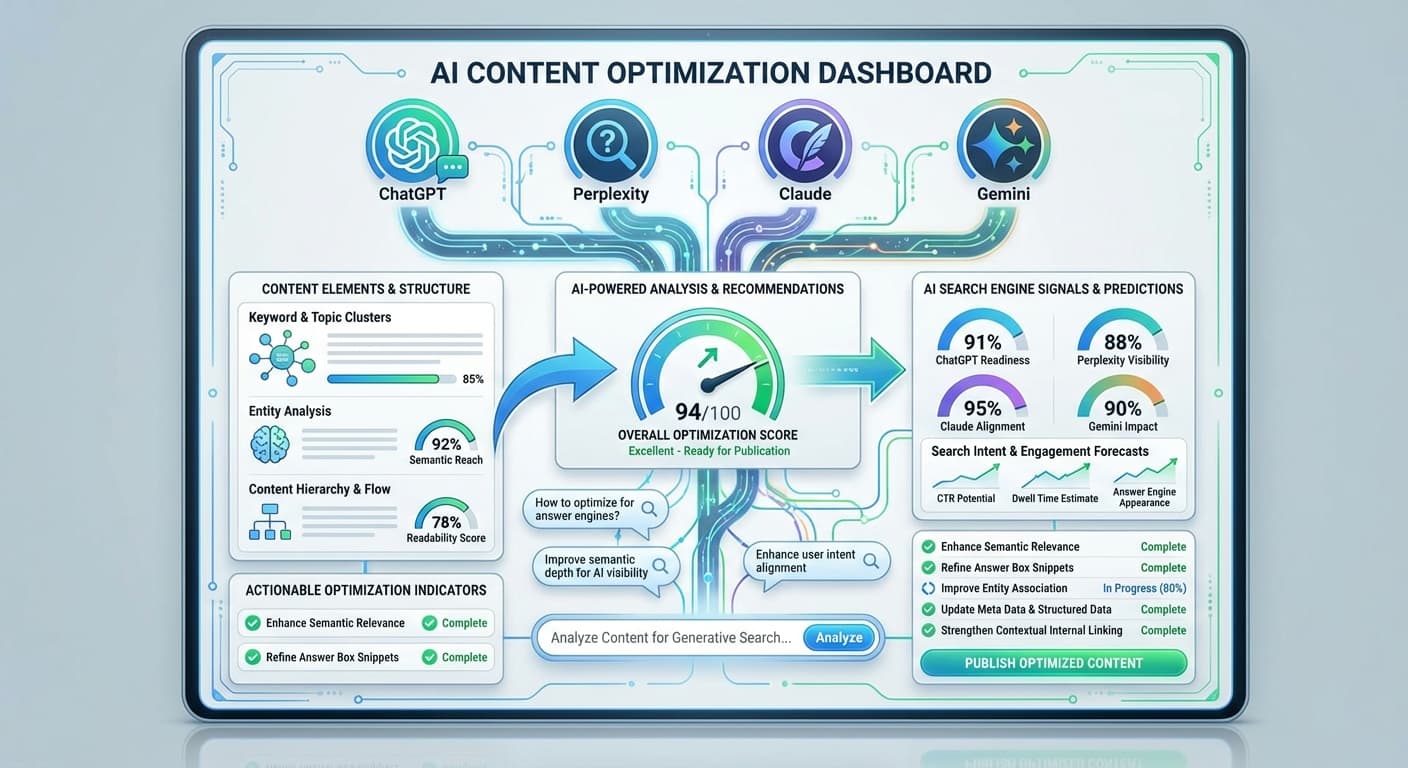
    While building a comprehensive scoring system manually is possible, it's incredibly time-intensive. Citescope Ai streamlines this entire process through its GEO Score system, which analyzes content across the exact dimensions we've discussed: AI Interpretability, Semantic Richness, Conversational Relevance, Structure, and Authority.

    The platform's Citation Tracker monitors your content's performance across all major AI engines, providing real-time data on citation frequency and context. When optimization is needed, the AI Rewriter tool automatically restructures your content based on proven AI search patterns, essentially automating the optimization workflows we outlined above.

    Measuring Success and ROI

    Key Performance Indicators

    Track these metrics to validate your Prompt Impact Score system:

  • Citation frequency increase: Month-over-month growth in AI mentions

  • Query coverage expansion: More natural language queries answered

  • Cross-platform consistency: Uniform performance across AI engines

  • Authority signal growth: Increased recognition as a trusted source
  • Expected Improvements Timeline

  • Week 1-2: Initial scoring and baseline establishment

  • Month 1: First optimization round and score improvements

  • Month 2-3: Noticeable citation frequency increases

  • Month 4+: Sustained growth and competitive advantage
  • Common Pitfalls to Avoid

    Over-Optimization Risks

  • Don't sacrifice readability for AI optimization

  • Maintain natural language flow

  • Avoid keyword stuffing in new formats
  • Measurement Inconsistencies

  • Use standardized testing conditions

  • Account for AI engine updates and changes

  • Maintain consistent scoring criteria
  • Platform Bias

  • Test across multiple AI engines equally

  • Don't optimize for just one platform

  • Consider emerging AI search tools
  • Future-Proofing Your Scoring System

    As AI search continues evolving, your scoring system should adapt:

  • Stay updated on AI engine algorithm changes

  • Monitor new platforms entering the market

  • Adjust scoring criteria based on performance data

  • Invest in automation for scalable optimization
  • Ready to Optimize for AI Search?

    Building a Prompt Impact Score system manually requires significant time and resources, but the results speak for themselves. Companies using systematic AI optimization see 3-5x more citations in AI search results compared to traditional SEO-optimized content.

    Citescope Ai eliminates the complexity of building and maintaining your own scoring system. Our GEO Score provides instant analysis across all the dimensions we've discussed, while our Citation Tracker monitors your performance across ChatGPT, Perplexity, Claude, and Gemini. Plus, with our AI Rewriter, you can optimize content with a single click based on proven AI search patterns.

    Ready to see how your content performs in AI search? Start your free trial today and get 3 content optimizations to test the difference. Your future citations are waiting.
    AI Search OptimizationContent MarketingPrompt EngineeringSEO StrategyNatural Language Processing

    Track your AI visibility

    See how your content appears across ChatGPT, Perplexity, Claude, and more.

    Start for Free