GEO Strategy

How to Build a Programmatic AI Citation Content Strategy When Manual Content Creation Can't Scale to Cover 10,000+ Long-Tail Query Variations
April 22, 20268 min read
How to Build a Programmatic AI Citation Content Strategy When Manual Content Creation Can't Scale to Cover 10,000+ Long-Tail Query Variations

How to Build a Programmatic AI Citation Content Strategy When Manual Content Creation Can't Scale to Cover 10,000+ Long-Tail Query Variations

With AI search engines now handling over 35% of all search queries in 2026 and ChatGPT processing 700+ million queries weekly, content creators face an unprecedented challenge: AI engines are answering increasingly specific, long-tail questions that traditional SEO never had to address. While Google might show 10 blue links for "best project management software," ChatGPT and Perplexity are fielding hyper-specific queries like "project management software for remote creative agencies with under 20 employees that integrates with Figma and has time tracking."

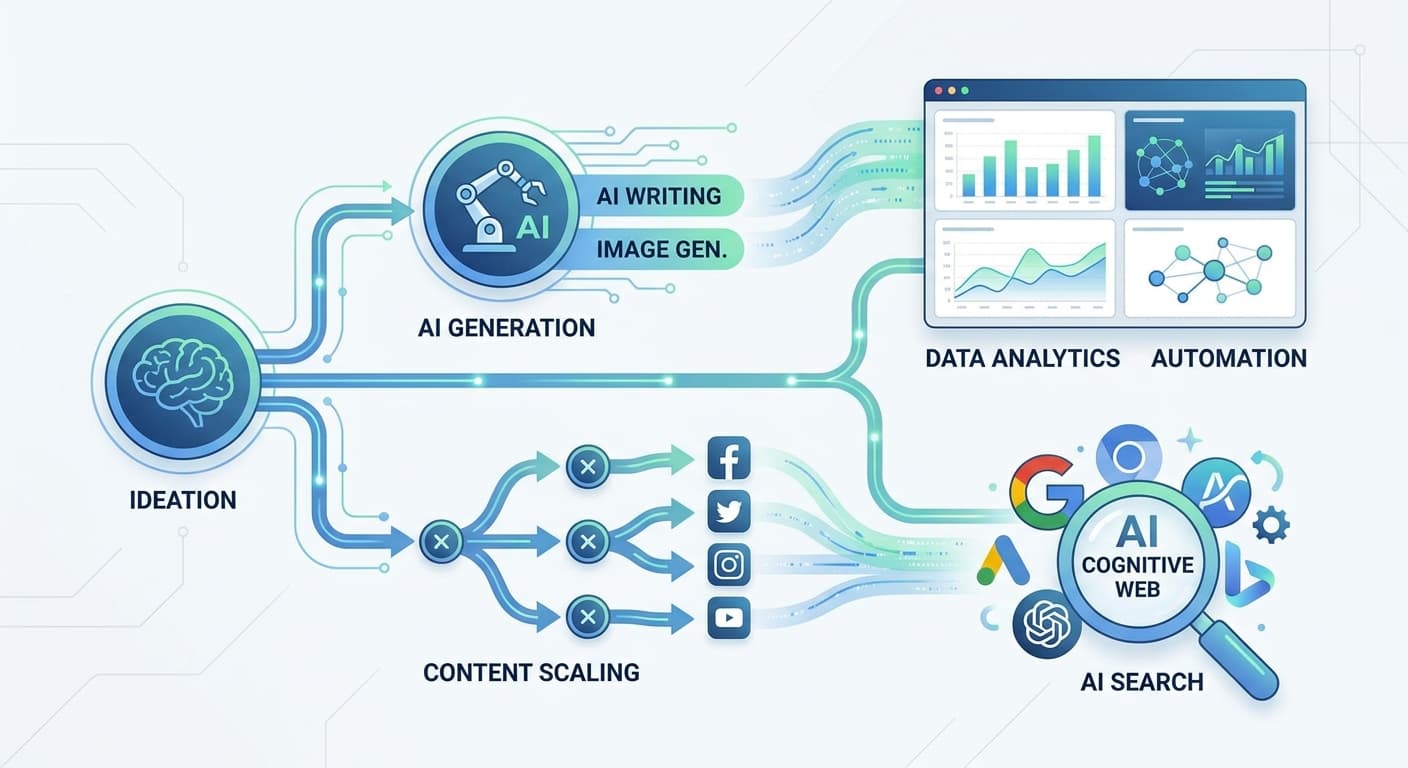
The problem? Manual content creation simply cannot scale to cover the tens of thousands of query variations that AI search engines now confidently answer. Smart content creators are turning to programmatic strategies that can generate, optimize, and scale AI-friendly content at unprecedented speeds.

The Scale Problem: Why Manual Content Creation is Falling Behind

Traditional content marketing focused on capturing a few hundred high-volume keywords. In 2026, AI search engines are surfacing and answering queries that would have been considered too niche to target just two years ago. Research from leading AI search platforms shows:

  • Query complexity has increased 4x: Modern AI queries average 15-20 words compared to 3-4 words in traditional search

  • Long-tail dominance: 78% of AI search queries are unique, appearing less than once per month

  • Semantic expansion: Each topic now generates 50-100+ viable query variations that AI engines confidently answer

  • Real-time answering: AI engines provide instant, comprehensive answers rather than directing users to browse multiple sources
  • This shift means that a single "best CRM software" article can no longer capture the hundreds of specific variations like "CRM for real estate teams with email automation and lead scoring" or "affordable CRM that integrates with WordPress and has mobile app access."

    Understanding Programmatic Content for AI Citations

    Programmatic content creation for AI citations isn't about churning out low-quality, templated articles. Instead, it's about systematically creating high-value, semantically rich content that addresses specific query variations while maintaining the depth and authority that AI engines prioritize for citations.

    Key Components of Programmatic AI Citation Content:

  • Semantic query mapping: Identifying the full spectrum of related queries AI engines answer

  • Structured content templates: Creating frameworks that maintain quality while allowing variation

  • Data-driven insights: Incorporating real data, statistics, and examples that AI engines value

  • Authority signals: Building topical expertise across query variations

  • Technical optimization: Ensuring content meets AI engine interpretability requirements
  • Step-by-Step Programmatic Strategy Framework

    Phase 1: Query Intelligence and Mapping

    Start by understanding the true scope of queries in your domain. Traditional keyword research tools miss 60-70% of the queries AI engines now answer.

    Action Steps:

  • Map semantic clusters: Use AI engines themselves to understand how they break down topics

  • Analyze competitor citations: See what specific queries are generating citations for competitors

  • Identify intent variations: Catalog different user intents within your topic area

  • Document query patterns: Notice recurring structures in how users ask AI engines questions
  • Example Query Expansion:
    Core topic: "Email marketing automation"
    AI-surfaced variations:

  • "Email automation for e-commerce stores with abandoned cart recovery"

  • "Marketing automation that works with Shopify and segments by purchase behavior"

  • "Automated email sequences for SaaS free trial users"

  • "Email marketing tools with A/B testing and behavioral triggers"
  • Phase 2: Content Architecture Design

    Create scalable content frameworks that maintain quality while addressing query variations systematically.

    Template Structure for AI Citations:

    #### The STAR Framework:

  • Situation: Specific context or use case

  • Task: What the user is trying to accomplish

  • Action: Detailed steps or recommendations

  • Result: Expected outcomes with supporting data
  • Content Module System:

  • Core information blocks: Reusable sections covering fundamental concepts

  • Variable sections: Customizable content based on query specifics

  • Data integration points: Places to insert relevant statistics and examples

  • Authority elements: Expert quotes, case studies, and proof points
  • Phase 3: Systematic Content Generation

    Scale content creation while maintaining the semantic richness and authority that AI engines prioritize for citations.

    Content Generation Process:

  • Start with query clusters: Group related variations that can be addressed comprehensively

  • Apply template frameworks: Use your STAR structure with appropriate variable sections

  • Integrate unique data: Add specific statistics, examples, and insights for each variation

  • Layer authority signals: Include relevant expert perspectives and proof points

  • Optimize for AI interpretability: Structure content with clear headings, lists, and semantic markers
  • Quality Control Checkpoints:

  • Does each piece provide unique value beyond similar content?

  • Are specific claims supported with current data and examples?

  • Would an expert in the field find this genuinely useful?

  • Is the content structured for easy AI interpretation and extraction?
  • Phase 4: Technical Optimization for AI Engines

    Ensure your programmatic content meets the technical requirements that AI engines use for citation decisions.

    Critical Technical Elements:

  • Semantic markup: Use structured data and clear content hierarchy

  • Answer-ready formats: Structure content to directly answer specific questions

  • Authority indicators: Include author credentials, publication dates, and source citations

  • Cross-referencing: Link related content pieces to demonstrate topical authority

  • Performance metrics: Track loading speed and technical accessibility
  • Citescope Ai's GEO Score analyzes these technical elements across five dimensions, helping you understand exactly how AI engines evaluate your content for citation worthiness.

    Phase 5: Measurement and Iteration

    Programmatic strategies require systematic measurement to optimize performance and identify successful patterns.

    Key Metrics to Track:

  • Citation frequency: How often your content gets cited across different AI engines

  • Query coverage: Percentage of target query variations generating citations

  • Authority building: Growth in citations within your topic domain

  • Semantic performance: Which content structures generate the most citations
  • Advanced Programmatic Techniques

    Dynamic Content Personalization

    Create content that adapts based on query context while maintaining core authority and accuracy.

    Implementation strategies:

  • Conditional content blocks: Show different sections based on query characteristics

  • Variable data integration: Pull in relevant statistics based on query specifics

  • Context-aware examples: Use examples that match the query's industry or use case
  • Multi-Format Content Generation

    AI engines cite different content formats for different query types. Scale across formats systematically:

  • Comparison frameworks: For "vs" and "best" queries

  • Step-by-step guides: For "how-to" and process queries

  • Definition and explanation formats: For conceptual queries

  • Data-driven reports: For research and statistics queries
  • Semantic Content Networks

    Build interconnected content ecosystems that demonstrate comprehensive topical authority.

    Network strategies:

  • Hub and spoke models: Core pillar content with detailed subtopic coverage

  • Cross-referencing systems: Systematic linking between related query variations

  • Authority layering: Multiple content pieces that reinforce expertise claims
  • How Citescope Ai Accelerates Programmatic Content Strategy

    Scaling programmatic content for AI citations requires sophisticated optimization and tracking capabilities that manual processes cannot provide efficiently.

    Citescope Ai streamlines programmatic strategies through:

  • GEO Score Analysis: Instantly evaluate how well your programmatic content meets AI engine requirements across semantic richness, structure, and authority dimensions

  • AI Rewriter Optimization: One-click optimization of programmatic content templates to maximize citation potential

  • Citation Tracking at Scale: Monitor citation performance across thousands of content pieces and query variations

  • Multi-format Export: Generate content in multiple formats (Markdown, HTML, WordPress) for different distribution channels

  • Performance Pattern Recognition: Identify which programmatic approaches generate the most citations
  • The platform's systematic approach allows content teams to optimize entire content libraries rather than individual pieces, making programmatic strategies both feasible and measurable.

    Common Programmatic Content Pitfalls to Avoid

    Quality Degradation


    Problem: Sacrificing content quality for quantity
    Solution: Maintain rigorous quality standards with systematic review processes

    Template Over-Reliance


    Problem: Creating obviously templated content that lacks genuine insights
    Solution: Ensure each piece provides unique value through specific data and examples

    Authority Dilution


    Problem: Spreading expertise claims too thin across too many topics
    Solution: Focus programmatic efforts within established areas of authority

    Technical Neglect


    Problem: Ignoring technical optimization in favor of content volume
    Solution: Build optimization requirements into programmatic workflows

    Measuring Programmatic Success

    Successful programmatic AI citation strategies require different success metrics than traditional content marketing.

    Primary Success Indicators:

  • Citation coverage rate: Percentage of target queries generating citations

  • Authority concentration: Citations clustered within your expertise areas

  • Query satisfaction: AI engines consistently citing your content for specific question types

  • Semantic performance: Strong performance across related query variations

  • Competitive displacement: Citations replacing competitor content in AI responses
  • Optimization Cycles:

  • Weekly: Review citation performance and identify high-performing patterns

  • Monthly: Analyze query coverage gaps and plan content expansion

  • Quarterly: Evaluate authority building progress and strategic focus areas
  • Ready to Scale Your AI Citation Strategy?

    Programmatic content creation for AI citations represents the future of content marketing at scale. As AI search engines continue to answer increasingly specific queries, businesses that master programmatic approaches will dominate their topic areas through comprehensive citation coverage.

    Citescope Ai provides the optimization and tracking infrastructure needed to make programmatic AI citation strategies both effective and measurable. Start with our free tier to optimize your first programmatic content templates, then scale to Pro or Enterprise as your citation coverage grows.

    Start optimizing your programmatic content strategy with Citescope Ai's free trial →
    programmatic contentAI citationscontent scalingAI search optimizationautomated content strategy

    Track your AI visibility

    See how your content appears across ChatGPT, Perplexity, Claude, and more.

    Start for Free