How to Build a Privacy-First AI Search Strategy in 2026: Navigating Cookie Blocks and User Distrust

How to Build a Privacy-First AI Search Strategy in 2026: Navigating Cookie Blocks and User Distrust
By 2026, the digital landscape has fundamentally shifted. With 68% of users now blocking third-party cookies and widespread distrust in brand data collection, the traditional approach to personalized search optimization is dead. Meanwhile, AI search engines like ChatGPT (now serving over 500 million weekly users), Perplexity, and Claude are becoming the primary discovery channels for 30% of all search queries.
The challenge? AI search engines still require rich, contextual signals to deliver personalized results and surface your content. The solution lies in building a privacy-first AI search strategy that earns user trust while providing the personalization signals AI engines need.
The Privacy Paradox in AI Search
Here's the contradiction every brand faces in 2026: users want personalized experiences but reject the data collection that makes personalization possible. Recent studies show:
Meanwhile, AI search engines are getting smarter about understanding user intent without invasive tracking. They're looking for content that can serve diverse audiences while maintaining relevance – a sweet spot that privacy-first strategies can actually help you hit.
Understanding First-Party Signals in the AI Era
First-party data in 2026 goes beyond email addresses and purchase history. AI search engines now recognize and reward these privacy-compliant signals:
Direct Engagement Signals
Contextual Relevance Indicators
Trust and Authority Markers
Building Your Privacy-First AI Search Framework
Step 1: Implement Transparent Data Collection
Rather than hiding data collection, make it a value exchange:
Step 2: Create Zero-Party Data Experiences
Zero-party data – information users intentionally share – is gold for AI search optimization:
Step 3: Optimize for Contextual Targeting
Without third-party cookies, context becomes king:
Step 4: Leverage Server-Side Analytics
Move tracking from the browser to your servers:
Privacy-Compliant Personalization Strategies
Content Personalization Without Invasion
AI-Friendly Content Architecture
Structure your content so AI can understand user intent without invasive tracking:
Measuring Success in a Privacy-First World
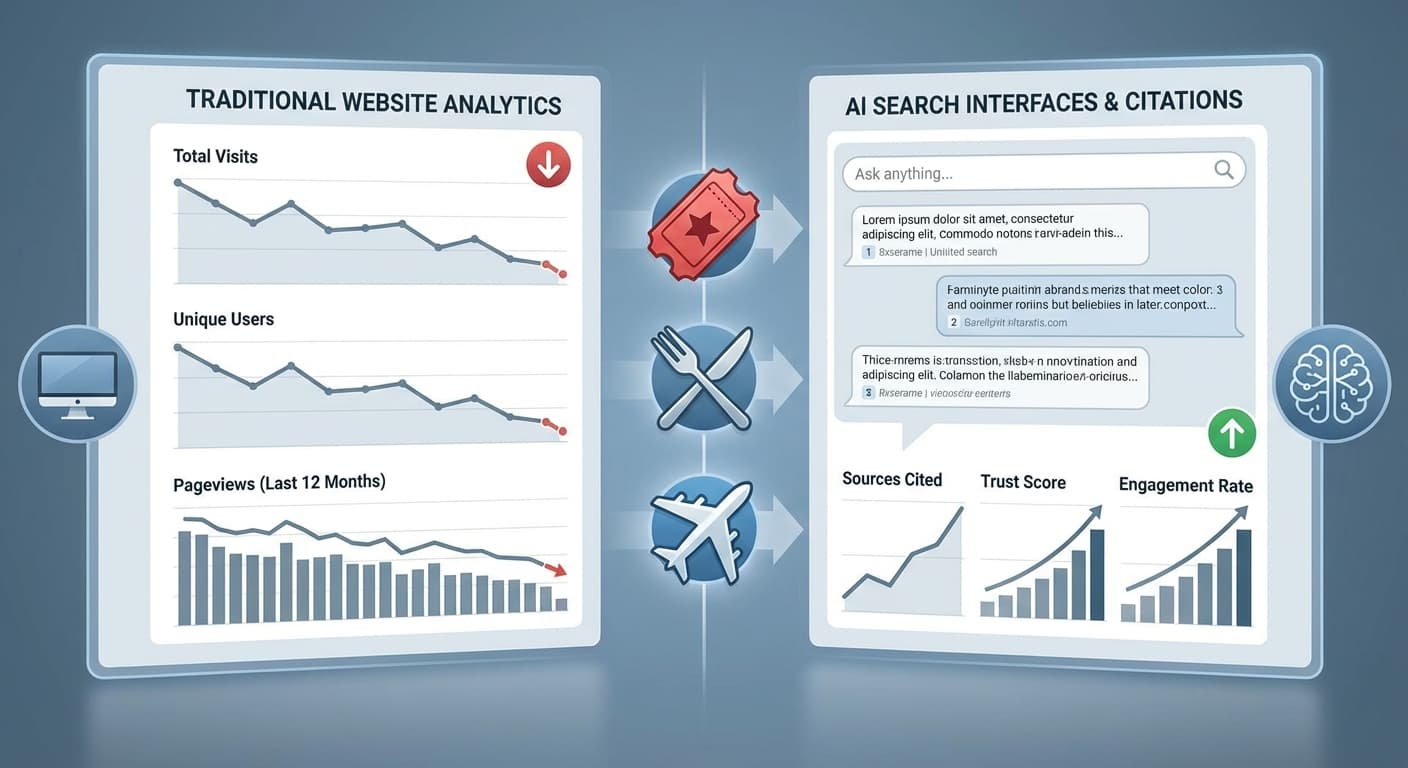
New Metrics for AI Search Success
Traditional metrics don't capture privacy-first performance. Focus on:
Privacy-Compliant Analytics Setup
Overcoming Common Privacy-First Challenges
Challenge 1: Reduced Personalization Accuracy
Solution: Focus on high-intent moments when users are most likely to share information voluntarily.
Challenge 2: Limited Retargeting Capabilities
Solution: Build email lists and push notification subscribers for owned-channel retargeting.
Challenge 3: Difficulty Measuring ROI
Solution: Implement server-side attribution models that track value without compromising privacy.
Challenge 4: Competing with Cookie-Based Competitors
Solution: Differentiate on trust and transparency – increasingly valuable differentiators in 2026.
How Citescope AI Helps Build Privacy-First AI Search Strategies
Citescope AI's approach aligns perfectly with privacy-first principles. Our GEO Score analyzes your content across five dimensions without requiring any user tracking:
Our Citation Tracker monitors when your content gets referenced by ChatGPT, Perplexity, Claude, and Gemini – showing you exactly how your privacy-first strategy performs in AI search.
The Future of Privacy-First AI Search
By 2026, privacy-first isn't just compliance – it's competitive advantage. Users increasingly choose brands that respect their privacy, and AI search engines are evolving to reward transparent, trustworthy content.
The brands winning in this new landscape are those that:
Ready to Optimize for AI Search?
Building a privacy-first AI search strategy doesn't mean sacrificing personalization – it means doing it better. Citescope AI helps you optimize your content for AI visibility while respecting user privacy. Our platform analyzes and improves your content's AI search performance without requiring any user tracking or invasive data collection.
Start building your privacy-first AI search strategy today. Try Citescope AI free and see how your content performs in the new world of AI search – where trust and transparency are your biggest competitive advantages.