How to Build a Predictive Intent Content Strategy When AI Search Engines Are Forecasting User Needs
How to Build a Predictive Intent Content Strategy When AI Search Engines Are Forecasting User Needs
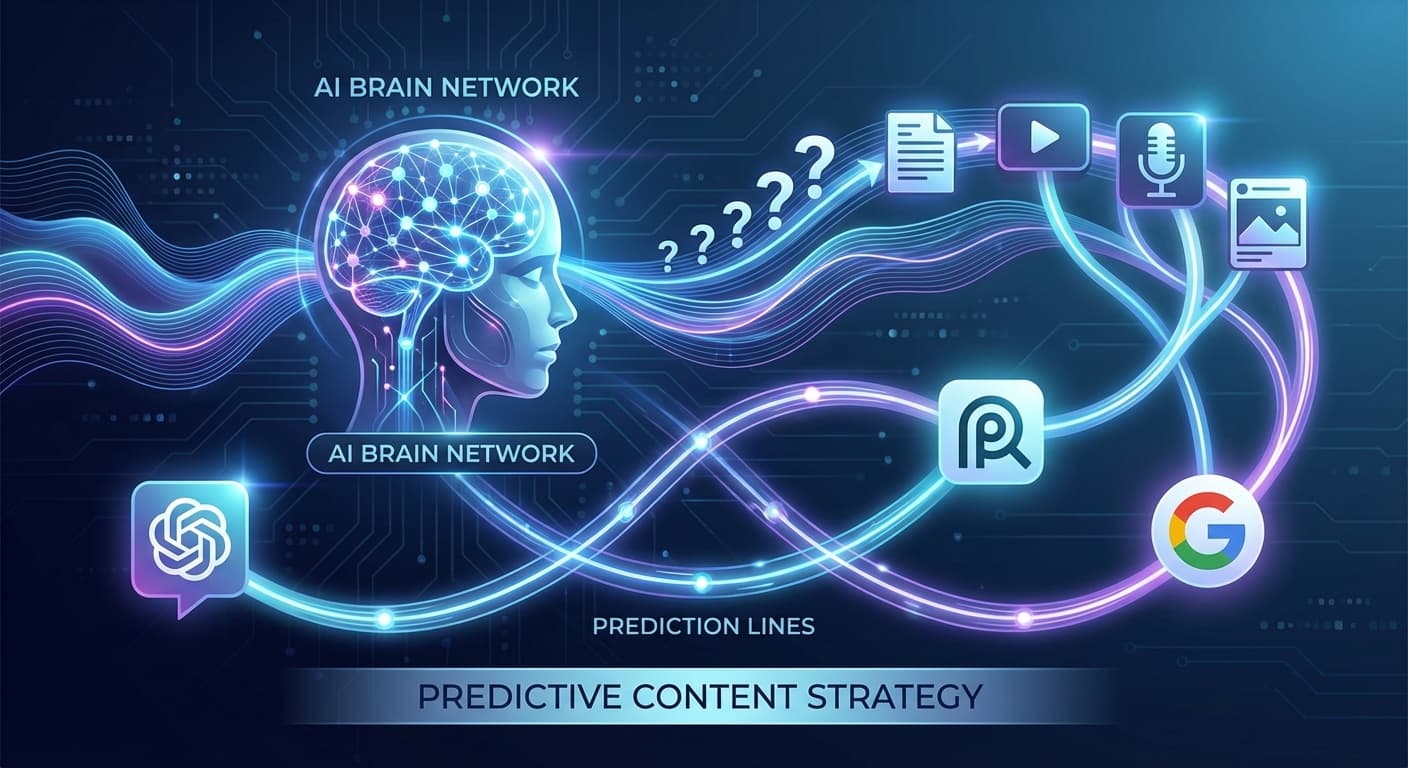
By late 2025, something remarkable happened: AI search engines stopped waiting for users to finish typing. Google's AI Mode now suggests complete questions after just two words, Perplexity predicts entire research journeys, and ChatGPT anticipates follow-up queries before users ask them. With AI search now handling over 35% of all queries and 73% of Gen Z relying on AI for discovery, we've entered the era of predictive search.
This shift changes everything about content strategy. Traditional keyword research assumes people know what they're looking for. But when AI engines forecast intent and surface content proactively, your strategy needs to think three steps ahead.
The New Reality: AI Engines That Think Ahead
In January 2026, the average AI search session involves 4.2 related queries that users never explicitly typed. Perplexity's "Related" suggestions drive 45% of follow-up searches, while Google's AI Mode completes thoughts for 60% of partial queries.
Here's what this means for content creators:
Building Your Predictive Intent Framework
1. Map Intent Progressions, Not Just Keywords
Traditional keyword research captures snapshots. Predictive intent mapping traces entire user journeys. Start by identifying the progression of questions your audience asks:
Example: SaaS Marketing Manager Journey
For each stage, create content that anticipates the next logical question. When someone reads about AI SEO basics, your content should seamlessly guide them toward optimization techniques.
2. Leverage Semantic Question Clusters
AI search engines excel at connecting related concepts. Instead of targeting individual keywords, build content around semantic clusters.
Traditional approach: Target "content marketing strategy"
Predictive approach: Create comprehensive content addressing:
This clustering approach increases your chances of appearing in AI-generated response threads and "Related" sections.
3. Create Context-Rich Content Architecture
AI engines analyze content structure to understand relationships. Use clear hierarchical organization:
4. Anticipate Follow-Up Questions
Every piece of content should answer the original query plus 3-5 logical follow-ups. Use these frameworks:
The "What's Next" Framework:
The "Context Expansion" Framework:
Advanced Predictive Strategies
Conversational Content Structure
AI search engines favor content that mirrors natural conversation patterns. Structure your content like you're having a dialogue:
Intent Signal Integration
Modern AI engines analyze multiple signals beyond text:
Track these signals and create content calendars that anticipate demand spikes.
Multi-Modal Intent Prediction
By 2026, AI search increasingly combines text, voice, and visual queries. Your content strategy should account for:
Tools and Techniques for Predictive Research
AI-Powered Research Methods
Traditional Tools with Predictive Applications
Content Validation Techniques
Before publishing, test your predictive intent coverage:
How Citescope Ai Enhances Predictive Intent Strategy
While building predictive intent content is crucial, ensuring AI engines can properly interpret and cite your content is equally important. Citescope Ai's GEO Score analyzes your content across five dimensions that directly impact predictive discoverability:
The platform's Citation Tracker also helps you understand which pieces of your predictive content strategy are working, showing exactly when and how ChatGPT, Perplexity, Claude, and Gemini reference your content in their predictive suggestions.
Measuring Predictive Intent Success
Key Metrics to Track
Performance Optimization
Regularly audit your predictive intent performance:
The Future of Predictive Content Strategy
As AI search engines become more sophisticated, predictive capabilities will expand further. By mid-2026, expect to see:
Content creators who master predictive intent strategies now will have significant advantages as these capabilities evolve.
Ready to Optimize for AI Search?
Building a predictive intent content strategy requires understanding both user behavior and AI engine capabilities. Citescope Ai helps you bridge this gap with tools designed specifically for the AI search era. Our GEO Score ensures your content is structured for predictive discoverability, while our Citation Tracker shows you exactly how AI engines are using your content in their responses.
Start optimizing your content for predictive intent today. Try Citescope Ai's free tier and see how your content performs across ChatGPT, Perplexity, Claude, and Gemini. Your future audience is already searching – make sure they find you.