How to Build a Perception Drift Monitoring Strategy When AI Search Engines Gradually Shift Brand Associations
How to Build a Perception Drift Monitoring Strategy When AI Search Engines Gradually Shift Brand Associations
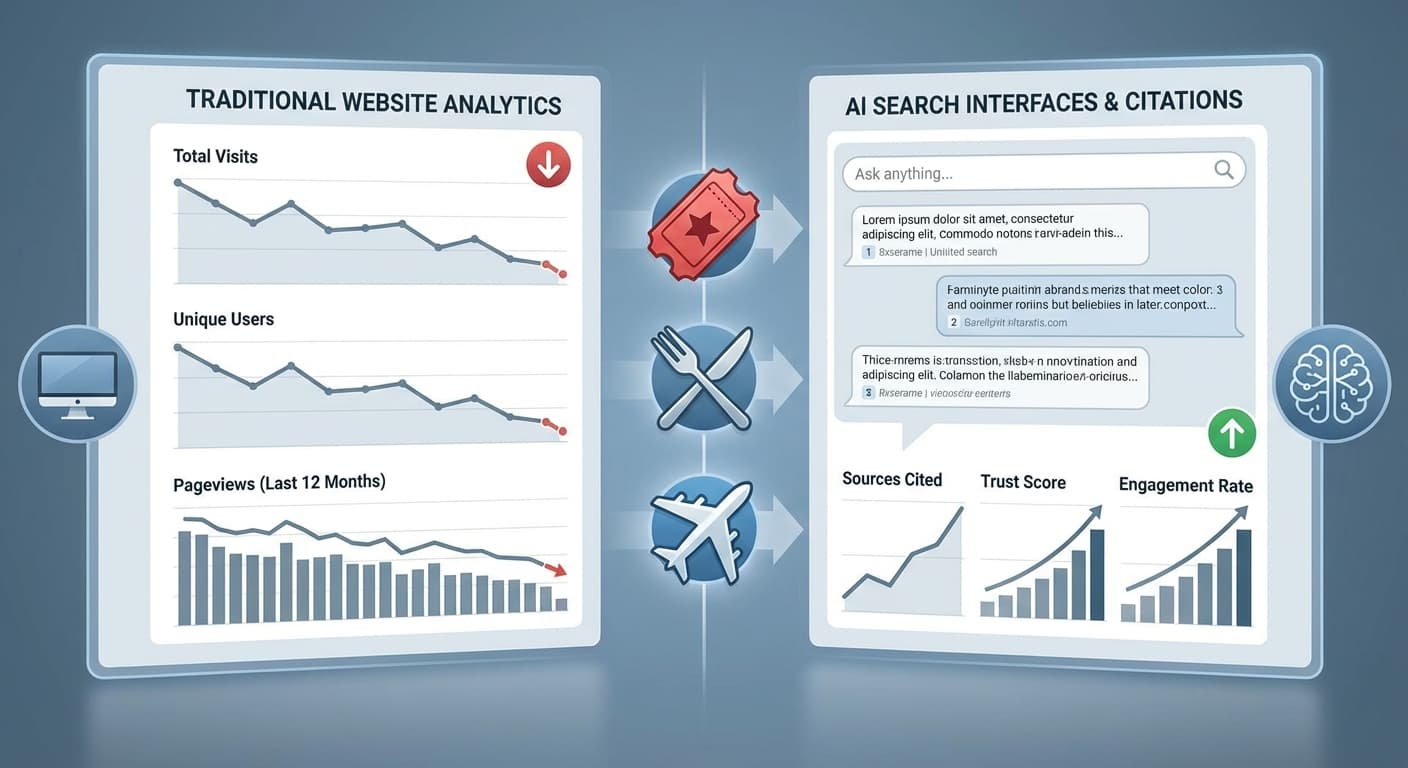
AI search engines are now answering over 40% of product category queries, fundamentally changing how consumers discover and perceive brands. But here's the alarming reality facing marketers in 2026: these AI systems are gradually reshaping brand associations, often in ways that drift far from your intended positioning.
Recent studies show that 67% of brands have experienced significant perception drift in AI search results, with some seeing their core value propositions completely reframed by AI engines like ChatGPT, Perplexity, Claude, and Gemini. The stakes couldn't be higher – when AI systems consistently present your brand in the wrong context, it can erode years of careful positioning work.
Understanding Perception Drift in AI Search
Perception drift occurs when AI search engines gradually alter how they describe, categorize, or position your brand based on the content they've indexed and the patterns they've learned. Unlike traditional search where you could directly influence results through SEO, AI engines synthesize information from multiple sources to create new narratives about your brand.
The Hidden Mechanics of AI Brand Perception
AI search engines don't simply retrieve information – they interpret and reconstruct it. When someone asks "What are the best sustainable fashion brands?" the AI doesn't just list brands tagged as "sustainable." Instead, it analyzes:
Why Traditional Brand Monitoring Isn't Enough
Traditional brand monitoring tools track mentions and sentiment, but they miss the subtle ways AI engines reframe your positioning. You might have overwhelmingly positive mentions, but if the AI consistently describes your premium product as "budget-friendly" or your innovative solution as "traditional," your brand perception is drifting.
The Five Pillars of Effective Perception Drift Monitoring
1. Query Pattern Analysis
Start by identifying the 20-30 most important product category queries where your brand should appear. These include:
Monitor how AI engines respond to these queries monthly, documenting any shifts in how your brand is presented or positioned.
2. Competitive Context Monitoring
AI engines love to create competitive contexts and comparisons. Track how your brand is grouped with competitors across different queries. Are you consistently mentioned alongside the right competitors? Are you being positioned as a premium option when you should be, or are you being relegated to budget alternatives?
Key metrics to track:
3. Attribute Drift Detection
Create a comprehensive list of brand attributes you want to own – innovation, reliability, affordability, sustainability, etc. Then systematically test how AI engines describe your brand across different contexts.
Set up regular queries like:
Document any attributes that are being emphasized or de-emphasized by AI systems.
4. Source Quality Assessment
AI engines draw from countless sources, but not all sources are created equal. Low-quality or outdated content can disproportionately influence AI perceptions. Regularly audit:
5. User Intent Alignment
Track whether AI engines are presenting your brand in contexts that align with user intent. If someone searches for enterprise solutions, is your enterprise product being mentioned? If they're looking for beginner-friendly tools, is your entry-level offering surfaced?
Building Your Monitoring Infrastructure
Essential Tools and Techniques
Query Automation: Set up automated queries across multiple AI platforms weekly. Use tools that can systematically test variations of important queries and document responses.
Response Analysis: Develop a framework for analyzing AI responses that goes beyond simple mention counting. Look for:
Trend Identification: Use data visualization to spot gradual changes over time. Perception drift is often subtle and occurs over months, not days.
Creating Effective Alerts
Set up alerts for:
Corrective Strategies When Drift Occurs
Content Amplification
When you identify perception drift, the most effective response is strategic content creation and optimization. Create authoritative content that reinforces your intended positioning:
Source Authority Building
Invest in getting your brand mentioned in high-authority sources that AI engines frequently reference:
Strategic Citation Optimization
Optimize your content to be more "citable" by AI engines. This means creating content that's structured for easy extraction and synthesis:
How Citescope Ai Helps Combat Perception Drift
Citescope Ai's Citation Tracker provides real-time monitoring of how AI search engines are citing and presenting your brand across all major platforms. The tool's GEO Score system analyzes your content across five key dimensions that directly impact how AI engines interpret and present your brand positioning.
The AI Rewriter feature helps you quickly optimize existing content to better communicate your intended positioning to AI systems, while the multi-format export ensures your optimized content can be deployed across all your marketing channels.
Advanced Monitoring Techniques
Persona-Based Query Testing
Test how AI engines respond to queries from different user personas. A technical buyer might get different brand information than a budget-conscious consumer. Understanding these variations helps you optimize for multiple audience segments.
Geographic Variation Analysis
AI responses can vary by region due to different source prioritization and local market contexts. If you operate in multiple markets, monitor perception drift across geographic regions.
Temporal Pattern Recognition
Some perception drift follows predictable patterns – seasonal changes, industry trends, or competitive activities. Identifying these patterns helps you proactively address drift before it becomes entrenched.
Measuring Success and ROI
Key Performance Indicators
Long-term Impact Metrics
Building Organization-Wide Awareness
Perception drift monitoring shouldn't exist in isolation. Create cross-functional awareness by:
Future-Proofing Your Strategy
As AI search continues to evolve, your monitoring strategy must adapt. Stay ahead by:
Ready to Optimize for AI Search?
Perception drift in AI search engines isn't just a technical challenge – it's a fundamental shift in how brand positioning works. With Citescope Ai's comprehensive citation tracking and content optimization tools, you can monitor, measure, and maintain your brand positioning across all major AI search platforms. Start with our free tier to analyze your current AI visibility and see how your brand is being presented across AI search engines today.