How to Build a Multi-Platform AI Search Attribution Model When Citations Don't Show Up in Google Analytics

How to Build a Multi-Platform AI Search Attribution Model When Citations Don't Show Up in Google Analytics
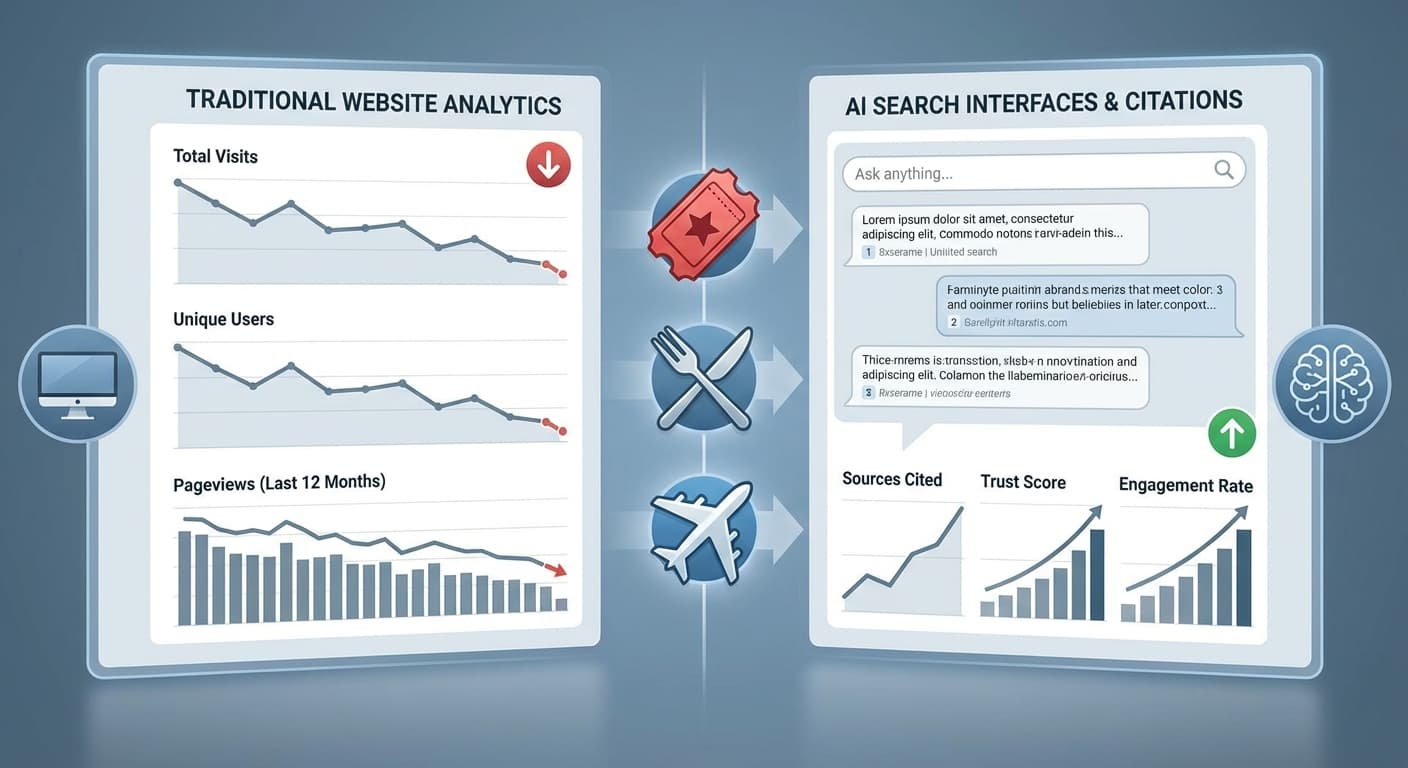
Your CMO just asked you to prove that your AI search optimization efforts are driving revenue, but your CFO is looking at Google Analytics and seeing... nothing. Sound familiar?
With AI search now accounting for over 35% of all queries in 2026, and platforms like ChatGPT, Perplexity, Claude, and Gemini driving millions of purchasing decisions weekly, the traditional attribution models that worked for Google Search are completely blind to this new reality. Your content might be getting cited hundreds of times across AI platforms, influencing thousands of potential customers, but none of it shows up in your standard analytics setup.
This isn't just a tracking problem—it's a business-critical blind spot that's making it impossible to optimize your AI search strategy or justify budget allocation.
Why Traditional Attribution Falls Short in the AI Era
The fundamental issue is that AI search engines operate differently from traditional search. When someone asks ChatGPT "What's the best project management software for remote teams?" and your SaaS gets mentioned in the response, there's rarely a direct clickthrough that Google Analytics can track. Instead, the user might:
This creates what we call "dark attribution"—real influence that drives real revenue but leaves no digital footprint in your current tracking setup.
The Multi-Platform Attribution Challenge
Building an effective AI search attribution model requires tracking across multiple touchpoints:
Primary AI Platforms to Monitor
Each platform has different citation behaviors, user intents, and conversion patterns. Your attribution model needs to account for these nuances.
Step-by-Step Guide to Building Your AI Attribution Model
Step 1: Establish Baseline Metrics
Before you can measure AI attribution, you need to understand your current state:
Step 2: Implement Citation Tracking
This is where most companies struggle because manually monitoring AI citations across platforms is impossible at scale. You need automated tracking that can:
Tools like Citescope Ai's Citation Tracker can monitor these mentions automatically, giving you visibility into when and how your content appears in AI responses across ChatGPT, Perplexity, Claude, and Gemini.
Step 3: Create UTM Parameters for AI-Influenced Traffic
Develop a systematic approach to tagging traffic that might be AI-influenced:
Source: ai-search
Medium: citation
Campaign: content-title-or-topic
Term: specific-ai-platform
Content: citation-context
Use these parameters in any links you can control, such as:
Step 4: Build a Multi-Touch Attribution Dashboard
Create a comprehensive view that combines:
Direct Metrics:
Indirect Indicators:
Revenue Attribution:
Step 5: Implement Survey-Based Attribution
Since technical tracking has limitations, supplement with direct customer feedback:
Post-Purchase Surveys:
"How did you first learn about our product?"
Lead Generation Forms:
Add a simple dropdown asking about their research process, including options for AI-assisted research.
Sales Team Integration:
Train your sales team to ask discovery questions that reveal AI influence in the buyer's journey.
Advanced Attribution Techniques
Cohort Analysis for AI-Influenced Customers
Track customers acquired during high AI citation periods and compare their:
This helps quantify the quality of AI-influenced leads.
Content Performance Correlation
Analyze which pieces of content drive the most AI citations and correlate this with:
Competitive Benchmarking
Monitor competitors' AI citation performance to:
How Citescope Ai Helps
Building this attribution model manually is incredibly time-consuming and error-prone. Citescope Ai automates the most challenging aspects:
Measuring Success: KPIs That Matter
Primary KPIs
Secondary KPIs
Common Pitfalls to Avoid
Building Your Business Case
When presenting to leadership, focus on:
The Opportunity:
The Risk of Inaction:
The Solution:
Ready to Optimize for AI Search?
Building a comprehensive AI search attribution model doesn't have to be overwhelming. Citescope Ai provides the citation tracking, content optimization, and performance analytics you need to prove ROI and scale your AI search strategy.
Start with our free tier to track up to 3 content optimizations per month and see how your content performs across ChatGPT, Perplexity, Claude, and Gemini. Ready to show your CFO exactly how AI search is driving revenue? Try Citescope Ai free today and build the attribution model that finally makes AI search measurable.