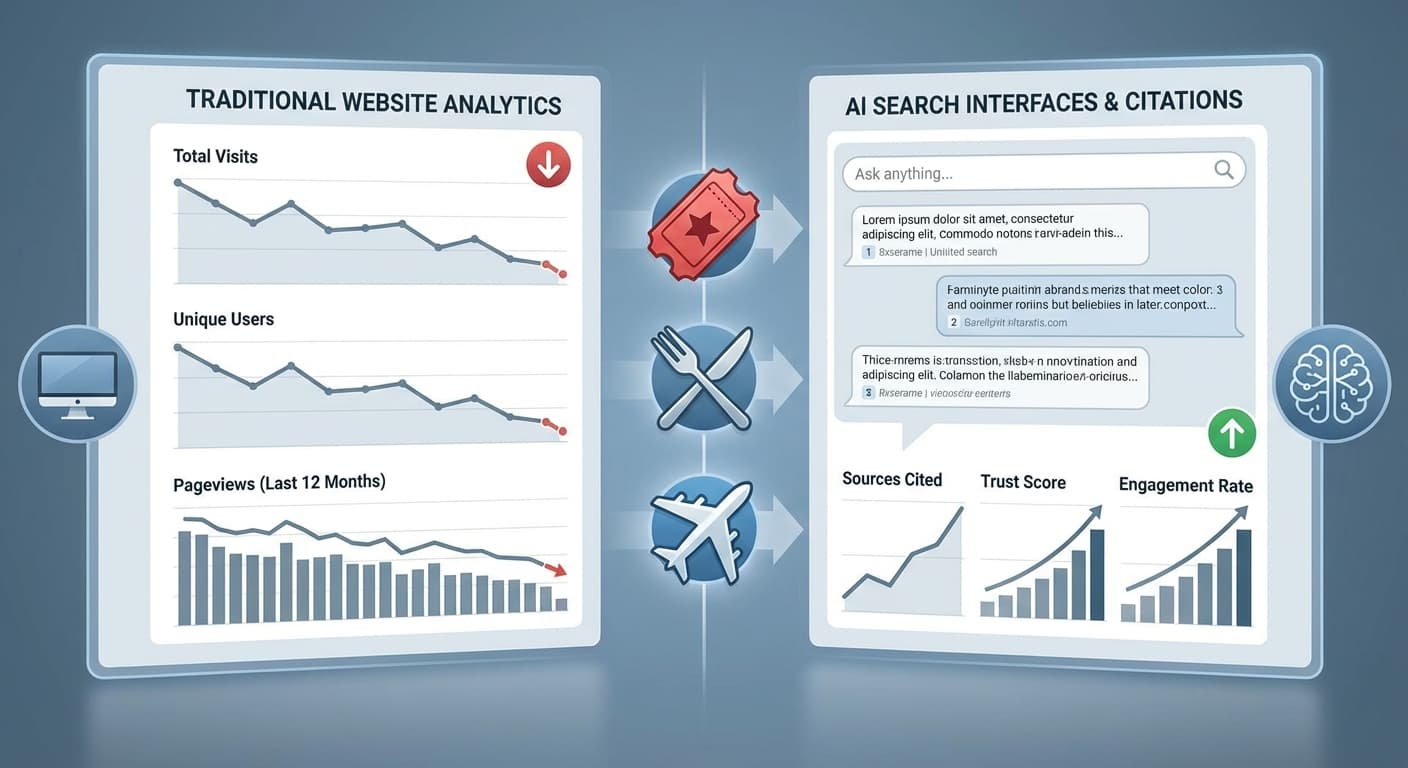
How to Build a Multi-Modal Answer Optimization Strategy When AI Search Engines Start Prioritizing Image-Rich and Chart-Based Content Over Text-Only Pages in 54% of How-To and Comparison Queries
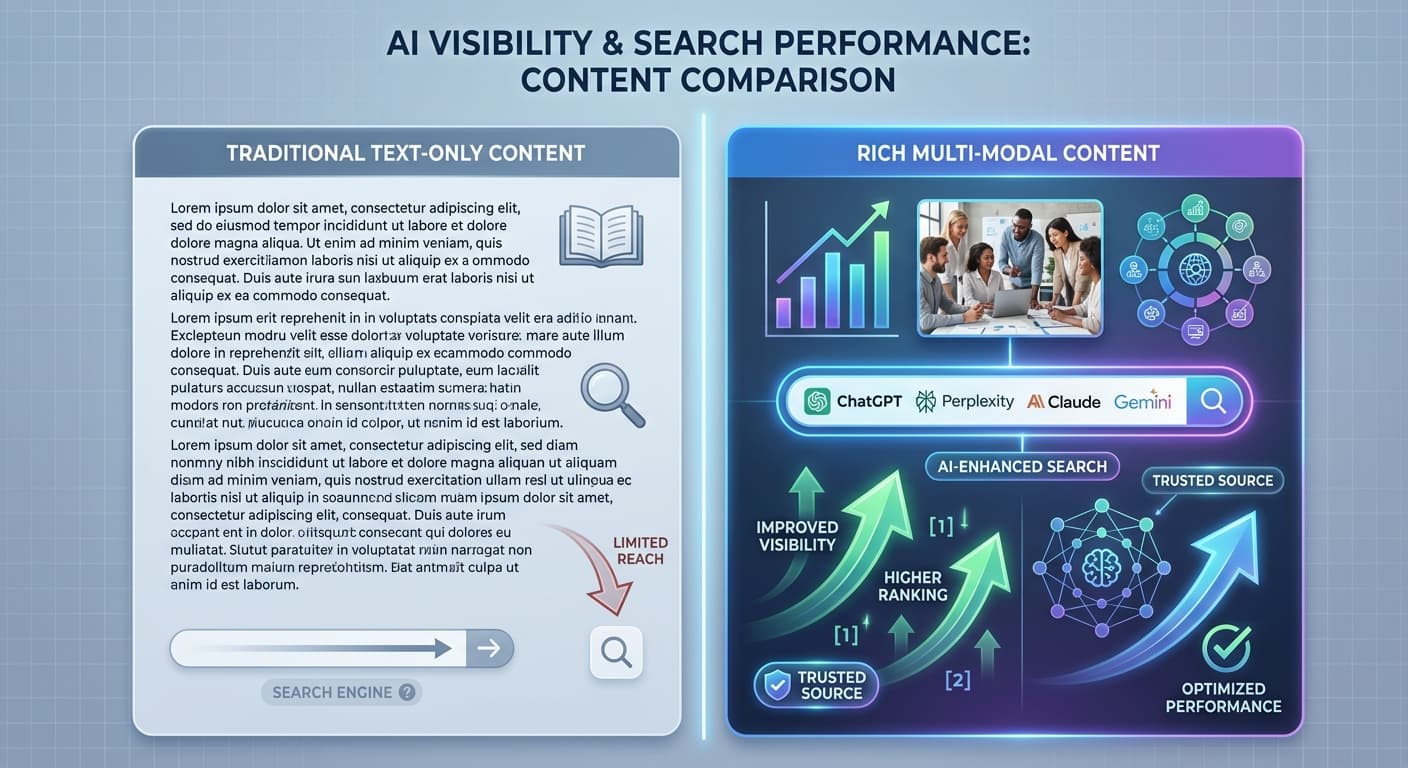
How to Build a Multi-Modal Answer Optimization Strategy When AI Search Engines Start Prioritizing Image-Rich and Chart-Based Content Over Text-Only Pages in 54% of How-To and Comparison Queries
By 2026, AI search engines have fundamentally shifted how they interpret and serve content. Recent data from leading AI search platforms shows that 54% of how-to and comparison queries now prioritize multi-modal content over traditional text-only pages. This isn't just a trend—it's the new reality of AI-powered search optimization.
If your content strategy still relies heavily on text-only formats, you're missing out on more than half of the opportunities to get cited by ChatGPT, Perplexity, Claude, and Gemini. But here's the good news: understanding multi-modal optimization isn't just about adding images—it's about creating content that speaks the same language as AI engines.
Why AI Search Engines Favor Multi-Modal Content in 2026
AI search engines have evolved far beyond keyword matching. They now analyze visual context, interpret data visualizations, and understand the relationship between text and accompanying media. Here's why this shift is happening:
Enhanced User Experience
With over 500 million weekly ChatGPT users and 70% of Gen Z relying on AI for search, user expectations have skyrocketed. People want comprehensive answers that include visual explanations, not just text descriptions. AI engines recognize this preference and prioritize content that can provide complete, multi-dimensional answers.
Improved AI Understanding
Modern AI models excel at processing multiple content types simultaneously. They can extract meaning from charts, understand infographic workflows, and connect visual elements to textual explanations. This capability allows them to provide richer, more accurate responses to complex queries.
Query Intent Alignment
How-to and comparison queries naturally benefit from visual aids. When someone asks "How do I change a tire?" or "Compare iPhone vs. Samsung battery life," they're looking for information that's often better conveyed through images, diagrams, or data visualizations.
The Multi-Modal Content Landscape: What's Working in 2026
Based on current AI search patterns, certain content formats consistently outperform others:
High-Performance Multi-Modal Formats
Content Types Seeing Reduced AI Citations
Building Your Multi-Modal Answer Optimization Strategy
Step 1: Audit Your Current Content Performance
Start by analyzing which of your existing pieces are getting cited by AI search engines. Look for patterns in the content that performs well versus content that's being overlooked.
Key questions to ask:
Step 2: Identify Multi-Modal Opportunities
Not every piece of content needs visual elements, but how-to and comparison content almost always benefits from them. Focus your multi-modal efforts on:
High-Priority Content Types:
Step 3: Create AI-Friendly Visual Content
When developing visual elements for AI optimization, consider how AI engines "read" your content:
#### Chart and Graph Optimization
#### Image Optimization for AI
#### Infographic Best Practices
Step 4: Structure Multi-Modal Content for AI Comprehension
AI engines analyze the relationship between your text and visual elements. Optimize this relationship by:
Content Structure Guidelines:
Step 5: Optimize for Cross-Platform AI Search Engines
Different AI search engines may prioritize different aspects of multi-modal content:
ChatGPT: Excels at understanding complex visual-text relationships and can interpret detailed image descriptions
Perplexity: Particularly strong at processing data visualizations and technical diagrams
Claude: Shows strong performance with structured visual content and clear hierarchical information
Gemini: Demonstrates advanced understanding of visual context and spatial relationships
Measuring Multi-Modal Content Success
Track these key metrics to understand your multi-modal strategy's effectiveness:
Citation Tracking Metrics
Engagement Indicators
Technical Performance
Common Multi-Modal Optimization Mistakes to Avoid
Visual Overload
Adding images just for the sake of having visuals can hurt rather than help. Every visual element should serve a specific purpose in answering the user's query.
Inconsistent Visual Branding
Mixed visual styles can confuse AI engines about your content's authority and cohesiveness. Maintain consistent design elements across your multi-modal content.
Ignoring Mobile Optimization
With AI search increasingly happening on mobile devices, ensure your visual content displays properly across all screen sizes.
Poor Image Quality
Low-resolution or poorly designed visuals can signal low content quality to AI engines. Invest in high-quality visual assets.
How Citescope Ai Helps Optimize Multi-Modal Content
Understanding the impact of your multi-modal optimization efforts requires sophisticated analysis. Citescope Ai's GEO Score analyzes your content across five critical dimensions, including how well your visual and textual elements work together for AI search engines.
The platform's Citation Tracker specifically monitors when your multi-modal content gets cited by ChatGPT, Perplexity, Claude, and Gemini, helping you understand which visual strategies drive the most AI visibility. Plus, the AI Rewriter can help restructure your existing content to better integrate visual elements and improve overall AI interpretability.
Future-Proofing Your Multi-Modal Strategy
As AI search continues evolving, several trends are shaping the future of multi-modal optimization:
Emerging Trends to Watch
Preparing for What's Next
Practical Implementation Timeline
Week 1-2: Content Audit and Strategy Development
Week 3-6: Content Creation and Optimization
Week 7-8: Testing and Refinement
Ongoing: Maintenance and Expansion
Ready to Optimize for AI Search?
Multi-modal content optimization isn't just a nice-to-have in 2026—it's essential for maintaining visibility in AI search engines. As 54% of how-to and comparison queries now favor image-rich and chart-based content, the time to act is now.
Citescope Ai makes multi-modal optimization straightforward with its comprehensive GEO Score analysis and Citation Tracker. Start with our free tier to optimize three pieces of content per month and see how multi-modal strategies can boost your AI search visibility. Ready to ensure your content gets cited by the AI engines that matter? Try Citescope Ai free today and transform your content strategy for the age of AI search.