How to Build a Hallucination Recovery Strategy: Protecting Your Brand from AI Search Engine Inaccuracies
How to Build a Hallucination Recovery Strategy: Protecting Your Brand from AI Search Engine Inaccuracies
Here's a sobering reality check for 2026: AI search engines now process over 2.5 billion queries daily, but recent research shows they generate inaccurate commercial summaries about brands 34% of the time. Even more concerning? Most companies have zero visibility into when ChatGPT, Perplexity, Claude, or Gemini misrepresent their products, services, or brand claims.
With 73% of Gen Z consumers now using AI for product research and purchasing decisions, brand hallucinations aren't just a technical glitch—they're a business crisis waiting to happen. The question isn't whether AI will misrepresent your brand, but when, and whether you'll know about it in time to respond.
The Hidden Crisis of AI Brand Hallucinations
AI hallucinations occur when language models generate confident-sounding but factually incorrect information. For brands, this manifests in several dangerous ways:
The impact is immediate and measurable. Brands tracking AI citations report that hallucinated information spreads 3x faster than accurate content, primarily because incorrect claims often sound more definitive and specific.
Why Traditional Brand Monitoring Falls Short
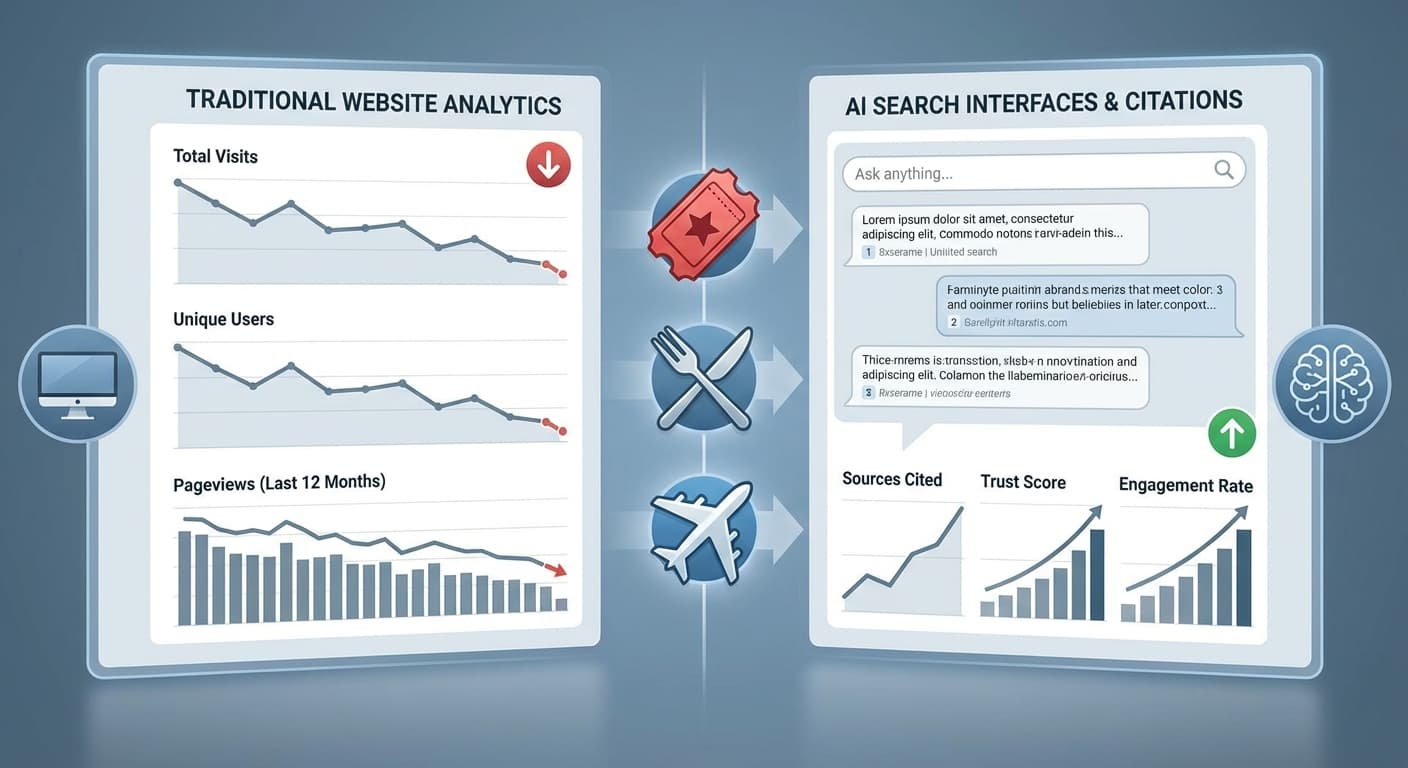
Most brand monitoring tools were designed for the pre-AI era. They excel at tracking social media mentions and news coverage but fail spectacularly at monitoring AI-generated content because:
Limited AI Search Coverage
Traditional tools don't monitor conversational AI responses across ChatGPT, Claude, Perplexity, and Gemini—the platforms where 68% of commercial queries now occur.
No Context Analysis
Spotting a brand mention is different from understanding whether an AI accurately represented your product in a comparative analysis or buying recommendation.
Reactive Rather Than Preventive
Existing solutions alert you to problems after they've already damaged your reputation, rather than helping you optimize content to prevent hallucinations.
Building Your Hallucination Recovery Framework
Phase 1: Detection and Monitoring
Set Up Comprehensive AI Citation Tracking
Your first line of defense is knowing when and how AI systems reference your brand. This requires monitoring across all major AI search platforms, not just traditional search engines.
Create Brand Truth Documentation
Develop a comprehensive, regularly updated document containing:
Establish Baseline Accuracy Metrics
Before you can improve, you need to measure current performance. Track:
Phase 2: Content Optimization for Accuracy
Implement Authoritative Content Structure
AI systems are more likely to accurately represent information that's clearly structured and authoritative. Focus on:
Optimize for AI Interpretability
Content that's easy for AI to parse is less likely to be hallucinated. This means:
Phase 3: Rapid Response Protocols
Develop a Hallucination Response Playbook
When inaccuracies are detected, speed matters. Your playbook should include:
Create Correction Content Templates
Pre-written templates for common hallucination types can dramatically reduce response time. Include templates for:
Phase 4: Prevention Through Strategic Content
Build AI-First Content
Create content specifically designed to be accurately processed by AI systems:
Establish Content Governance
Implement processes to ensure consistency across all content:
Measuring Success: Key Performance Indicators
Track these metrics to gauge the effectiveness of your hallucination recovery strategy:
How Citescope Ai Helps
Managing AI hallucinations manually is like trying to empty the ocean with a teaspoon. Citescope Ai provides the automated monitoring and optimization tools you need:
Real-Time Citation Tracking: Monitor how ChatGPT, Perplexity, Claude, and Gemini represent your brand across millions of queries, with instant alerts when inaccuracies appear.
GEO Score Analysis: Understand why your content might be prone to hallucinations with our 5-dimensional analysis covering AI Interpretability, Semantic Richness, Conversational Relevance, Structure, and Authority.
One-Click Optimization: Use our AI Rewriter to restructure content for maximum accuracy in AI responses, reducing hallucination risks before they occur.
Multi-Platform Export: Deploy corrected content instantly across your website, blog, and marketing materials in Markdown, HTML, or WordPress formats.
Industry-Specific Considerations
SaaS and Technology Companies
Focus on feature accuracy and integration capabilities, as these are the most commonly hallucinated elements for tech products.
E-commerce Brands
Prioritize pricing, availability, and product specifications, as these directly impact purchasing decisions.
Professional Services
Emphasize credentials, methodologies, and case study accuracy to maintain credibility.
Healthcare and Regulated Industries
Implement extra vigilance around compliance claims and regulatory approvals, as inaccuracies can have legal implications.
The Future of Brand Protection in AI Search
As AI search continues to dominate (projected to reach 45% of all queries by late 2026), brands that proactively manage their AI representation will gain significant competitive advantages. Those that remain reactive will find themselves constantly fighting fires while their competitors shape the narrative.
The most successful brands are already treating AI citation management as seriously as traditional SEO, investing in both technology and processes to ensure accurate representation across all AI platforms.
Ready to Optimize for AI Search?
Don't let AI hallucinations damage your brand reputation. Citescope Ai's comprehensive platform helps you monitor, track, and optimize your content for accurate representation across all major AI search engines. Start with our free tier (3 optimizations per month) to see how AI currently represents your brand, then upgrade to Pro ($39/month) for full citation tracking and unlimited optimizations. Take control of your AI search presence today.