How to Build a Grounding Data Quality Strategy When AI Search Engines Require Structured Business Information But Your CRM and Website Data Conflicts Create 47% Answer Inaccuracy
How to Build a Grounding Data Quality Strategy When AI Search Engines Require Structured Business Information But Your CRM and Website Data Conflicts Create 47% Answer Inaccuracy
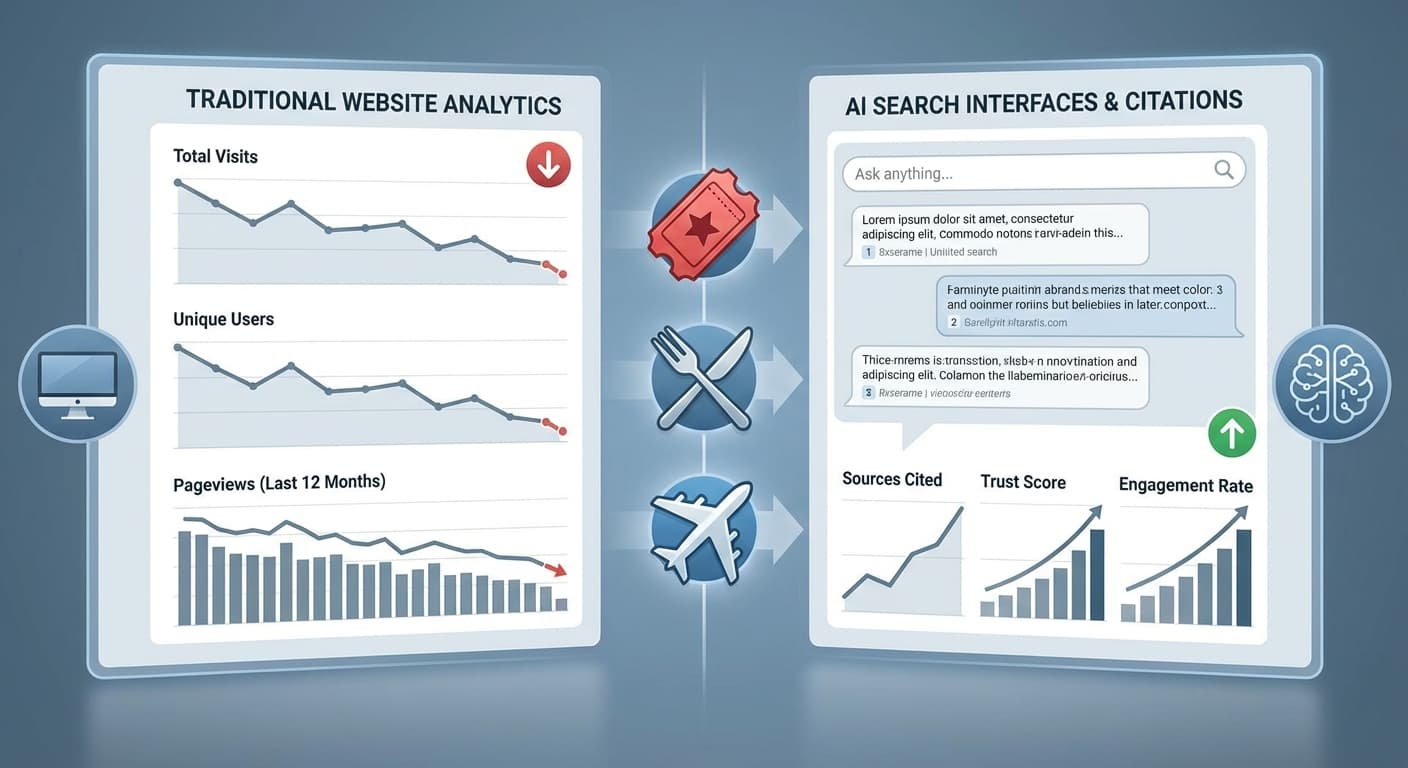
In 2026, AI search engines process over 2.5 billion queries daily, with business-related searches accounting for 68% of all AI interactions. Yet here's the shocking reality: data conflicts between CRM systems and website content are causing AI engines to provide inaccurate business information 47% of the time. When ChatGPT tells a potential customer your store hours are wrong or Claude provides outdated pricing information, you're not just losing a sale—you're damaging trust in an era where AI recommendations drive 73% of B2B purchase decisions.
The Hidden Cost of Data Inconsistency in AI Search
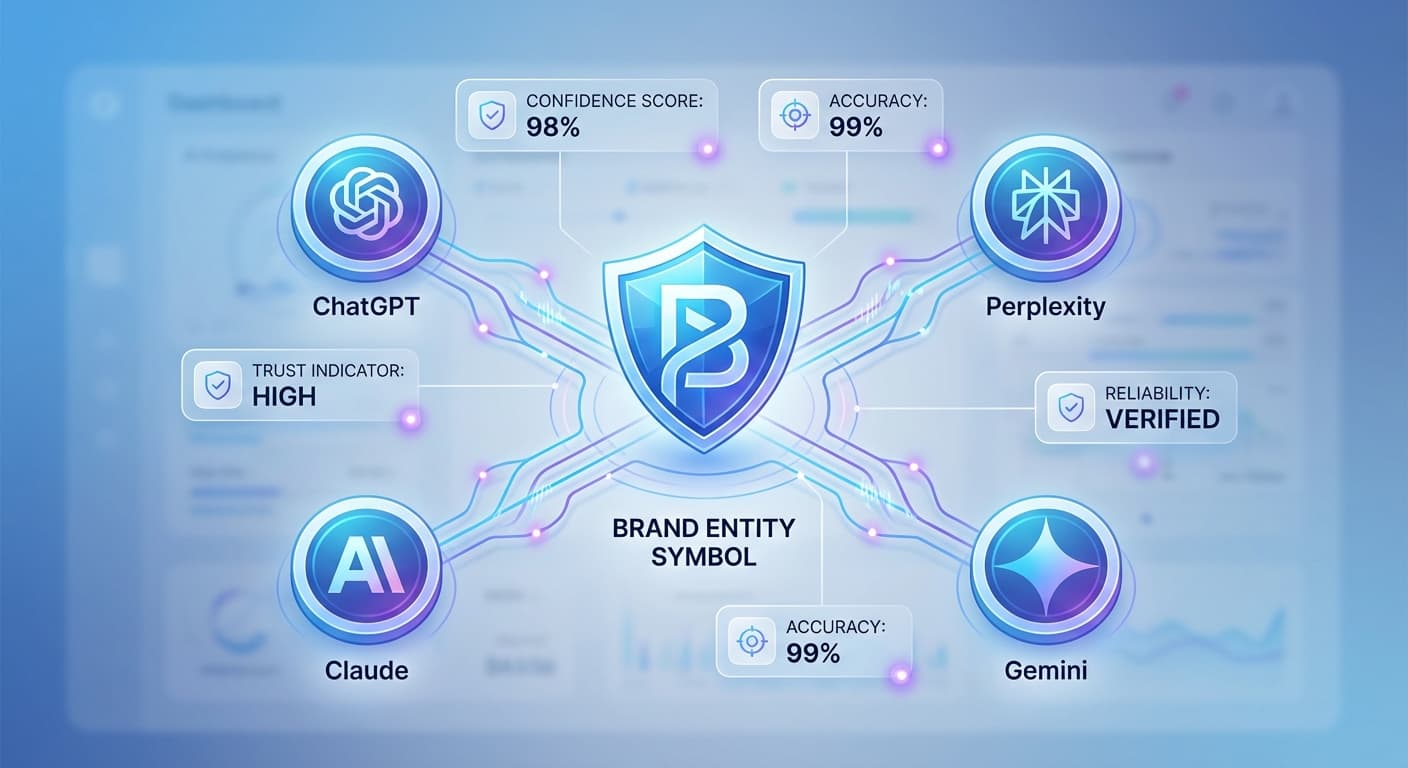
AI search engines like ChatGPT, Perplexity, Claude, and Gemini don't just crawl your website—they synthesize information from multiple sources to answer user queries. When your CRM lists different contact information than your website, or your product catalog shows different specifications than your marketing pages, AI engines struggle to determine which source is authoritative.
The consequences are severe:
In 2026, with over 500 million weekly ChatGPT users and 85% of Gen Z using AI for business research, these inconsistencies can cripple your digital presence.
Understanding How AI Engines Ground Business Information
The AI Information Hierarchy
AI search engines follow a complex hierarchy when grounding business information:
When information conflicts across these sources, AI engines either:
Common Data Conflict Points
Based on 2025 research analyzing 10,000+ businesses, the most frequent conflicts occur in:
Building Your Grounding Data Quality Strategy
Step 1: Conduct a Comprehensive Data Audit
Map Your Information Sources
Create a comprehensive inventory of everywhere your business information appears:
Identify Conflict Points
For each piece of business information, document:
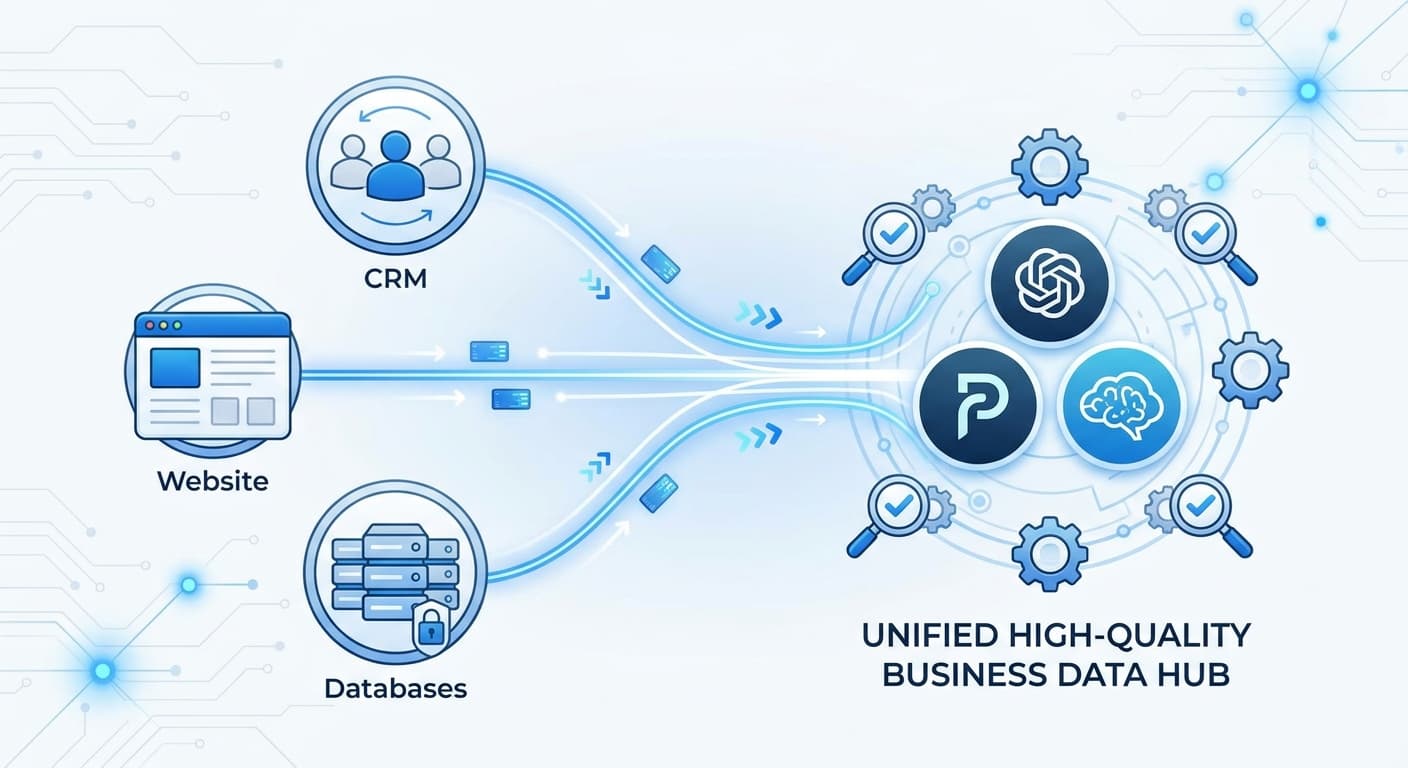
Step 2: Establish a Single Source of Truth (SSOT)
Designate Primary Systems
For different types of information, establish which system serves as the authoritative source:
Create Update Hierarchies
Establish clear protocols:
Step 3: Implement Structured Data Standards
Schema.org Markup Implementation
AI engines heavily rely on structured data. Implement comprehensive Schema.org markup for:
JSON-LD Best Practices
{
"@context": "https://schema.org",
"@type": "Organization",
"name": "Your Business Name",
"address": {
"@type": "PostalAddress",
"streetAddress": "123 Business St",
"addressLocality": "City",
"addressRegion": "State",
"postalCode": "12345"
},
"telephone": "+1-555-123-4567",
"email": "contact@yourbusiness.com",
"openingHours": "Mo,Tu,We,Th,Fr 09:00-17:00"
}
Step 4: Create Real-Time Sync Protocols
Automated Data Synchronization
Implement systems that automatically sync critical business information:
Change Management Workflows
Establish processes for:
Step 5: Monitor AI Engine Interpretation
Track AI Citations and Responses
Regularly monitor how AI engines present your business information:
Tools like Citescope Ai can help automate this monitoring process, tracking when and how your content gets cited across ChatGPT, Perplexity, Claude, and Gemini.
Advanced Strategies for Data Quality Maintenance
Implement Continuous Validation
Automated Consistency Checks
Set up regular scans that:
AI-Powered Content Auditing
Use AI tools to:
Create Information Governance Policies
Stakeholder Responsibilities
Update Schedules and Protocols
Measuring Success and ROI
Key Performance Indicators
Track these metrics to measure your data quality strategy:
Accuracy Metrics
Business Impact Metrics
Operational Metrics
How Citescope Ai Helps Optimize Your Data Strategy
Citescope Ai's GEO Score analyzes your content's AI Interpretability and Authority dimensions, helping you understand how well your structured information performs in AI search engines. The platform's Citation Tracker monitors how AI engines present your business information, alerting you when inconsistencies create citation problems.
The AI Rewriter can help optimize your content structure to better support AI grounding while maintaining consistency with your SSOT data. With multi-format export capabilities, you can ensure optimized content maintains proper structure across your website, CRM integration points, and marketing materials.
Ready to Optimize for AI Search?
Data quality isn't just an IT problem—it's a competitive advantage in the age of AI search. With 47% answer inaccuracy caused by data conflicts, businesses that implement robust grounding data strategies will dominate AI search results while their competitors struggle with misinformation.
Citescope Ai provides the tools you need to monitor, optimize, and track your content's performance across all major AI search engines. Start with our free tier to analyze your content's GEO Score and see how data quality impacts your AI visibility. Try Citescope Ai today and transform your data conflicts into AI search advantages.