How to Build a GEO Acquisition Strategy When Media Partnerships and Third-Party Brand Mentions Generate 6.5x More AI Citations Than Your Owned Domain Content
How to Build a GEO Acquisition Strategy When Media Partnerships and Third-Party Brand Mentions Generate 6.5x More AI Citations Than Your Owned Domain Content
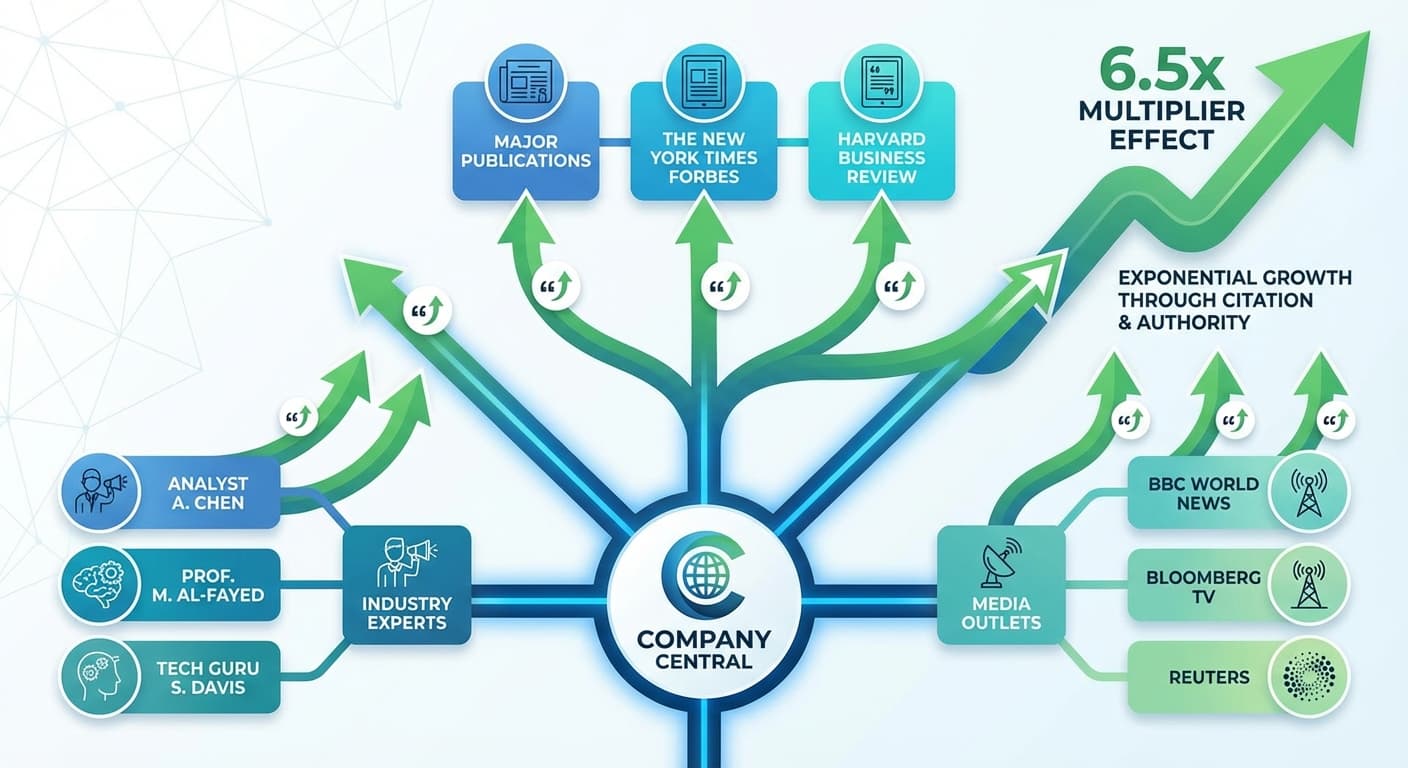
Here's a stat that should make every content marketer rethink their AI optimization strategy: Third-party brand mentions and media partnerships now generate 6.5x more AI citations than owned domain content across ChatGPT, Perplexity, Claude, and Gemini. As AI search continues to dominate the digital landscape—accounting for 35% of all search queries in 2025—the old playbook of just optimizing your own website isn't enough anymore.
The reason is simple: AI engines trust authoritative, third-party sources more than self-promotional content. When Forbes mentions your product in an industry roundup or when a respected thought leader quotes your CEO in their LinkedIn article, these citations carry exponentially more weight in AI algorithms than the same information published on your corporate blog.
The New Reality of AI Citation Authority
Traditional SEO taught us to build domain authority through backlinks and consistent content publishing. But AI search engines operate differently. They're not just looking at your domain's authority—they're evaluating the contextual authority of each individual piece of content and its source.
Here's what we're seeing in 2025:
This shift means your GEO (Generative Engine Optimization) strategy needs to extend far beyond your owned channels.
Understanding the Citation Trust Hierarchy
AI engines evaluate sources through a sophisticated trust hierarchy. At the top are established media outlets, academic institutions, and recognized industry authorities. Your company blog, no matter how well-optimized, starts several tiers down.
Tier 1: Premium Authority Sources
Tier 2: Industry-Specific Authority
Tier 3: Professional Networks
Tier 4: Owned and Earned Media
Building Your Third-Party GEO Acquisition Strategy
1. Map Your Citation Opportunity Landscape
Start by identifying where your ideal AI citations should come from. Research which publications, influencers, and platforms your target audience consumes and which sources AI engines frequently cite in your industry.
Action steps:
2. Develop Your Expert Positioning Strategy
Before you can secure high-authority third-party mentions, you need to establish your executives and team members as quotable experts.
Key tactics:
3. Execute Strategic Media Outreach
Your outreach should focus on providing value, not just seeking coverage. AI engines favor sources that consistently deliver accurate, helpful information.
Proven approaches:
4. Leverage Partnership Content Opportunities
Strategic partnerships can multiply your third-party citation potential while providing mutual value to both organizations.
Partnership content formats:
5. Optimize Content for AI Engine Preferences
When you do create third-party content, ensure it's structured for maximum AI visibility. This means clear headings, specific data points, and quotable insights that AI engines can easily extract and cite.
Tools like Citescope Ai can help you analyze and optimize your content across the five key dimensions that AI engines evaluate: interpretability, semantic richness, conversational relevance, structure, and authority.
Measuring Your Third-Party GEO Success
Tracking third-party citations requires a different approach than traditional SEO metrics. You need to monitor mentions across AI engines and measure the quality, not just quantity, of citations.
Key Metrics to Track
Tools and Tracking Methods
Common Pitfalls to Avoid
1. Over-Promoting Your Products
Third-party content should provide genuine value, not serve as thinly veiled advertisements. AI engines can detect overly promotional content and may discount or ignore it entirely.
2. Neglecting Relationship Building
Successful third-party GEO requires ongoing relationship building with journalists, influencers, and industry partners. One-off pitches rarely generate sustainable results.
3. Ignoring Content Quality Standards
Just because content appears on a high-authority site doesn't guarantee AI citations. The content itself must meet AI engines' quality and relevance standards.
4. Failing to Track and Measure
Without proper tracking, you can't identify which third-party strategies are driving real AI visibility and which are just generating vanity metrics.
How Citescope Ai Helps
Building an effective third-party GEO strategy requires understanding how AI engines evaluate and cite content. Citescope Ai's GEO Score analyzes content across the five critical dimensions that determine AI citation likelihood, while the Citation Tracker monitors when your content gets mentioned by ChatGPT, Perplexity, Claude, and Gemini.
The platform's AI Rewriter can help optimize both your owned content and any third-party pieces you contribute, ensuring they meet AI engines' structural and semantic requirements. With multi-format export capabilities, you can easily adapt optimized content for different partnership opportunities and platforms.
Implementing Your Strategy: Next Steps
Ready to Optimize for AI Search?
Building a successful third-party GEO strategy requires the right tools to track, analyze, and optimize your content for AI citations. Citescope Ai provides comprehensive AI search optimization with citation tracking across all major AI engines, content analysis with actionable GEO Scores, and one-click optimization for better AI visibility. Start with our free tier and see how your content performs—get 3 free optimizations per month to test your most important pieces.


