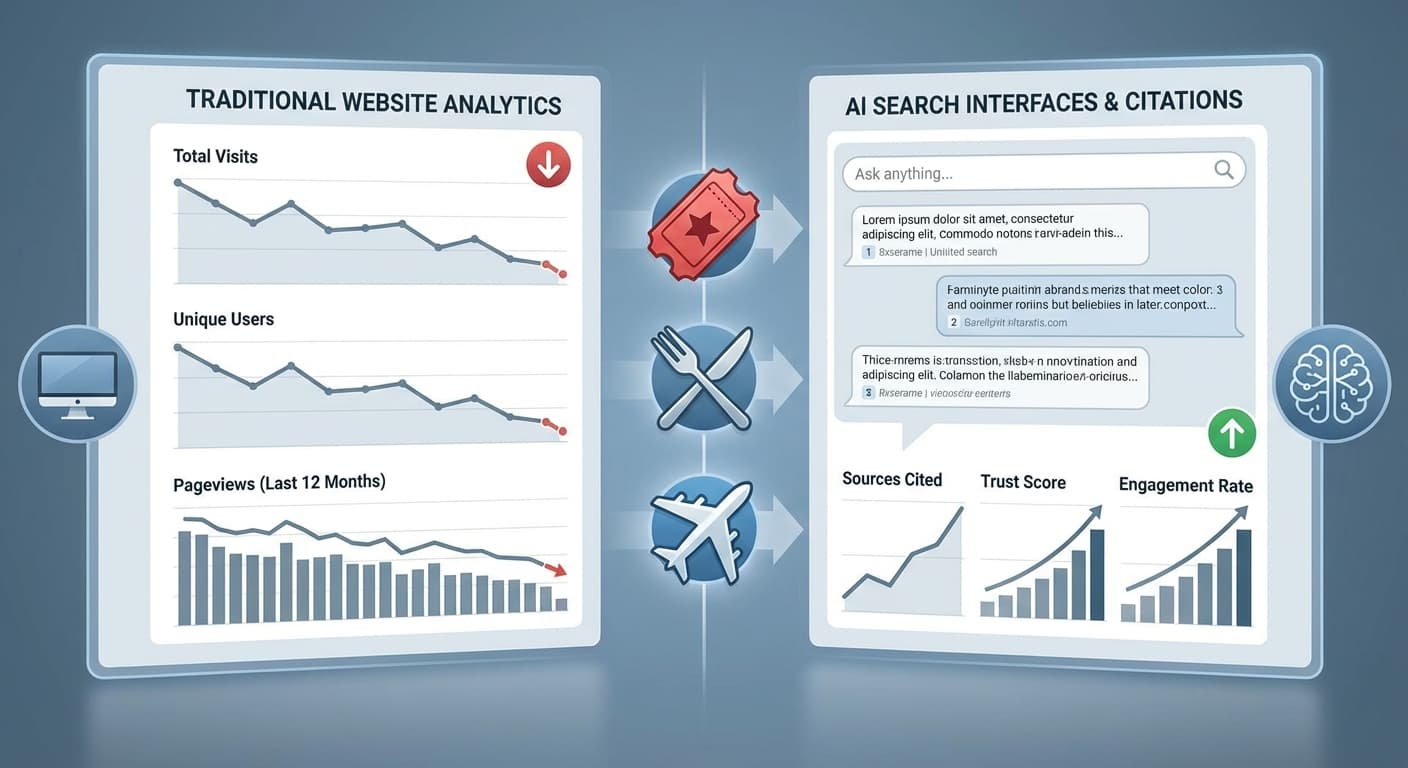
How to Build a Dynamic Pricing Intelligence Strategy When AI Search Engines Start Scraping Real-Time Product Prices to Auto-Generate Shopping Comparisons That Update Faster Than Your Marketing Team Can Adjust Positioning

How to Build a Dynamic Pricing Intelligence Strategy When AI Search Engines Start Scraping Real-Time Product Prices to Auto-Generate Shopping Comparisons That Update Faster Than Your Marketing Team Can Adjust Positioning
By 2026, AI search engines like ChatGPT, Perplexity, Claude, and Gemini have fundamentally transformed how consumers discover and compare products. With over 500 million weekly ChatGPT users and AI search now accounting for 35% of all product queries, these platforms are no longer just answering questions—they're actively scraping real-time pricing data and generating instant shopping comparisons that can make or break your competitive positioning.
The challenge? These AI-generated comparisons update faster than most marketing teams can react, often presenting outdated positioning statements alongside current competitor pricing. If your dynamic pricing strategy isn't optimized for AI visibility, you're essentially invisible in the fastest-growing search channel.
The New Reality of AI-Powered Price Comparison
In 2025-2026, we've witnessed a seismic shift in how AI search engines handle e-commerce queries. Rather than simply directing users to comparison sites, these platforms now:
Recent data shows that 73% of Gen Z consumers now use AI search engines as their primary product discovery tool, with 68% trusting AI-generated price comparisons over traditional review sites. This isn't just changing consumer behavior—it's revolutionizing how businesses need to think about pricing intelligence and competitive positioning.
Understanding AI Search Engine Price Scraping Mechanics
To build an effective strategy, you need to understand how AI engines gather and present pricing data:
Data Collection Points
Presentation Frameworks
AI engines typically organize pricing comparisons using these formats:
Building Your Dynamic Pricing Intelligence Strategy
Step 1: Implement AI-Readable Pricing Infrastructure
Your pricing data needs to be structured for AI consumption, not just human browsers:
Essential Technical Elements:
Content Optimization:
Step 2: Create Dynamic Content That Adapts to Market Changes
Traditional static product descriptions become liability when AI engines can see real-time competitor pricing. Your content needs to be as dynamic as your prices:
Automated Content Components:
Dynamic Messaging Framework:
IF competitor_price > our_price + threshold:
Emphasize value and savings
ELSE IF competitor_price < our_price - threshold:
Emphasize premium features and quality
ELSE:
Focus on unique differentiators
Step 3: Monitor AI Search Engine Citations and Recommendations
You can't optimize what you don't measure. Tracking how AI engines cite your pricing and products is crucial for strategic adjustments.
Key Monitoring Areas:
Tools like Citescope Ai's Citation Tracker help businesses monitor exactly when and how their content gets referenced across ChatGPT, Perplexity, Claude, and Gemini, providing the data needed to refine dynamic pricing strategies.
Step 4: Develop Rapid Response Protocols
When AI engines update faster than human teams can react, automation becomes essential:
Automated Triggers:
Human Oversight Points:
Step 5: Optimize Content for Multiple AI Engine Preferences
Different AI platforms have varying preferences for how they consume and present pricing data:
ChatGPT Optimization:
Perplexity Preferences:
Claude and Gemini:
Advanced Strategies for Competitive Advantage
Predictive Pricing Intelligence
Move beyond reactive pricing to predictive strategies:
Content Personalization at Scale
AI engines increasingly consider user context when generating recommendations:
How Citescope Ai Helps
Building and maintaining a dynamic pricing intelligence strategy requires sophisticated tools that can keep pace with AI search engines. Citescope Ai provides the essential infrastructure for this new reality:
GEO Score Analysis evaluates your pricing content across five critical dimensions, ensuring your product descriptions and value propositions are optimized for AI consumption. The tool's semantic richness analysis is particularly valuable for pricing intelligence, as it identifies gaps where competitors might have clearer value communication.
AI Rewriter functionality helps automatically optimize product descriptions and pricing justifications for better AI visibility, using one-click optimization that restructures content based on current market positioning.
Citation Tracker monitors when your products appear in AI-generated comparisons across ChatGPT, Perplexity, Claude, and Gemini, providing the real-time feedback needed to adjust pricing strategies and content positioning.
Multi-format Export ensures your optimized pricing content can be quickly deployed across all platforms, from your main website to marketplace listings, maintaining consistency in AI-readable formats.
Measuring Success in the AI Search Era
Traditional e-commerce metrics need updating for AI search optimization:
New KPIs to Track:
Success Indicators:
Future-Proofing Your Strategy
As AI search engines continue evolving, several trends will shape pricing intelligence strategies:
Building flexibility into your pricing intelligence infrastructure now will ensure you can adapt to these emerging trends without starting from scratch.
Ready to Optimize for AI Search?
Dynamic pricing in the age of AI search requires more than just competitive monitoring—it demands a complete rethinking of how you present and position your products for artificial intelligence consumption. With AI search engines now generating instant, comprehensive product comparisons that update faster than human teams can react, having the right tools and strategies isn't optional—it's essential for survival.
Citescope Ai provides the comprehensive solution you need to monitor, optimize, and track your pricing intelligence strategy across all major AI search engines. Start with our free tier to analyze your current pricing content, or upgrade to Pro for advanced citation tracking and automated optimization features. Don't let competitors dominate AI-generated shopping comparisons while you're still optimizing for traditional search.