How to Build a Customer Journey Recovery Strategy When AI Answer Engines Solve Problems in Chat Without Ever Directing Users to Your Landing Pages
How to Build a Customer Journey Recovery Strategy When AI Answer Engines Solve Problems in Chat Without Ever Directing Users to Your Landing Pages
Did you know that 73% of consumers now start their problem-solving journey with AI chatbots rather than traditional search engines? By 2026, AI answer engines like ChatGPT, Perplexity, Claude, and Gemini have fundamentally disrupted the customer journey, often providing complete solutions without users ever visiting your website.
This shift represents both a crisis and an opportunity. While traditional conversion funnels are breaking down, smart businesses are adapting their strategies to reclaim lost touchpoints and build new pathways to customer acquisition.
The New Reality: AI Engines Are Keeping Customers Away
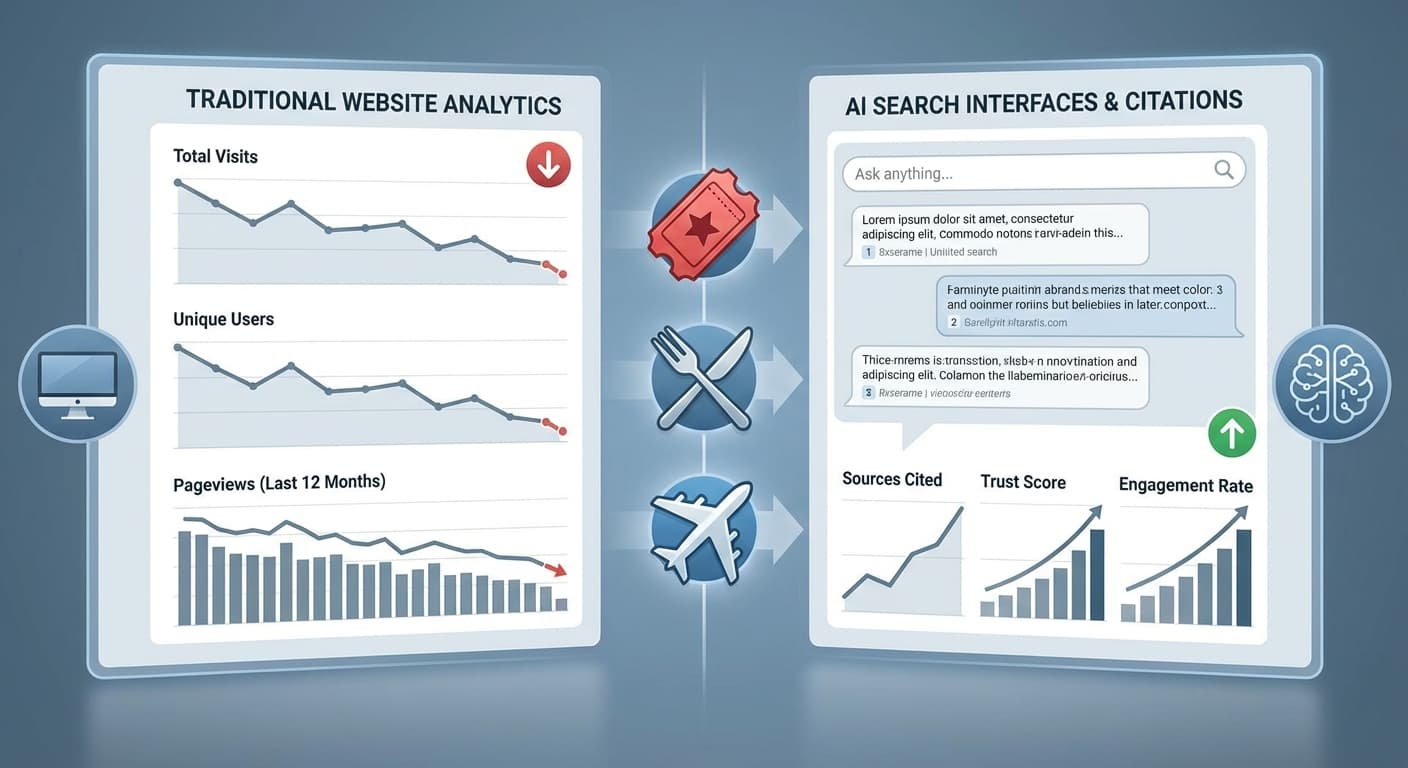
The traditional customer journey used to look like this: Problem → Search → Click → Website → Convert. Today's reality is starkly different: Problem → AI Chat → Solution → Done.
Recent data shows that:
This "zero-click" phenomenon means businesses are losing crucial touchpoints where they previously captured leads, built relationships, and demonstrated expertise.
Understanding the Three Types of Lost Customer Interactions
1. Information Seekers
Users who would have visited your blog posts, guides, or FAQ pages now get answers directly from AI engines. These interactions represented early-stage awareness and education opportunities.
2. Problem Solvers
Customers seeking specific solutions previously landed on your product pages or case studies. AI engines now provide alternative solutions or generic advice without brand attribution.
3. Comparison Shoppers
Buyers who used to visit multiple websites to compare options now ask AI engines for recommendations, often receiving unbiased comparisons that don't favor any particular brand.
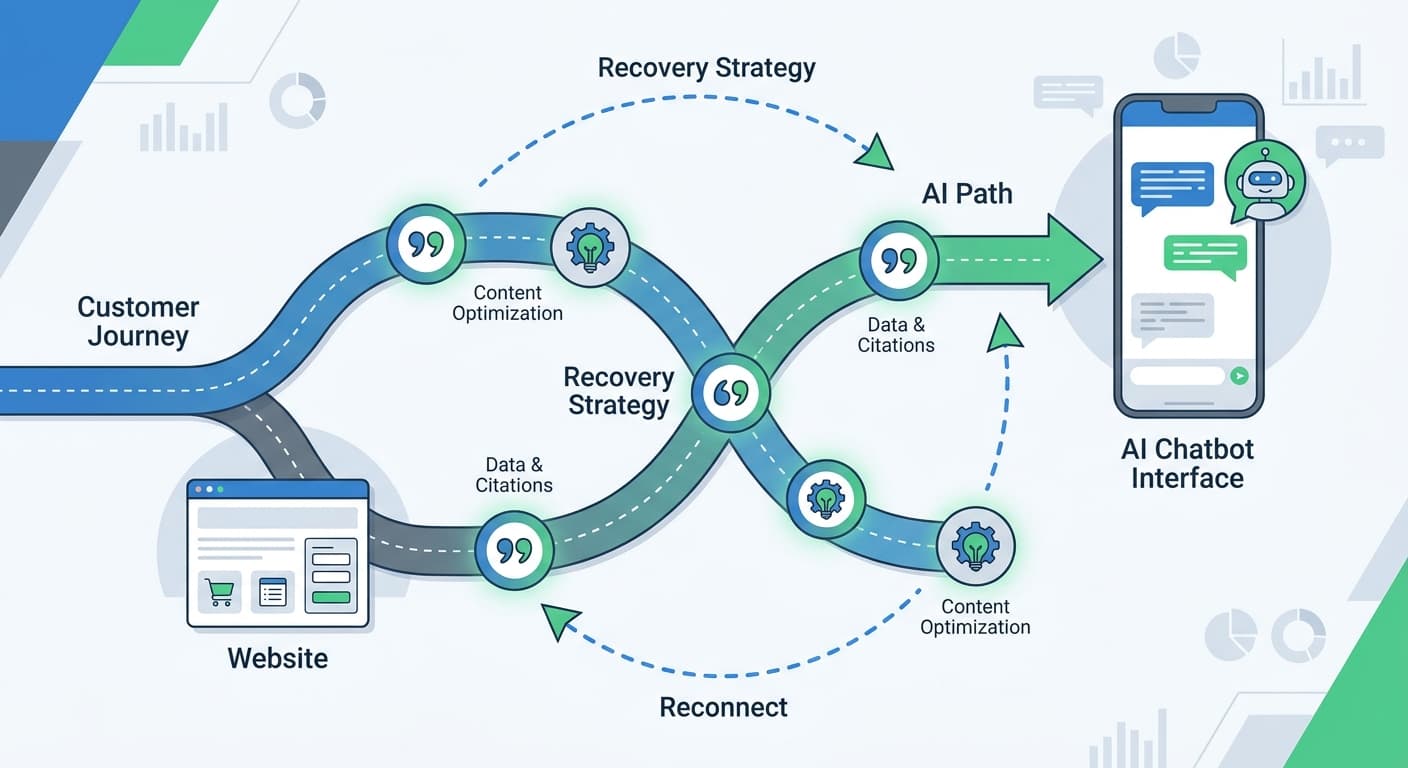
The Customer Journey Recovery Framework
Step 1: Become the Primary Source
Instead of fighting AI engines, become their preferred source. This means:
Create Citation-Worthy Content
Optimize for AI Comprehension
Step 2: Embed Strategic CTAs Within Citations
When your content gets cited, ensure it includes subtle nudges toward deeper engagement:
Contact Information Integration
Value-Added References
Step 3: Create AI-First Content Formats
Conversational Content Architecture
Multi-Layered Information Density
Step 4: Implement Cross-Channel Recovery Tactics
Social Media Amplification
Email Marketing Integration
Paid Media Adaptation
Advanced Recovery Strategies
Reverse Engineering AI Citations
Monitor Your Citation Performance
Track when and how often your content appears in AI responses. Understanding these patterns helps you:
Competitive Citation Analysis
Study which competitors get cited for your target topics and analyze:
Building AI-Resistant Touchpoints
Some interactions are harder for AI engines to replace entirely:
Interactive Experiences
Community and Relationship Building
Exclusive and Proprietary Content
How Citescope AI Helps
Building an effective customer journey recovery strategy requires deep insights into how AI engines interact with your content. Citescope AI provides the tools you need to:
Measuring Recovery Strategy Success
Primary Metrics
Secondary Metrics
Long-term Indicators
The Future of Customer Journey Recovery
As AI engines become more sophisticated, recovery strategies must evolve. Emerging trends include:
Ready to Optimize for AI Search?
The customer journey isn't disappearing—it's transforming. Success in 2026 requires a proactive approach to AI optimization and citation tracking. Citescope AI helps you reclaim lost touchpoints by ensuring your content gets cited by leading AI engines, complete with detailed analytics to measure your recovery success.
Start building your customer journey recovery strategy today with a free Citescope AI account. Track your citations, optimize your content, and turn AI disruption into competitive advantage.