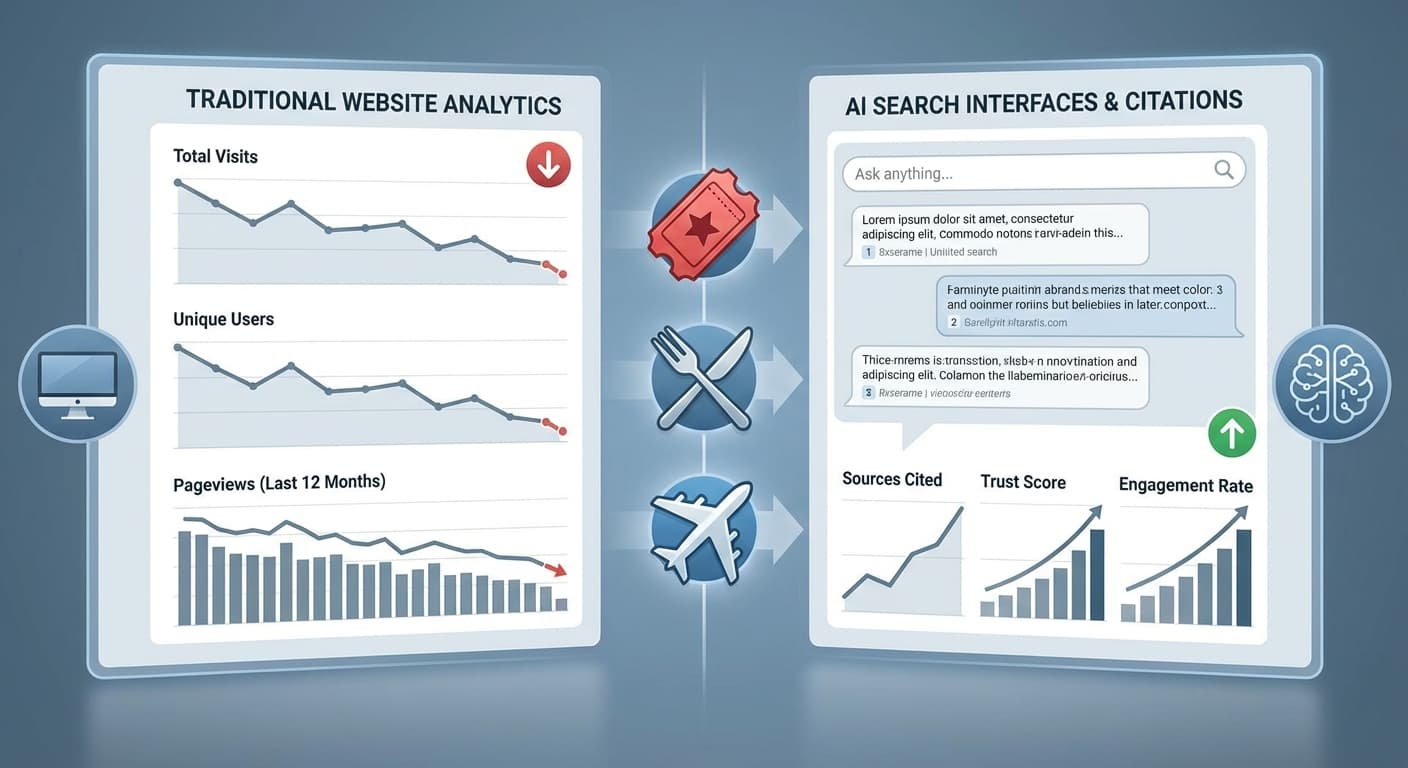
How to Build a Customer Data Platform Citation Strategy When AI Search Engines Start Requiring First-Party Behavioral Data to Rank Answers for High-Intent Commercial Queries
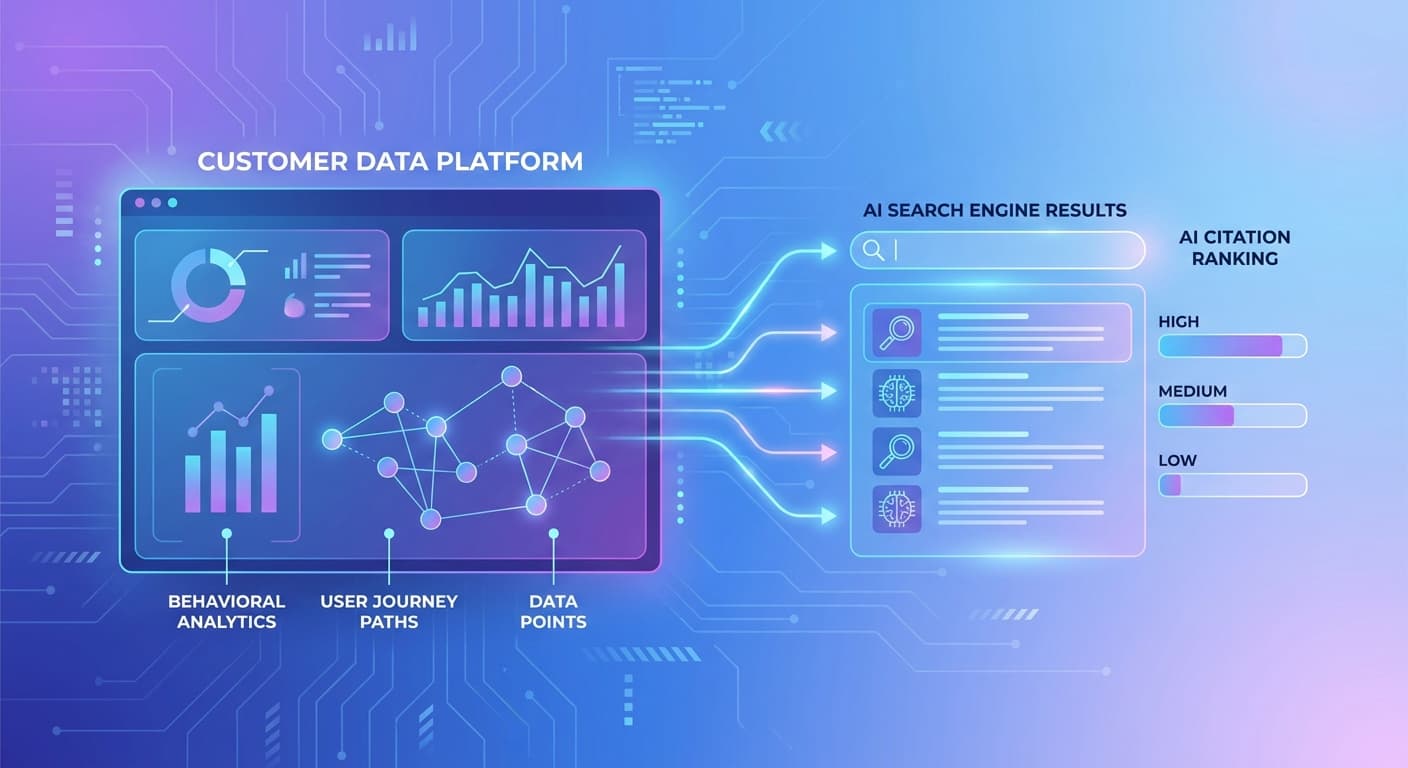
How to Build a Customer Data Platform Citation Strategy When AI Search Engines Start Requiring First-Party Behavioral Data to Rank Answers for High-Intent Commercial Queries
By late 2025, over 75% of high-intent commercial queries are now answered by AI search engines like ChatGPT, Perplexity, and Gemini. But here's the game-changer: these platforms are increasingly prioritizing sources that can demonstrate real user engagement and behavioral validation when ranking citations for commercial queries.
If your content isn't backed by first-party behavioral data from a robust Customer Data Platform (CDP), you're essentially invisible when potential customers ask AI engines questions like "best project management software for remote teams" or "most reliable cloud hosting providers for e-commerce."
The New Reality of AI-Driven Commercial Search
The shift happened faster than most marketers anticipated. In 2026, AI search engines have moved beyond simple keyword matching and semantic understanding. They now factor in behavioral signals, user engagement metrics, and conversion data when determining which sources to cite for commercial queries.
Here's what changed:
This creates both a challenge and massive opportunity. Companies with sophisticated Customer Data Platforms are seeing 40-60% higher citation rates for commercial queries, while those relying solely on traditional SEO tactics are losing ground rapidly.
Understanding the CDP Citation Strategy Framework
What Is a CDP Citation Strategy?
A CDP citation strategy leverages behavioral data from your Customer Data Platform to create content that AI search engines recognize as high-authority sources for commercial queries. It's not just about having great content—it's about proving that real users find your content valuable enough to convert.
The Three Pillars of CDP-Powered Citations
1. Behavioral Signal Integration
Your CDP captures how users interact with your content across touchpoints. This data becomes the foundation for creating content that mirrors successful user journeys.
2. Conversion Path Optimization
By analyzing which content pieces drive the highest conversion rates, you can structure future content to match those successful patterns.
3. User Intent Correlation
CDP data reveals the relationship between search behavior and actual purchase decisions, allowing you to create content that directly addresses commercial intent.
Building Your CDP Citation Strategy: A Step-by-Step Approach
Step 1: Audit Your Current CDP Capabilities
Before diving into citation optimization, assess your current data infrastructure:
Step 2: Identify High-Value Commercial Query Clusters
Use your CDP to identify query patterns that lead to conversions:
Step 3: Create Behavior-Validated Content Assets
This is where your CDP data transforms into citation-worthy content:
Content Structure Based on Successful User Paths
Incorporate Behavioral Social Proof
Optimize for Commercial Intent Signals
Step 4: Implement Real-Time Content Optimization
Your CDP citation strategy should be dynamic, not static:
Advanced CDP Citation Tactics for 2026
Behavioral Micro-Targeting for Niche Queries
Use CDP segmentation to create hyper-specific content for commercial micro-queries:
Cross-Platform Behavioral Validation
Leverage CDP data from multiple channels to strengthen citation authority:
Dynamic Content Personalization at Scale
While maintaining general applicability for AI citations, use CDP insights to create content variations:
Measuring CDP Citation Strategy Success
Key Performance Indicators
Citation-Specific Metrics
Business Impact Metrics
Behavioral Validation Metrics
Overcoming Common CDP Citation Strategy Challenges
Data Quality and Integration Issues
Ensure your CDP provides clean, actionable insights:
Privacy and Compliance Considerations
Navigate increasing privacy regulations while maximizing data utility:
Resource Allocation and ROI Justification
Make the case for CDP citation strategy investment:
How Citescope Ai Enhances Your CDP Citation Strategy
While your CDP provides the behavioral insights, Citescope Ai bridges the gap between data and AI search optimization. The platform's GEO Score analyzes your CDP-informed content across five dimensions crucial for AI citations: AI Interpretability, Semantic Richness, Conversational Relevance, Structure, and Authority.
The AI Rewriter feature helps transform your behavioral insights into content formats that AI search engines prefer, while the Citation Tracker monitors when your CDP-optimized content successfully gets cited across ChatGPT, Perplexity, Claude, and Gemini. This creates a feedback loop that helps you refine your CDP citation strategy based on actual AI search performance.
The Future of CDP-Driven AI Search Strategy
As we move through 2026, expect AI search engines to become even more sophisticated in evaluating behavioral signals. The companies that build robust CDP citation strategies now will have significant advantages:
Ready to Optimize for AI Search?
Building a CDP citation strategy isn't just about better search visibility—it's about creating content that genuinely serves your customers' commercial decision-making process. Citescope Ai helps you bridge the gap between behavioral insights and AI search optimization, ensuring your CDP-informed content gets the citations it deserves. Start with our free tier to optimize three pieces of your most important commercial content and see how behavioral data can transform your AI search presence.