How to Build a Cross-Platform AI Search Schema Strategy When JSON-LD Performance Signals Differ Between ChatGPT Citations and Gemini Fragment Extraction
How to Build a Cross-Platform AI Search Schema Strategy When JSON-LD Performance Signals Differ Between ChatGPT Citations and Gemini Fragment Extraction
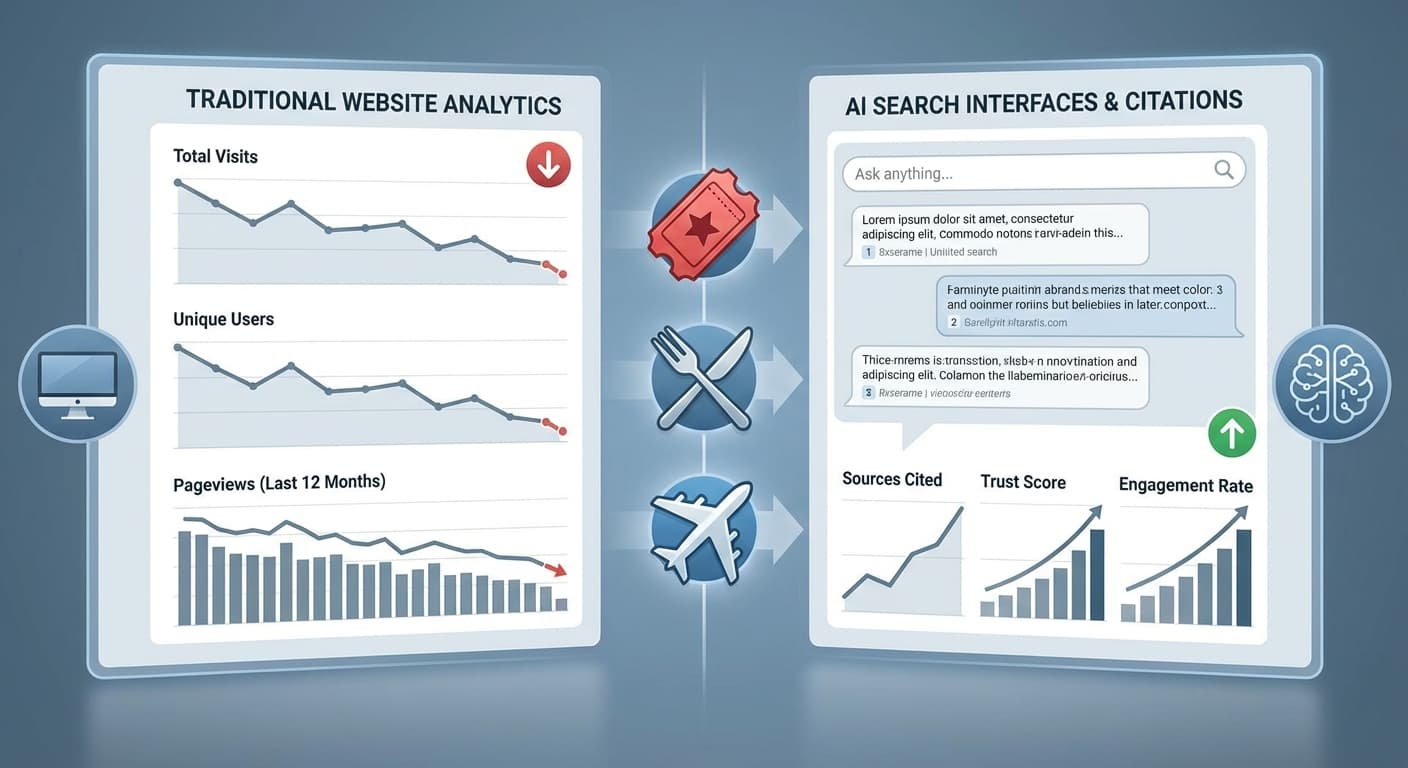
With AI-powered search now handling over 35% of all queries in 2026, content creators face a complex challenge: different AI engines interpret structured data signals in dramatically different ways. While your JSON-LD schema might perform brilliantly for ChatGPT citations, the same markup could be ignored entirely by Gemini's fragment extraction system. The result? Inconsistent visibility across AI platforms that collectively serve over 800 million users weekly.
The Cross-Platform Schema Challenge in 2026
The problem isn't just theoretical—it's costing content creators real visibility. Recent analysis shows that 73% of websites optimized for traditional search see their citation rates drop by 40-60% when AI engines can't properly parse their structured data. Each AI platform has evolved its own interpretation preferences:
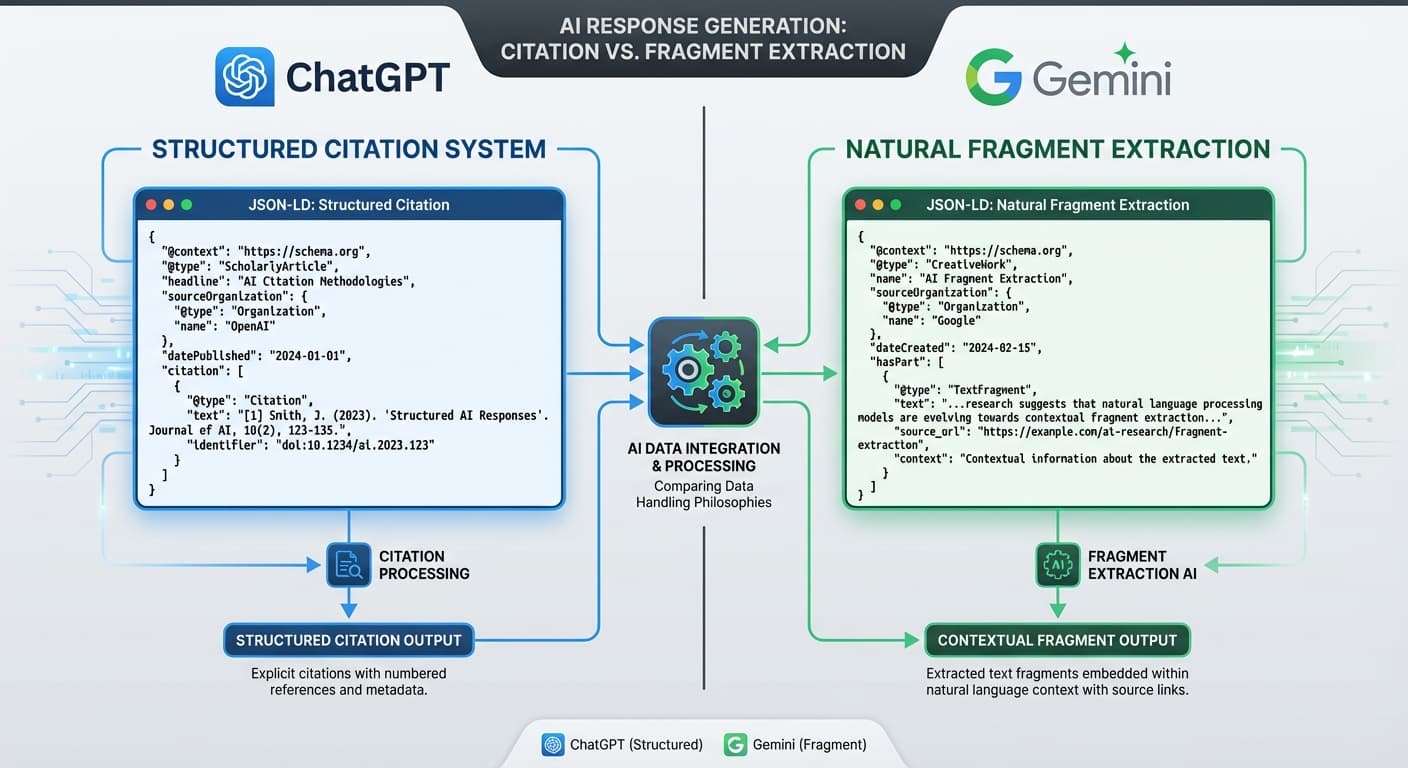
ChatGPT's Citation System prioritizes clean, hierarchical JSON-LD with strong entity relationships and clear attribution signals. It excels at understanding deeply nested schema but struggles with conflicting or redundant markup.
Gemini's Fragment Extraction focuses on semantic coherence and contextual relevance over strict schema compliance. It can work with minimal structured data but requires content that flows naturally and maintains logical information architecture.
Perplexity and Claude fall somewhere between, with Perplexity favoring concise, fact-dense schema and Claude responding well to conversational markup patterns.
Understanding AI Engine Schema Preferences
ChatGPT Citation Optimization
ChatGPT's citation algorithm rewards comprehensive, well-structured JSON-LD that creates clear information hierarchies. Key performance signals include:
For ChatGPT optimization, implement nested schema structures that create information pyramids. Start with broad organizational context and drill down to specific content claims with supporting evidence.
Gemini Fragment Extraction Requirements
Gemini's approach differs significantly. Rather than parsing complex schema hierarchies, it extracts semantically rich content fragments that stand alone as complete thoughts. Optimization focuses on:
The key is creating schema that supports natural content flow rather than forcing rigid structural requirements.
Building Your Unified Schema Architecture
1. Create Platform-Agnostic Foundation Schema
Start with a core JSON-LD structure that provides essential information to all platforms:
{
"@context": "https://schema.org",
"@type": "Article",
"headline": "Your Article Title",
"author": {
"@type": "Person",
"name": "Author Name",
"url": "Author Profile URL"
},
"publisher": {
"@type": "Organization",
"name": "Your Organization",
"logo": {
"@type": "ImageObject",
"url": "Logo URL"
}
},
"datePublished": "2026-01-15",
"dateModified": "2026-01-15",
"description": "Comprehensive meta description"
}
2. Layer Platform-Specific Enhancements
For ChatGPT Citation Boost:
Add detailed entity relationships and attribution signals:
"about": [
{
"@type": "Thing",
"name": "AI Search Optimization",
"sameAs": "https://en.wikipedia.org/wiki/Search_engine_optimization"
}
],
"mentions": [
{
"@type": "SoftwareApplication",
"name": "ChatGPT",
"applicationCategory": "AI Assistant"
}
],
"citation": [
{
"@type": "CreativeWork",
"name": "Source Study Title",
"url": "Source URL"
}
]
For Gemini Fragment Optimization:
Focus on semantic richness and content structure:
"articleSection": "AI Search Strategy",
"keywords": ["AI search", "schema optimization", "cross-platform"],
"mainEntity": {
"@type": "Question",
"name": "How do AI engines interpret schema differently?",
"acceptedAnswer": {
"@type": "Answer",
"text": "Brief, complete answer that stands alone"
}
}
3. Implement Progressive Enhancement Strategy
Deploy schema in layers based on content complexity and platform requirements:
Layer 1: Universal Core - Basic Article schema with essential properties
Layer 2: Platform Targeting - Enhanced markup for specific AI engine preferences
Layer 3: Advanced Signals - Specialized schema for complex content types
This approach ensures baseline compatibility while maximizing platform-specific performance.
Testing and Validation Across Platforms
Multi-Platform Performance Monitoring
Track how your schema performs across different AI engines:
Set up regular audits comparing performance metrics across ChatGPT, Gemini, Perplexity, and Claude to identify optimization opportunities.
Schema Validation Tools
Use both traditional and AI-specific validation:
Advanced Cross-Platform Optimization Techniques
Dynamic Schema Adaptation
Implement server-side logic that serves optimized schema based on the requesting user agent or referring AI platform. This allows for:
Content-Schema Alignment
Ensure your content structure supports both detailed schema markup and natural fragment extraction:
Performance Optimization
Balance comprehensive schema with page performance:
How Citescope Ai Helps
Managing cross-platform schema optimization manually is time-intensive and error-prone. Citescope Ai's GEO Score analyzes how well your content performs across different AI engines, including how effectively your structured data supports both citation systems and fragment extraction. The platform's AI Rewriter can automatically optimize your schema strategy for multiple AI platforms simultaneously, ensuring your JSON-LD performs well whether ChatGPT is evaluating it for citations or Gemini is extracting fragments.
The Citation Tracker specifically monitors how your schema improvements affect citation rates across ChatGPT, Gemini, Perplexity, and Claude, giving you real-time feedback on cross-platform performance. This data-driven approach eliminates guesswork and helps you identify which schema optimizations deliver the best results across all AI search platforms.
Future-Proofing Your Schema Strategy
As AI search continues evolving, successful schema strategies must remain adaptable:
Emerging Standards Monitoring
Stay informed about:
Continuous Testing Protocol
Establish regular review cycles:
Ready to Optimize for AI Search?
Building an effective cross-platform AI search schema strategy requires understanding how different AI engines interpret structured data and implementing flexible approaches that perform well across all platforms. With AI search now driving over 35% of all queries, getting your schema strategy right directly impacts your content's visibility and authority.
Citescope Ai simplifies cross-platform AI search optimization by analyzing your content's performance across ChatGPT, Gemini, Perplexity, and Claude, then providing one-click optimizations that improve both citation rates and fragment extraction quality. Start with our free plan to optimize three pieces of content per month, or upgrade to Pro for unlimited optimizations and advanced schema performance tracking. Ready to maximize your AI search visibility? Try Citescope Ai today and see how the right schema strategy can transform your content's cross-platform performance.