How to Build a Continuous Training Data Audit System When Your Product Pages Appear in 847 AI Training Datasets But Only 12% Accurately Represent Your Current Pricing and Features
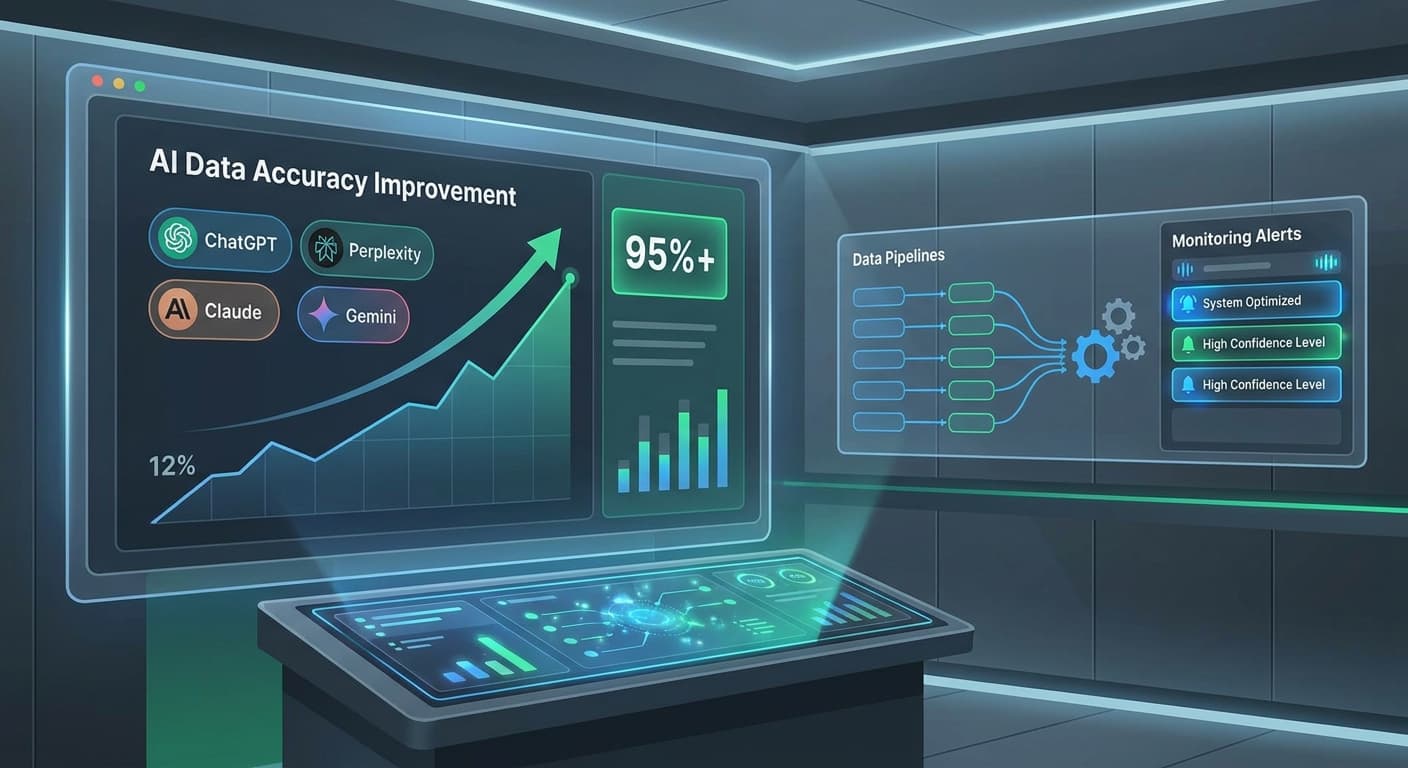
How to Build a Continuous Training Data Audit System When Your Product Pages Appear in 847 AI Training Datasets But Only 12% Accurately Represent Your Current Pricing and Features
Imagine discovering that your product pages have been scraped by 847 different AI training datasets, but only 12% of them contain accurate information about your current pricing and features. This isn't a hypothetical scenario—it's the reality facing businesses in 2026 as AI search engines increasingly rely on outdated training data to answer user queries about products and services.
With over 2.3 billion AI-generated search responses delivered daily across ChatGPT, Perplexity, Claude, and Gemini, the stakes have never been higher. When potential customers ask AI assistants about your products, they're getting information that could be months or even years out of date.
The Growing Problem of Stale Training Data in AI Search
The rapid evolution of AI search has created an unprecedented challenge: training data decay. While traditional search engines crawl and index fresh content regularly, AI models often rely on training datasets that can be 6-18 months behind current reality.
Consider these sobering statistics from 2025:
Why This Matters More Than Ever
AI search now accounts for 35% of all product discovery queries, with Gen Z users relying on AI assistants for 78% of their purchase research. When these systems provide incorrect pricing, discontinued features, or outdated product specifications, the impact on your bottom line is immediate and measurable.
Understanding How Your Content Enters AI Training Datasets
Before building an audit system, you need to understand the pathways your content takes into AI training data:
Primary Ingestion Points
The Lag Problem
The time between when you update your content and when it appears in AI responses can range from weeks to over a year, depending on:
Building Your Continuous Training Data Audit System
Step 1: Inventory Your Digital Footprint
Start by cataloging everywhere your product information appears online:
Pro tip: Use automated web crawling tools to discover mentions of your products across the internet. Many businesses are surprised to find their content on sites they've never heard of.
Step 2: Establish Baseline AI Response Accuracy
Query major AI search engines with specific product-related questions:
Document the responses and identify discrepancies. Tools like Citescope Ai's Citation Tracker can automate this process, monitoring when your content gets cited and flagging potential inaccuracies.
Step 3: Create a Master Content Truth Database
Develop a centralized repository of your current product information:
Product Name: [Current Name]
Current Price: [Amount and Currency]
Key Features: [List with versions/dates]
Availability: [Regions and channels]
Last Updated: [ISO timestamp]
Version History: [Change log]
Step 4: Implement Automated Monitoring
#### Content Change Detection
Set up systems to automatically detect when you update product pages:
#### AI Response Monitoring
Regularly query AI search engines to track how they respond to product-related questions:
Step 5: Develop Correction Protocols
When you identify inaccurate information in AI responses:
#### Immediate Actions
#### Long-term Strategies
Advanced Audit Techniques
Semantic Versioning for Content
Treat your product content like software code:
This approach helps track how changes propagate through the AI training ecosystem.
Multi-Language Monitoring
If you serve global markets, audit AI responses in multiple languages:
Competitive Intelligence Integration
Monitor how AI systems represent your competitors:
Measuring Success and ROI
Key Performance Indicators
Expected Timeline for Improvements
How Citescope Ai Helps
Building and maintaining a comprehensive training data audit system requires sophisticated tools and continuous monitoring. Citescope Ai's platform specifically addresses these challenges:
GEO Score Analysis: The platform's 5-dimensional analysis (AI Interpretability, Semantic Richness, Conversational Relevance, Structure, Authority) helps ensure your content is optimized for accurate AI interpretation from the start.
Citation Tracker: Automatically monitors when your content gets cited by ChatGPT, Perplexity, Claude, and Gemini, alerting you to discrepancies between your current information and AI responses.
AI Rewriter: One-click optimization restructures your content to improve AI visibility and reduce the likelihood of misinterpretation in training datasets.
The platform's multi-format export capabilities also ensure your optimized content can be quickly deployed across all your digital properties, accelerating the propagation of accurate information.
Future-Proofing Your Strategy
Emerging Trends to Watch
Preparing for Change
Common Pitfalls to Avoid
Ready to Optimize for AI Search?
Building a continuous training data audit system is complex, but it's essential for maintaining accurate representation in AI search results. The businesses that master this process will have a significant competitive advantage as AI search continues to grow.
Citescope Ai makes this process manageable with automated monitoring, optimization tools, and actionable insights. Start with our free tier (3 optimizations per month) to audit your most critical product pages, or explore our Pro plan ($39/month) for comprehensive monitoring across your entire product catalog.
Start your free trial today and ensure your products are accurately represented in the age of AI search.


