How to Build a Compliance Risk Management Strategy When AI Search Engines Extract and Republish Regulated Financial Product Information Without Required Legal Disclaimers
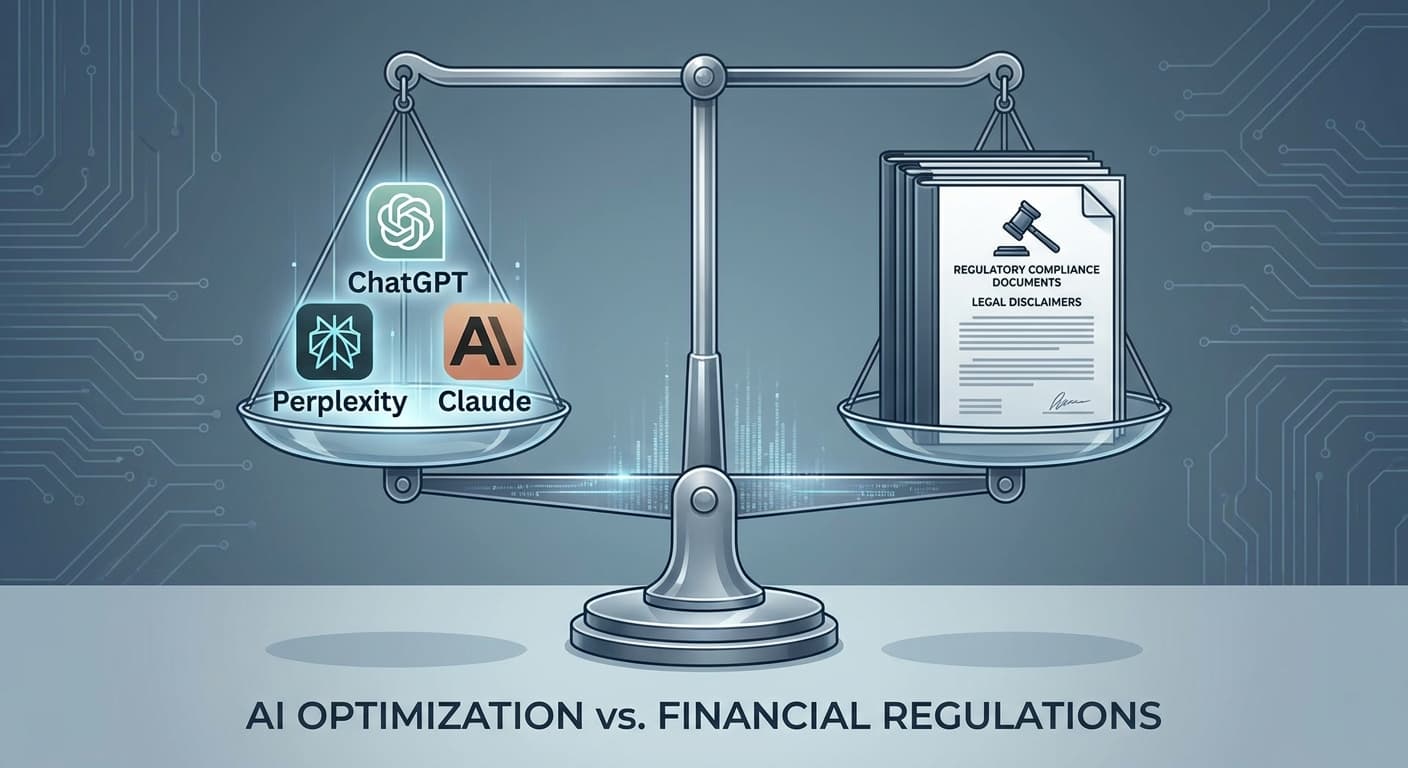
How to Build a Compliance Risk Management Strategy When AI Search Engines Extract and Republish Regulated Financial Product Information Without Required Legal Disclaimers
By 2026, over 40% of financial service queries are being answered by AI search engines like ChatGPT, Perplexity, and Claude. But here's the problem: these AI systems often extract and republish regulated financial information while stripping away critical legal disclaimers, risk warnings, and compliance language that financial institutions are legally required to include. This creates a massive compliance gap that could expose firms to regulatory penalties, lawsuits, and reputational damage.
If you're in financial services, fintech, or any regulated industry, this isn't just a marketing challenge—it's a legal time bomb waiting to explode.
The Growing Compliance Crisis in AI Search
The rapid adoption of AI search has created an unprecedented regulatory blind spot. When ChatGPT or Perplexity extracts information about investment products, insurance policies, or loan terms from your website, they typically omit the mandatory disclaimers, risk warnings, and legal language that regulators require.
Consider these sobering statistics from 2025:
The challenge is that AI systems are designed to provide clean, conversational answers—but financial regulations require specific legal language that doesn't fit this format.
Understanding the Regulatory Landscape
Key Compliance Requirements at Risk
Financial institutions must navigate a complex web of regulations that AI search engines routinely ignore:
SEC Requirements:
FINRA Guidelines:
State Insurance Regulations:
Consumer Protection Laws:
The AI Citation Gap
When AI engines cite your content, they typically extract the "useful" information while discarding what they perceive as legal boilerplate. A typical AI response might say: "According to XYZ Investment Firm, their aggressive growth fund has averaged 12% returns over the past five years."
What gets lost? The required disclaimers like "Past performance does not guarantee future results," "Investments involve risk of loss," and "Consult with a qualified financial advisor before investing."
Building Your Compliance Risk Management Strategy
Phase 1: Risk Assessment and Audit
Conduct a Comprehensive Content Audit
Assess Current AI Visibility
Use tools like Citescope Ai's Citation Tracker to monitor how AI engines are currently citing your financial content. This gives you baseline data on compliance exposure across ChatGPT, Perplexity, Claude, and Gemini.
Phase 2: Content Structure Optimization
Embed Disclaimers in Core Content
Rather than relegating compliance language to fine print, integrate essential disclaimers into your main content structure:
Before: "Our premium savings account offers a 4.5% annual percentage yield."
After: "Our premium savings account offers a 4.5% annual percentage yield, though rates are subject to change and FDIC insurance applies to deposits up to $250,000 per depositor."
Use Semantic Clustering
Group related compliance concepts throughout your content so AI engines understand the regulatory context:
Implement Structured Data Markup
Use schema.org markup to explicitly tag compliance-critical information:
html
<div itemscope itemtype="https://schema.org/FinancialProduct">
<span itemprop="name">Growth Investment Fund</span>
<span itemprop="riskLevel">High Risk - Past performance does not guarantee future results</span>
<span itemprop="disclaimer">Investments involve risk of loss of principal</span>
</div>
Phase 3: AI-Optimized Compliance Content
Create Conversational Disclaimer Language
Transform legal jargon into AI-friendly language that maintains regulatory compliance:
Traditional: "This communication is not intended as personalized investment advice and should not be relied upon as such."
AI-Optimized: "Important: This information is educational only and not personalized investment advice for your specific situation."
Develop Compliance-First Content Templates
Build content frameworks that naturally incorporate required disclosures:
Phase 4: Monitoring and Response Protocols
Establish Real-Time Monitoring
Set up systems to track how AI engines are citing your content:
Create Response Procedures
Develop protocols for addressing compliance violations in AI citations:
Advanced Compliance Strategies
Regulatory Sandbox Approach
Create a controlled environment for testing AI optimization while maintaining compliance:
Stakeholder Collaboration Framework
Legal and Compliance Team Integration
Technology Partnership Strategy
Future-Proofing Your Strategy
Anticipate Regulatory Changes
2026 is likely to bring new regulations specifically addressing AI search and financial content. Position your organization ahead of these changes:
Technology Evolution Planning
As AI search engines become more sophisticated, your compliance strategy must evolve:
How Citescope Ai Helps Manage Compliance Risk
Navigating compliance in the AI search era requires specialized tools designed for this unique challenge. Citescope Ai offers several features specifically valuable for regulated industries:
GEO Score Analysis evaluates your content across five dimensions, including authority and structure—crucial factors for maintaining compliance context in AI citations. The tool identifies when regulatory language might be at risk of omission.
Citation Tracking monitors how ChatGPT, Perplexity, Claude, and Gemini are citing your financial content in real-time, alerting you to potential compliance gaps before they become regulatory issues.
AI Rewriter helps restructure your content to maintain both regulatory compliance and AI visibility, ensuring required disclaimers stay connected to relevant financial information.
Multi-format Export allows compliance teams to distribute optimized content across different platforms while maintaining consistent regulatory language.
Implementation Timeline
Weeks 1-2: Assessment Phase
Weeks 3-6: Strategy Development
Weeks 7-12: Full Deployment
Ongoing: Monitoring and Refinement
Ready to Optimize for AI Search While Managing Compliance Risk?
The intersection of AI search optimization and regulatory compliance is complex, but it's not optional for financial services firms. With the right strategy and tools, you can maintain regulatory compliance while capturing the growing AI search audience.
Citescope Ai helps financial institutions navigate this challenge with purpose-built features for monitoring, optimizing, and tracking regulated content in AI search engines. Start with our free tier to audit your current AI citation risk, then upgrade to Pro for comprehensive compliance monitoring across all major AI platforms.