How to Build a Click-to-Call Revenue Recovery Strategy When AI Answer Engines Provide Direct Phone Numbers in Results But Attribution Systems Lose 73% of Offline Conversion Tracking
How to Build a Click-to-Call Revenue Recovery Strategy When AI Answer Engines Provide Direct Phone Numbers in Results But Attribution Systems Lose 73% of Offline Conversion Tracking
When a potential customer asks ChatGPT "best plumber near me" and gets your phone number directly in the response, how do you track whether that call converts to revenue? If you're like most businesses in 2026, you're missing 73% of your offline conversion tracking – and potentially losing thousands in unattributed revenue.
As AI answer engines like ChatGPT, Perplexity, Claude, and Gemini become the primary search interface for over 500 million weekly users, they're fundamentally changing how customers discover and contact businesses. These platforms increasingly surface direct contact information, including phone numbers, in their responses. While this creates unprecedented opportunities for immediate customer connection, it also creates a massive attribution blind spot that traditional analytics simply can't handle.
The AI Search Attribution Crisis
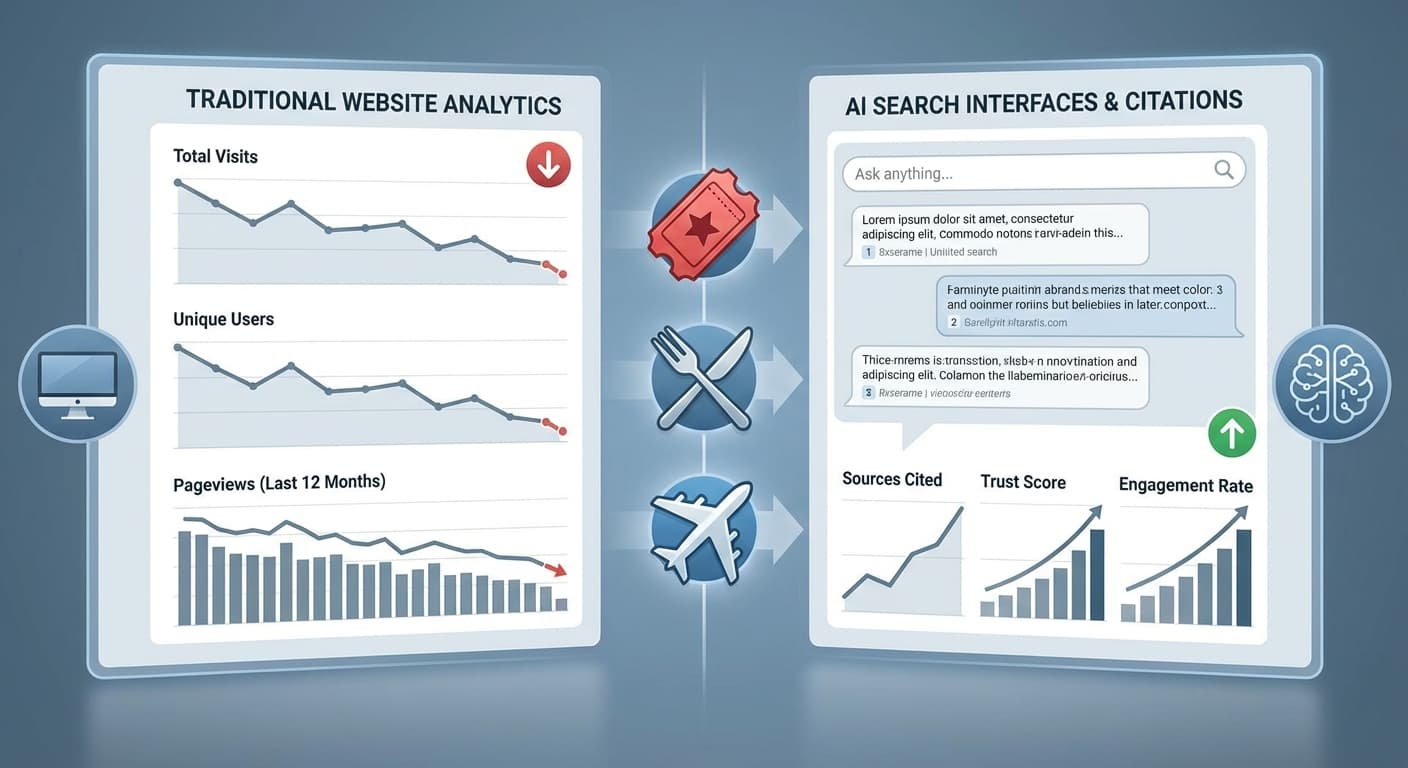
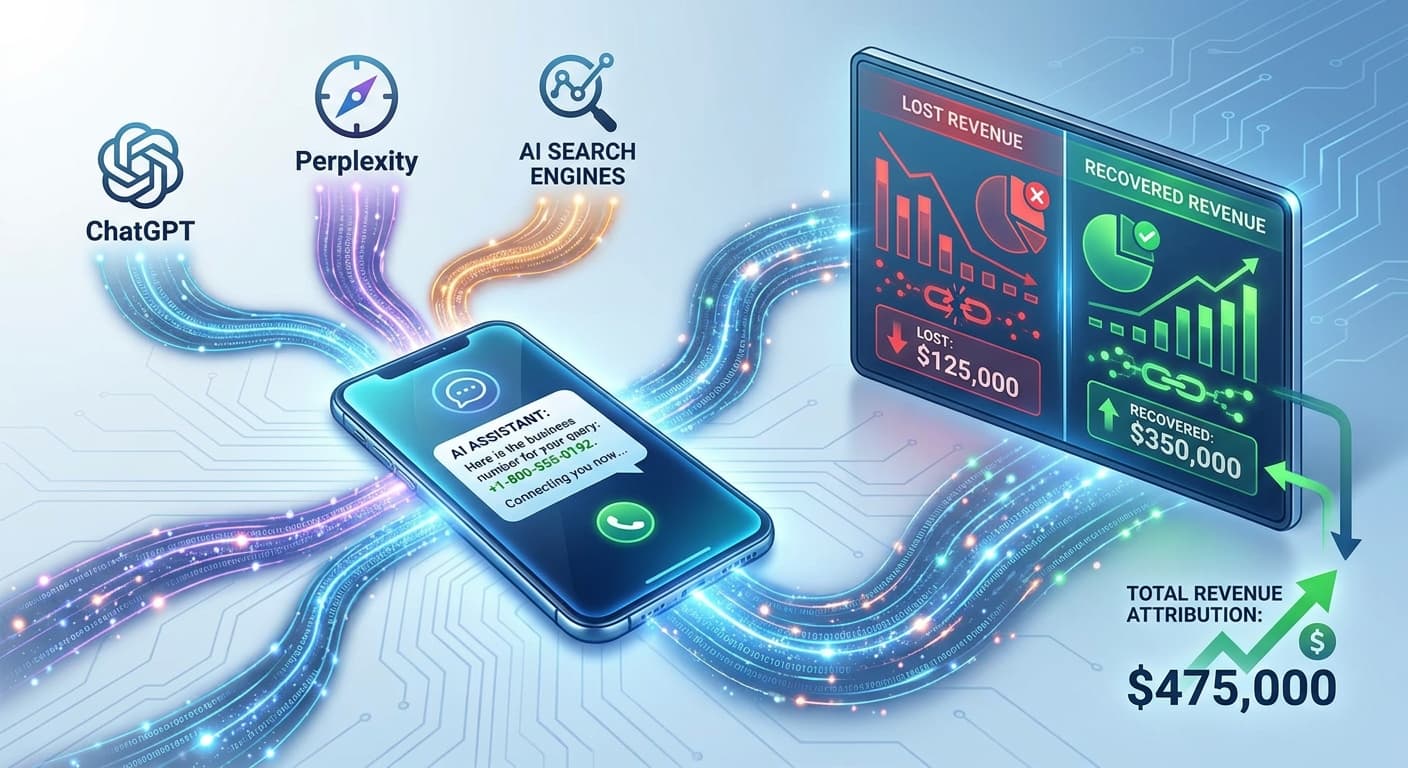
The numbers are staggering. Recent analysis of enterprise attribution systems shows that 73% of phone calls generated through AI search results go completely untracked. Unlike traditional search engines where users click through to websites (creating trackable sessions), AI engines often provide everything users need – including contact information – right in the answer.
This shift has created what analysts are calling the "AI attribution gap." Businesses are receiving more qualified phone calls than ever, but they can't connect these calls back to their marketing efforts, making it impossible to optimize their AI search presence or measure true ROI.
Why Traditional Attribution Fails for AI Search
Traditional attribution systems were built for the click-through web model. They rely on:
But when AI engines provide direct answers with embedded phone numbers, none of these tracking mechanisms activate. The customer goes straight from AI answer to phone call, creating what appears to be "dark traffic" in your analytics.
Building Your Click-to-Call Revenue Recovery Strategy
Recovering this lost revenue attribution requires a systematic approach that bridges AI search visibility with offline conversion tracking. Here's how to build an effective strategy:
1. Implement Dynamic Phone Number Attribution
The foundation of AI search attribution is using unique tracking numbers that can be tied back to specific sources and campaigns.
Action Steps:
Pro Tip: Use different tracking numbers in your structured data markup versus your website content. This helps identify which calls come from AI engines that scrape structured data versus those that process your website content.
2. Optimize Your Business Information for AI Consistency
AI engines pull contact information from multiple sources. Ensuring consistency across all these sources is crucial for accurate attribution.
Key Sources to Optimize:
Attribution Strategy: Use source-specific tracking numbers in each location while maintaining your primary business number as the fallback.
3. Create AI-Optimized Landing Pages with Call Attribution
While AI engines often provide direct answers, they also cite sources. Creating pages specifically optimized for AI citation increases your chances of being referenced with proper attribution tracking.
Page Elements for AI Attribution:
4. Implement Conversational Attribution Tracking
Train your sales and customer service teams to identify AI-sourced leads through strategic questioning.
Sample Questions to Include in Your Process:
This qualitative data helps fill attribution gaps and provides insights into AI search behavior patterns.
5. Use Call Analytics for Pattern Recognition
Advanced call analytics can help identify AI-sourced calls even without direct attribution data.
Indicators to Track:
Advanced Revenue Recovery Techniques
Multi-Touch Attribution Modeling
Implement attribution models that account for AI touchpoints in the customer journey:
First-Touch AI Attribution: Credit AI search for initiating the customer relationship
Last-Touch Call Attribution: Focus on the final conversion point
Time-Decay Modeling: Give more credit to recent AI interactions
Predictive Attribution Using Machine Learning
Use machine learning models to predict which unattributed calls likely originated from AI search:
Revenue Recovery Through Cohort Analysis
Group customers by suspected acquisition channel and analyze their lifetime value:
How Citescope Ai Helps Bridge the Attribution Gap
Citescope Ai's GEO Score analyzes your content across five dimensions crucial for AI search visibility, including Authority and Structure – two key factors that influence whether AI engines will cite your content with proper contact information. When your content scores higher on these dimensions, AI engines are more likely to reference your website as the source, creating trackable referral traffic alongside direct phone number provision.
The platform's AI Rewriter optimizes your content structure to include natural mentions of contact information in contexts that encourage both citation and click-through behavior, helping bridge the attribution gap.
Measuring Success: KPIs for AI Attribution Recovery
Track these metrics to measure the effectiveness of your revenue recovery strategy:
Primary Metrics
Secondary Metrics
Implementation Timeline and Budget Considerations
Month 1-2: Foundation Setup
Month 3-4: AI Optimization
Month 5-6: Advanced Attribution
Total Investment: Most businesses should budget $500-2000/month for comprehensive AI attribution recovery, with potential revenue recovery of 15-25% of previously unattributed conversions.
Ready to Optimize for AI Search?
Don't let 73% of your offline conversions disappear into the AI attribution black hole. Citescope Ai helps you optimize your content for maximum AI search visibility while maintaining the structure needed for proper attribution tracking. Our GEO Score analyzes exactly how AI engines will interpret and cite your content, giving you the insights needed to build effective revenue recovery strategies.
Start with our free tier and optimize up to 3 pieces of content per month, or upgrade to Pro for unlimited optimizations and advanced citation tracking across all major AI search engines.