GEO Strategy

How to Build a Click Retention Strategy When AI Overviews Trigger in 25% of Queries
May 20, 20267 min read
How to Build a Click Retention Strategy When AI Overviews Trigger in 25% of Queries

How to Build a Click Retention Strategy When AI Overviews Trigger in 25% of Queries

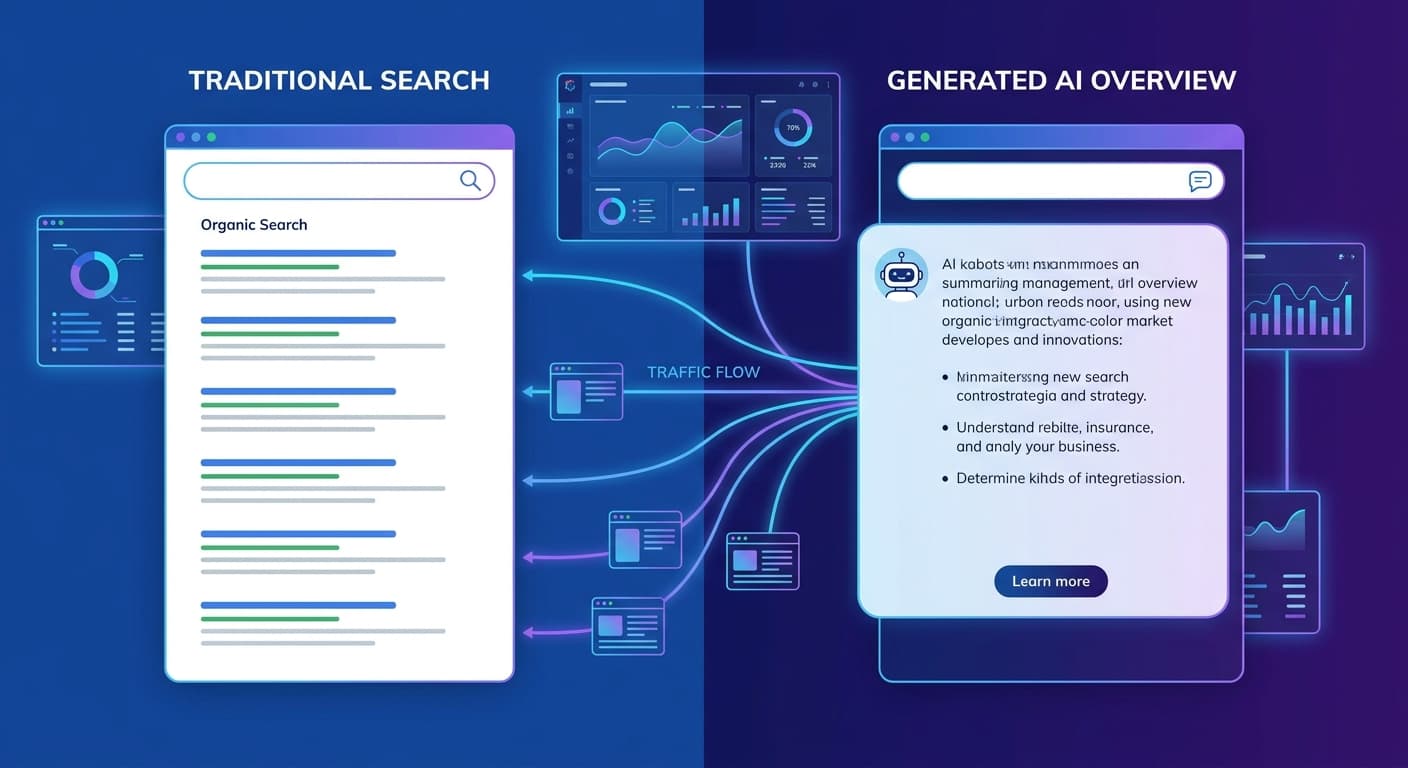
By early 2026, AI-powered search features now appear in over 25% of all Google queries, while platforms like Perplexity handle 100+ million searches monthly. Yet here's the kicker: most marketers still can't distinguish between AI-driven traffic and traditional search clicks in their analytics. This blind spot is costing businesses millions in lost opportunities and misallocated budgets.

If you're struggling to understand where your traffic is really coming from and how to retain clicks when AI overviews dominate the SERP, you're not alone. The search landscape has fundamentally shifted, and traditional metrics are failing to capture the full picture.

The Analytics Black Hole: Why We Can't Track AI Traffic

The problem runs deeper than most realize. When Google's AI Overview or Perplexity's answer engine pulls information from your content, the referral data often appears identical to traditional organic search traffic. This creates several critical challenges:

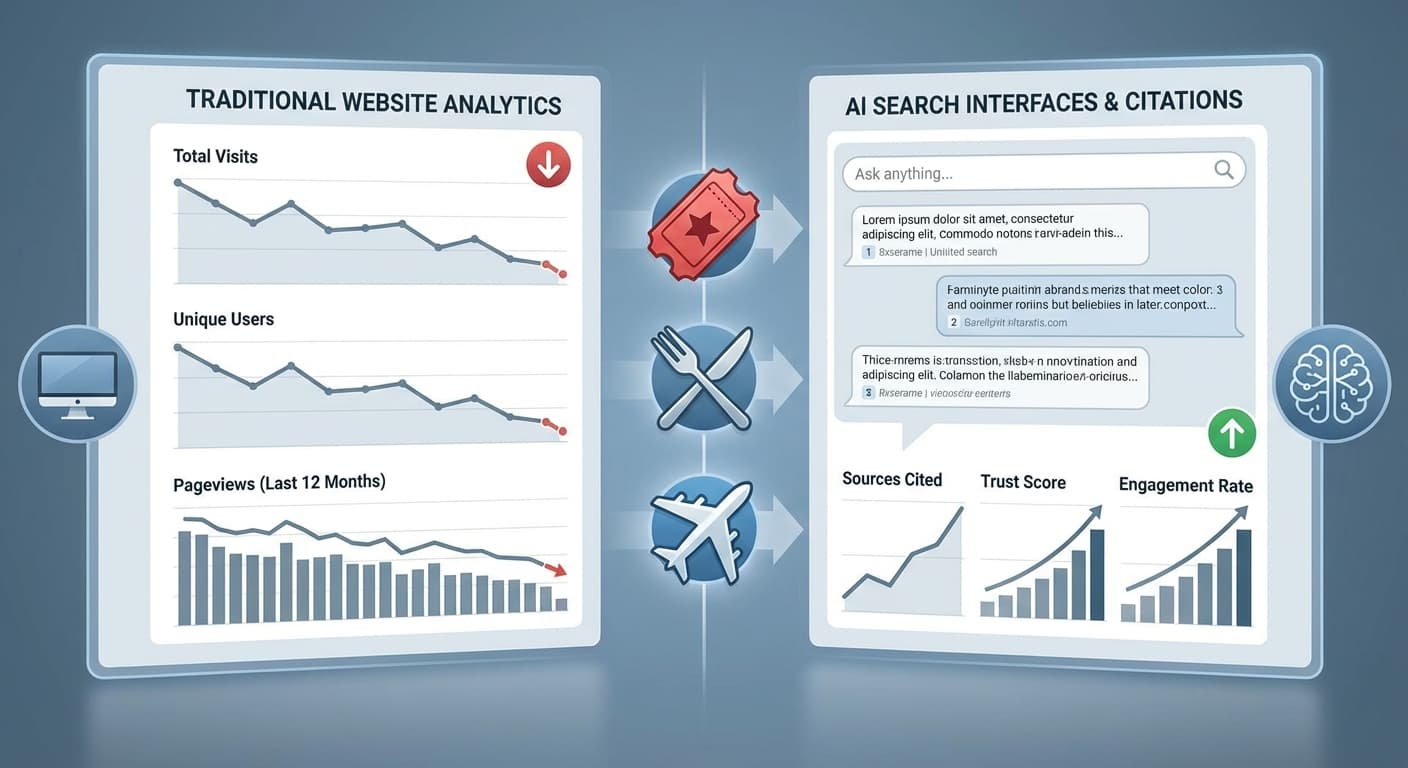
Current Tracking Limitations

  • Identical referral signatures: AI-generated clicks often show the same UTM parameters as organic search

  • Aggregated data: Google Analytics lumps AI-influenced sessions with traditional search traffic

  • Missing context: We can't see which queries triggered AI overviews that included our content

  • Attribution gaps: Conversions from AI-driven traffic get misattributed to other channels
  • This tracking blindness means you might be optimizing for the wrong metrics while missing opportunities to capture high-intent AI-driven traffic.

    The 2026 Reality: How AI Overviews Are Reshaping Search Behavior

    Recent data from search behavior studies reveals a dramatic shift in user patterns:

  • 68% of users scroll past AI overviews to click organic results when seeking detailed information

  • 42% of Gen Z users now start with AI chat interfaces before moving to traditional search

  • Average session duration from AI-referred traffic is 23% longer than traditional organic clicks

  • Conversion rates from AI-driven traffic average 31% higher, likely due to pre-qualified intent
  • These statistics suggest that while AI overviews might reduce total click volume, the traffic that does come through is often higher quality. The key is building a strategy that capitalizes on this shift.

    Building Your Click Retention Strategy: A Framework for 2026

    1. Optimize for AI Overview Inclusion

    When your content appears in AI overviews, you're not just getting a mention—you're getting pre-qualified traffic. Users who click through after reading an AI summary are typically looking for deeper insights.

    Actionable tactics:

  • Structure content with clear, quotable sections that AI can easily extract

  • Use numbered lists and bullet points for scannable information

  • Include authoritative statistics and data points that AI engines prefer

  • Create content that naturally answers follow-up questions users might have
  • 2. Implement Advanced Attribution Modeling

    Since traditional analytics fall short, you need creative solutions to track AI-influenced traffic:

    UTM parameter strategies:

  • Create unique landing pages for high-AI-visibility content

  • Use specific UTM campaigns for content likely to appear in overviews

  • Set up custom events in GA4 to track AI-referral patterns

  • Monitor direct traffic spikes that coincide with AI overview appearances
  • Behavioral indicators:

  • Track users who spend 30+ seconds on page (suggesting they read beyond the overview)

  • Monitor scroll depth on pages that commonly appear in AI summaries

  • Analyze bounce rates from suspected AI traffic vs. traditional organic
  • 3. Create "Click-Through Magnets"

    When AI overviews provide partial answers, your content needs irresistible hooks to pull users to your site:

    Content enhancement techniques:

  • Tease exclusive data: "Based on our analysis of 10,000+ campaigns..."

  • Offer downloadable resources: Tools, templates, and checklists not available in the overview

  • Promise visual content: Charts, infographics, and videos that AI can't fully convey

  • Provide step-by-step guides: Detailed processes that require full context
  • 4. Optimize Landing Experience for AI-Referred Users

    Users coming from AI overviews have different expectations than traditional search visitors:

    Page optimization strategies:

  • Load content above the fold that immediately expands on the AI summary

  • Use clear headings that help users navigate to specific information

  • Include internal links to related topics mentioned in overviews

  • Add social proof and credibility indicators early in the content
  • Advanced Strategies for Enterprise Teams

    Cross-Platform AI Visibility

    Don't limit your strategy to Google. In 2026, users are getting answers from multiple AI platforms:

  • ChatGPT: Focus on conversational, helpful content that feels natural in chat

  • Perplexity: Emphasize factual accuracy and cite authoritative sources

  • Claude: Create comprehensive, well-structured content that supports complex reasoning

  • Gemini: Optimize for multimodal content that includes images and data visualizations
  • Tools like Citescope Ai help you track citation performance across all these platforms, giving you visibility into which AI engines are referencing your content most frequently.

    Content Audit for AI Visibility

    Regularly assess your content's AI performance:

  • Identify high-AI-visibility pages using search console data and manual testing

  • Analyze user behavior on these pages to understand drop-off points

  • A/B test different content structures to improve click-through rates

  • Monitor competitor content that frequently appears in overviews
  • Building Internal Tracking Systems

    Create custom dashboards that help you understand AI-influenced traffic:

  • Time-series analysis: Compare traffic patterns before and after AI overview implementations

  • Content correlation: Match content themes with traffic spikes

  • Conversion attribution: Track which content formats drive the highest AI-referred conversions
  • How Citescope Ai Helps Solve the Attribution Problem

    While traditional analytics struggle with AI traffic attribution, Citescope Ai provides unique insights into your content's AI visibility. The platform's Citation Tracker monitors mentions across ChatGPT, Perplexity, Claude, and Gemini, giving you data that Google Analytics simply can't provide.

    The GEO Score feature analyzes your content across five key dimensions that AI engines prioritize, helping you optimize for maximum visibility. When combined with the AI Rewriter tool, you can transform existing content into formats that both retain clicks and perform well in AI overviews.

    Measuring Success in the AI-First Era

    New Metrics That Matter

    Traditional SEO metrics need updates for the AI era:

    Beyond click-through rates:

  • AI citation frequency: How often your content appears in AI responses

  • Post-overview engagement: Time spent on site after AI referral

  • Cross-platform visibility: Citations across multiple AI engines

  • Intent satisfaction rate: Whether users find what they need on your site
  • Quality indicators:

  • Session depth: Pages per session from AI-referred traffic

  • Return visitor rate: Users who come back after initial AI referral

  • Social sharing: Content shared after AI-driven discovery

  • Lead quality: Conversion rates from suspected AI traffic
  • Setting Up Success Tracking

  • Establish baselines using current traffic patterns and conversion data

  • Create custom segments in Analytics for suspected AI traffic

  • Monitor content performance across different AI platforms

  • Track brand mention frequency in AI responses

  • Measure user satisfaction through surveys and feedback
  • Future-Proofing Your Strategy

    As AI search continues evolving, stay ahead with these approaches:

    Emerging Trends to Watch

  • Voice-first AI interactions becoming more common

  • Visual AI search gaining prominence

  • Personalized AI responses based on user history

  • Real-time AI updates reflecting current events
  • Building Adaptive Systems

  • Regular strategy reviews to adapt to platform changes

  • Flexible content creation that works across multiple AI formats

  • Continuous testing of new optimization techniques

  • Team training on AI search best practices
  • Ready to Optimize for AI Search?

    The shift to AI-dominated search isn't coming—it's here. While attribution challenges make it difficult to track AI-influenced traffic, the opportunity for businesses that adapt quickly is enormous. With higher-quality traffic, better conversion rates, and pre-qualified leads, AI-referred visitors represent some of the most valuable traffic you can capture.

    Citescope Ai helps you navigate this complex landscape with tools designed specifically for the AI search era. From tracking citations across major AI platforms to optimizing content for maximum visibility, you'll finally have the insights needed to build an effective click retention strategy.

    Start your free trial today and discover which AI engines are already citing your content—you might be surprised by what you find.

    AI search optimizationclick retentionanalytics trackingAI overviewssearch marketing

    Track your AI visibility

    See how your content appears across ChatGPT, Perplexity, Claude, and more.

    Start for Free