How to Build a Budget Reallocation Strategy When AI Overviews Reduce Paid Search Click-Through Rates by 25% But Organic AI Citations Don't Convert at Forecasted Rates
How to Build a Budget Reallocation Strategy When AI Overviews Reduce Paid Search Click-Through Rates by 25% But Organic AI Citations Don't Convert at Forecasted Rates
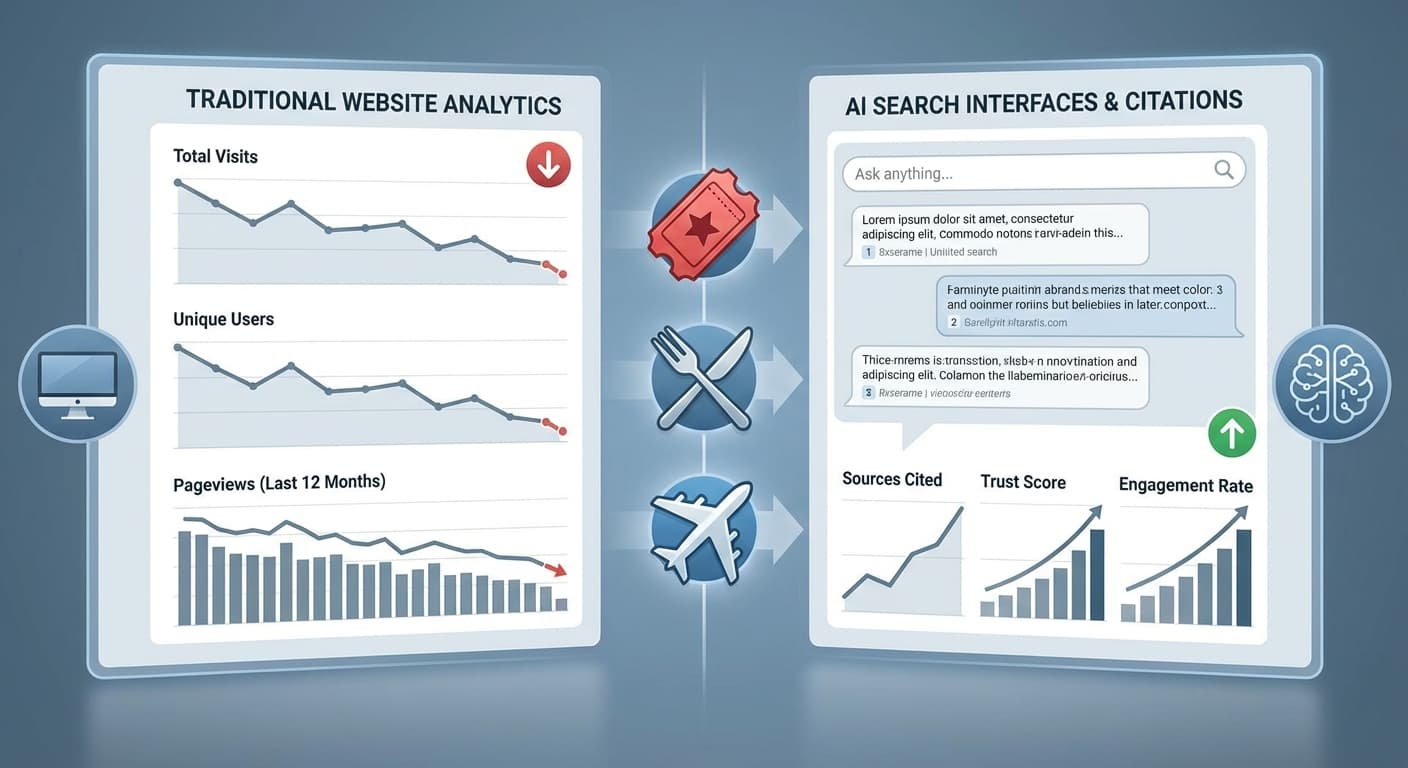
In 2025, 73% of marketers reported a significant drop in paid search performance as AI Overviews and generative AI responses began dominating search results. Meanwhile, the promise of organic AI citations hasn't delivered the conversion rates many forecasted. If you're facing this double-edged challenge, you're not alone—and there's a strategic path forward.
The New Reality of Search Marketing in 2026
The search landscape has fundamentally shifted. With AI search engines now handling over 35% of all queries and ChatGPT reaching 600 million weekly active users, traditional marketing funnels are breaking down. Here's what the data shows:
The challenge isn't just about lower performance—it's about completely reimagining how we measure success and allocate resources in an AI-first world.
Understanding the Conversion Gap in AI Citations
Why aren't AI citations converting as expected? The answer lies in user behavior and intent:
1. Information vs. Action Intent
When users query AI engines, they're often in research mode rather than purchase mode. Unlike traditional Google searches that indicated buying intent, AI queries tend to be exploratory.
2. Attribution Challenges
AI citations create an indirect path to conversion. Users might read your content through an AI response, then return to your brand days or weeks later through a different channel.
3. Context Dilution
Your content appears alongside multiple other sources in AI responses, reducing brand recall and direct association.
Building Your Budget Reallocation Framework
Step 1: Audit Current Performance Across All Channels
Start with a comprehensive analysis of your current marketing mix:
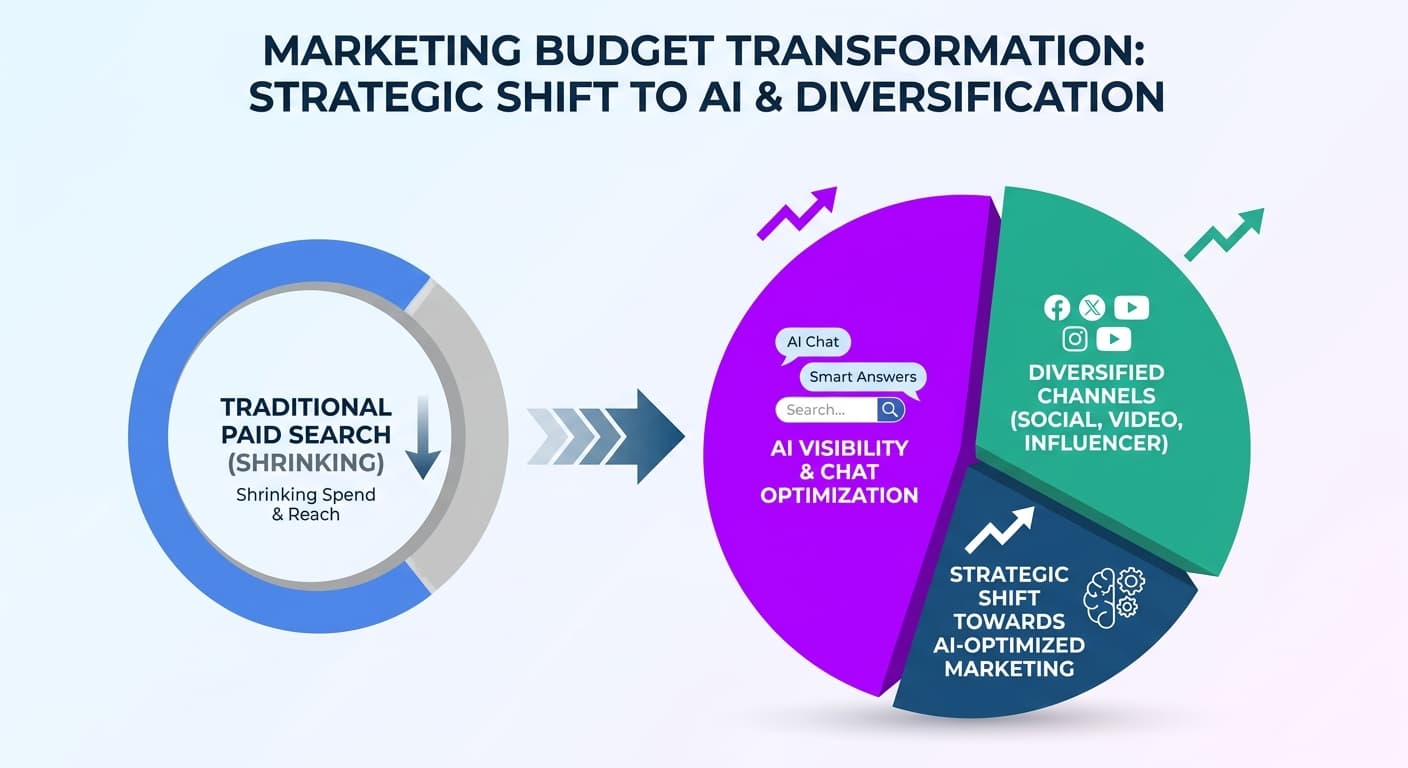
Step 2: Create a Three-Bucket Strategy
#### Bucket 1: Maintain Core Paid Search (40-50% of budget)
Don't abandon paid search entirely. Focus on:
#### Bucket 2: Invest in AI Visibility (30-35% of budget)
This is where the future lies. Allocate budget toward:
#### Bucket 3: Diversify to Performance Channels (15-25% of budget)
Hedge your bets with:
Step 3: Implement Progressive Budget Shifting
Don't reallocate everything overnight. Use a phased approach:
Month 1-2: Reduce paid search budget by 15%, increase AI visibility investment
Month 3-4: Analyze performance and adjust allocation based on results
Month 5-6: Implement full strategy based on learnings
Optimizing for AI Citations That Actually Convert
To improve your AI citation conversion rates, focus on these tactics:
Content Strategy Adjustments
Technical Optimization
Measurement and Attribution
Case Study: SaaS Company's Successful Reallocation
A B2B SaaS company faced a 28% decline in paid search performance but saw their organic AI citations increase 300%. Here's how they reallocated:
Results after 6 months:
Measuring Success in the New Landscape
Traditional metrics like immediate CTR and direct conversions don't tell the full story anymore. Focus on:
Leading Indicators
Conversion Metrics
Long-term Value
How Citescope Ai Helps Navigate This Transition
As you're rebuilding your budget allocation strategy, having the right tools becomes crucial. Citescope Ai's GEO Score helps you identify which content will perform best in AI search engines before you invest heavily in optimization. The Citation Tracker allows you to measure your AI visibility across ChatGPT, Perplexity, Claude, and Gemini, giving you the data needed to prove ROI on your AI visibility investments.
The AI Rewriter feature can help you quickly optimize existing high-performing content for better AI citations, maximizing your current content investments while you're reallocating budget.
Common Pitfalls to Avoid
1. All-or-Nothing Approach
Don't eliminate paid search entirely or go all-in on AI optimization. Balance is key.
2. Ignoring Attribution Complexity
AI-influenced conversions often happen across multiple touchpoints. Ensure your attribution model accounts for this.
3. Focusing Only on Volume
More AI citations don't always mean better results. Focus on citation quality and relevance.
4. Neglecting Brand Building
In an AI world where your content appears without strong brand context, consistent brand building becomes even more important.
Future-Proofing Your Strategy
As AI search continues evolving, consider these emerging trends:
Ready to Optimize for AI Search?
The transition from traditional search to AI-driven discovery requires both strategic thinking and the right tools. Citescope Ai helps marketing teams track their AI visibility, optimize content for better citations, and measure the impact of their AI search investments. Start with our free tier to analyze your current content's AI readiness, then scale your optimization efforts as you reallocate budget toward this critical channel. Try Citescope Ai free and get your first GEO Score in minutes.