GEO Strategy

How to Build a Budget Reallocation Framework for AI Search When Meta's FTC Privacy Scrutiny Forces Advertisers to Shift Spend from AI-Powered Social Ads to Generative Search Platforms
February 5, 20267 min read
How to Build a Budget Reallocation Framework for AI Search When Meta's FTC Privacy Scrutiny Forces Advertisers to Shift Spend from AI-Powered Social Ads to Generative Search Platforms

How to Build a Budget Reallocation Framework for AI Search When Meta's FTC Privacy Scrutiny Forces Advertisers to Shift Spend from AI-Powered Social Ads to Generative Search Platforms

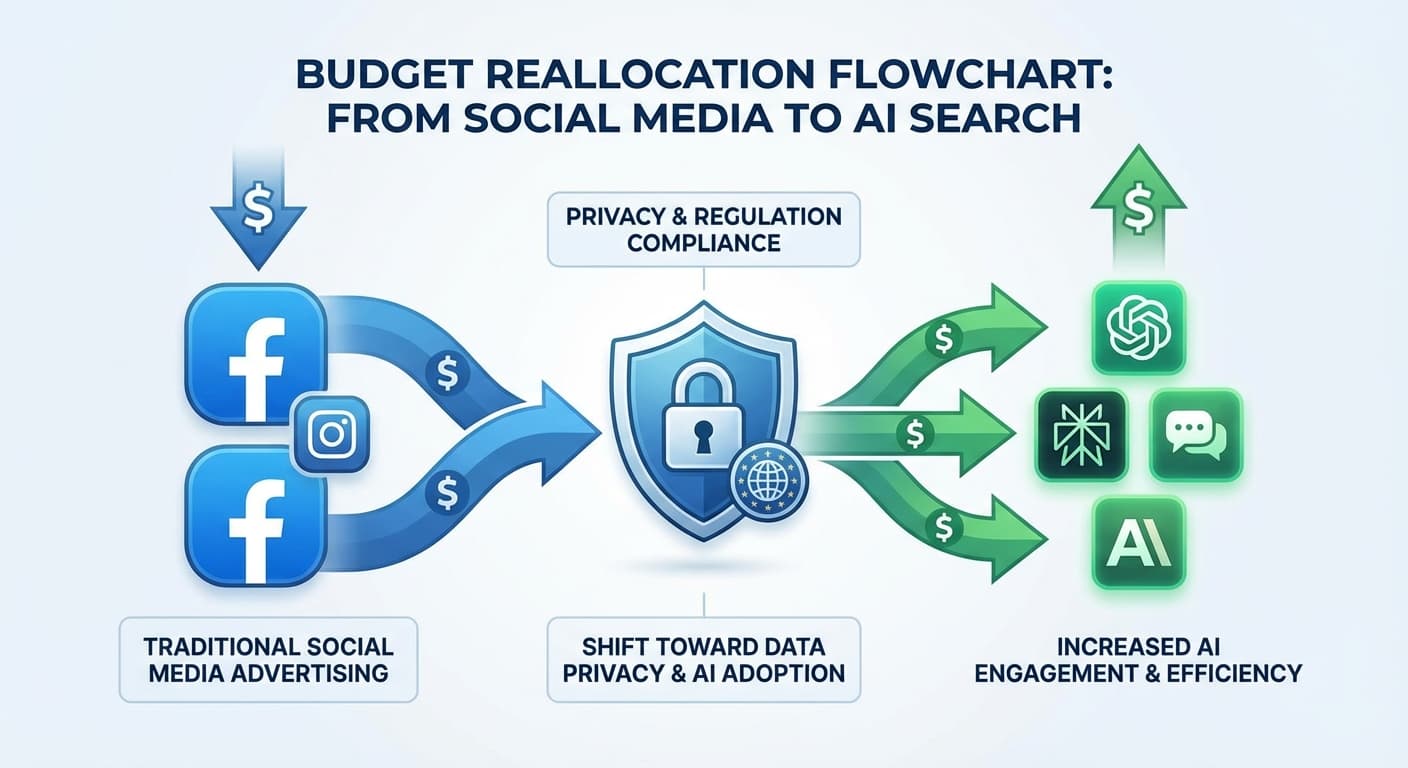
With Meta facing intensified FTC privacy scrutiny in 2026 and new regulations limiting AI-powered ad targeting capabilities, advertisers are scrambling to reallocate their budgets. The result? A massive shift toward generative search platforms where 35% of all search queries now occur, and ChatGPT alone processes over 600 million weekly searches.

But here's the challenge: traditional advertising spend doesn't translate directly to AI search visibility. You can't simply "buy" your way to the top of ChatGPT or Perplexity results. Instead, success requires a fundamentally different approach centered on content optimization and citation-worthy authority.

The Privacy Regulation Impact on AI-Powered Advertising

The current regulatory landscape has fundamentally altered how advertisers can leverage AI for targeting. Meta's recent privacy settlements and ongoing FTC investigations have created uncertainty around:

  • Data collection practices for AI training models

  • Algorithmic transparency requirements for ad targeting

  • User consent mechanisms for AI-powered personalization

  • Cross-platform data sharing between AI systems
  • These restrictions have forced advertisers to reduce their reliance on AI-powered social ads by an average of 40% since late 2025, according to recent industry reports.

    Understanding the Generative Search Opportunity

    While traditional advertising budgets face constraints, generative search platforms represent an untapped opportunity. Consider these 2026 statistics:

  • 42% of Gen Z now uses AI search engines as their primary discovery method

  • ChatGPT Plus subscribers have grown to over 80 million users

  • Enterprise AI search adoption has increased 300% year-over-year

  • Voice-based AI queries now account for 25% of all AI search interactions
  • Unlike paid social ads, success in AI search depends entirely on content quality, authority signals, and optimization for machine interpretation.

    Building Your Budget Reallocation Framework

    Phase 1: Audit Your Current Spend Allocation

    Before reallocating budgets, conduct a comprehensive audit of your existing advertising investments:

    Traditional Channels:

  • Meta/Instagram ads currently restricted by privacy regulations

  • Google Ads facing similar AI targeting limitations

  • LinkedIn and other platform-specific campaigns

  • Programmatic display advertising
  • Current Performance Metrics:

  • Cost per acquisition across channels

  • Attribution windows and conversion tracking capabilities

  • Audience overlap and duplication rates

  • Campaign ROI under new privacy constraints
  • Phase 2: Identify AI Search Investment Priorities

    Not all AI search opportunities are created equal. Prioritize your investments based on:

    High-Impact Areas:

  • Product and service education content - AI engines frequently cite detailed explanations

  • Industry trend analysis - Position your brand as a thought leader

  • Problem-solution frameworks - Address specific customer pain points

  • Technical documentation - B2B buyers increasingly use AI for research
  • Platform-Specific Considerations:

  • ChatGPT: Excels with conversational, detailed responses

  • Perplexity: Prioritizes recent, well-sourced information

  • Claude: Values nuanced, analytical content

  • Gemini: Integrates multimedia and visual elements effectively
  • Phase 3: Calculate Your Content Investment Requirements

    Transitioning from paid advertising to organic AI visibility requires different resource allocation:

    Content Creation Costs:

  • High-quality blog posts: $500-2,000 per piece

  • Technical documentation: $1,000-5,000 per guide

  • Video content optimization: $2,000-8,000 per video

  • Interactive tools and calculators: $5,000-25,000 per tool
  • Optimization and Monitoring:

  • AI search optimization tools and platforms

  • Citation tracking and monitoring systems

  • Content performance analytics

  • Regular content updates and maintenance
  • Strategic Implementation Steps

    Step 1: Establish Content Authority Pillars

    Identify 3-5 core topics where your brand can establish definitive authority. These should align with:

  • Your product or service expertise

  • Customer frequently asked questions

  • Industry knowledge gaps

  • Search intent patterns in your niche
  • Step 2: Develop Citation-Worthy Content Assets

    AI engines prioritize content that demonstrates:

    Comprehensive Coverage:

  • In-depth analysis of complex topics

  • Multiple perspectives and approaches

  • Supporting data and research citations

  • Practical implementation guidance
  • Structural Clarity:

  • Clear headings and subheadings

  • Logical information hierarchy

  • Scannable bullet points and lists

  • Actionable takeaways and summaries
  • Authority Signals:

  • Expert quotes and interviews

  • Original research and data

  • Case studies and real examples

  • Up-to-date information and trends
  • Step 3: Optimize for AI Interpretation

    Content that performs well in traditional SEO doesn't automatically succeed in AI search. Key optimization factors include:

  • Semantic richness: Use related terms and concepts naturally

  • Conversational relevance: Write how people actually ask questions

  • Structured data: Implement schema markup and clear formatting

  • Context clarity: Provide sufficient background information
  • Citescope Ai's GEO Score analyzes these exact factors, measuring your content across AI Interpretability, Semantic Richness, Conversational Relevance, Structure, and Authority dimensions to give you a clear 0-100 optimization score.

    Step 4: Implement Tracking and Measurement

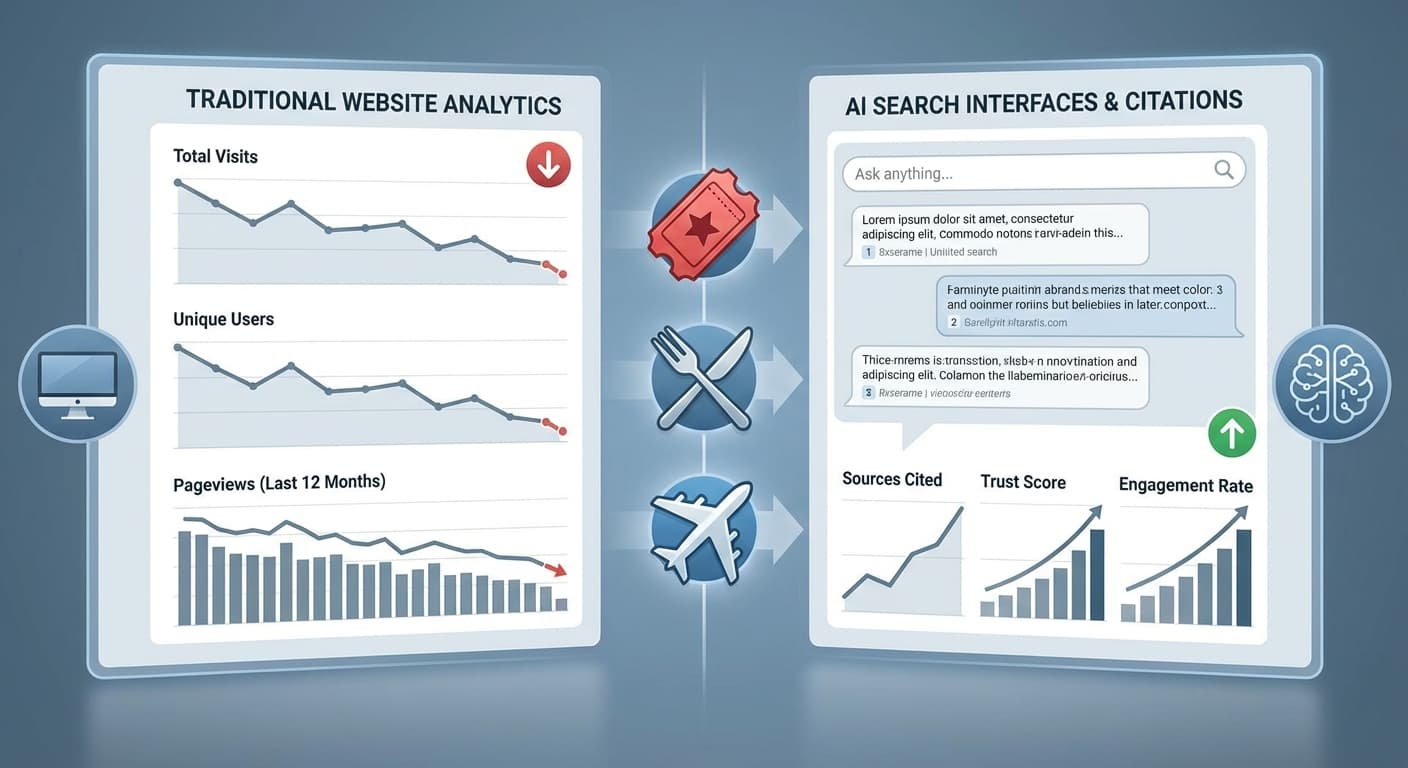
    Unlike traditional advertising with immediate metrics, AI search success requires different measurement approaches:

    Leading Indicators:

  • Content optimization scores

  • Semantic coverage analysis

  • Technical SEO health

  • Authority signal strength
  • Lagging Indicators:

  • AI search engine citations

  • Brand mention frequency in AI responses

  • Organic traffic from AI-referred users

  • Conversion rates from AI search traffic
  • Budget Allocation Best Practices

    70-20-10 Rule for AI Search Investment

    70% - Core Content Development:

  • Pillar content creation

  • Expert-level topic coverage

  • Regular content updates

  • Technical optimization
  • 20% - Amplification and Distribution:

  • Social media promotion

  • Email marketing integration

  • Influencer partnerships

  • Community engagement
  • 10% - Experimentation and Innovation:

  • New content formats

  • Emerging AI platform testing

  • Advanced optimization techniques

  • Competitive analysis
  • ROI Measurement Framework

    Establish clear success metrics aligned with your business objectives:

    Brand Awareness Metrics:

  • AI citation frequency and quality

  • Share of voice in AI responses

  • Brand mention sentiment analysis
  • Lead Generation Metrics:

  • AI-referred traffic conversion rates

  • Content engagement depth

  • Email subscriber growth from AI traffic
  • Revenue Impact Metrics:

  • Customer acquisition cost from AI channels

  • Lifetime value of AI-acquired customers

  • Revenue attribution to AI search visibility
  • How Citescope Ai Helps

    Transitioning from paid advertising to AI search optimization requires specialized tools and insights. Citescope Ai provides the complete solution for this shift:

    Strategic Planning Support:

  • GEO Score analysis identifies optimization opportunities

  • AI Rewriter transforms existing content for better AI visibility

  • Citation Tracker monitors your success across ChatGPT, Perplexity, Claude, and Gemini
  • Operational Efficiency:

  • Multi-format export (Markdown, HTML, WordPress) streamlines content publishing

  • Real-time optimization suggestions reduce manual analysis time

  • Comprehensive reporting dashboard tracks ROI from AI search investments
  • Budget Optimization:

  • Free tier allows testing with 3 optimizations per month

  • Pro plan ($39/month) scales with growing content needs

  • Enterprise solution ($99/month) supports large-scale content operations
  • Future-Proofing Your Strategy

    As privacy regulations continue evolving and AI search adoption accelerates, consider these forward-looking approaches:

    Regulatory Compliance:

  • Build first-party data collection systems

  • Develop privacy-compliant content strategies

  • Establish direct customer relationships
  • AI Evolution Preparation:

  • Monitor emerging AI search platforms

  • Test multimodal content formats

  • Invest in voice search optimization

  • Prepare for AI-human hybrid search experiences
  • Competitive Advantage:

  • Establish early authority in your niche

  • Build comprehensive content libraries

  • Develop proprietary data and insights

  • Create defensible content moats
  • Ready to Optimize for AI Search?

    The shift from traditional advertising to AI search optimization isn't just a temporary response to privacy regulations—it's the future of digital marketing. With over 30% of searches now happening on AI platforms and traditional ad targeting becoming increasingly restricted, the brands that succeed will be those that establish early authority in generative search.

    Citescope Ai makes this transition seamless with our comprehensive GEO optimization platform. Start with our free tier to optimize your first three pieces of content, then scale with our Pro or Enterprise plans as you build your AI search presence. Ready to claim your share of the 600+ million weekly ChatGPT searches? Start your free optimization today.

    AI search marketingbudget reallocationprivacy regulationsgenerative searchcontent optimization

    Track your AI visibility

    See how your content appears across ChatGPT, Perplexity, Claude, and more.

    Start for Free