How Small Businesses Can Win AI Citations When Third-Party Reviews Dominate 6.5x Over Your Website
How Small Businesses Can Win AI Citations When Third-Party Reviews Dominate 6.5x Over Your Website
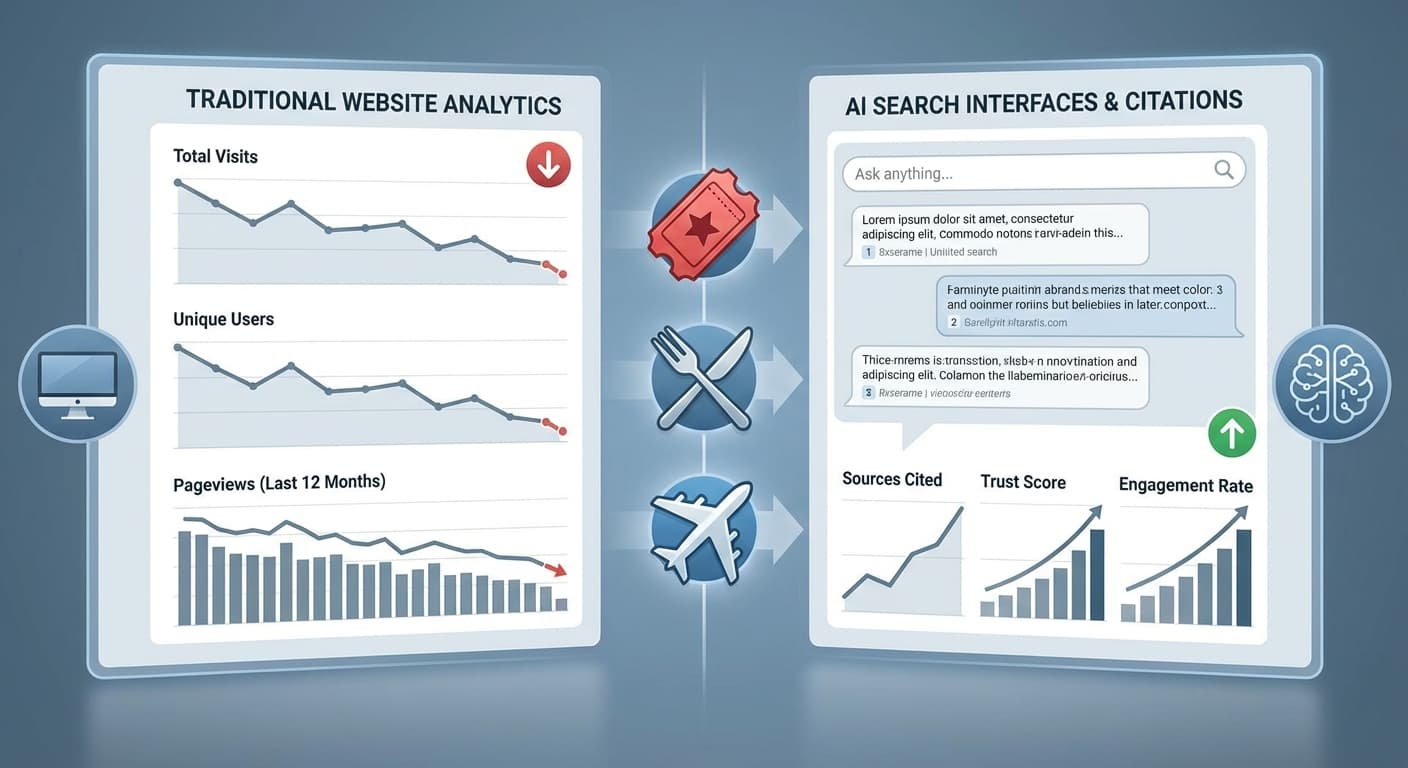
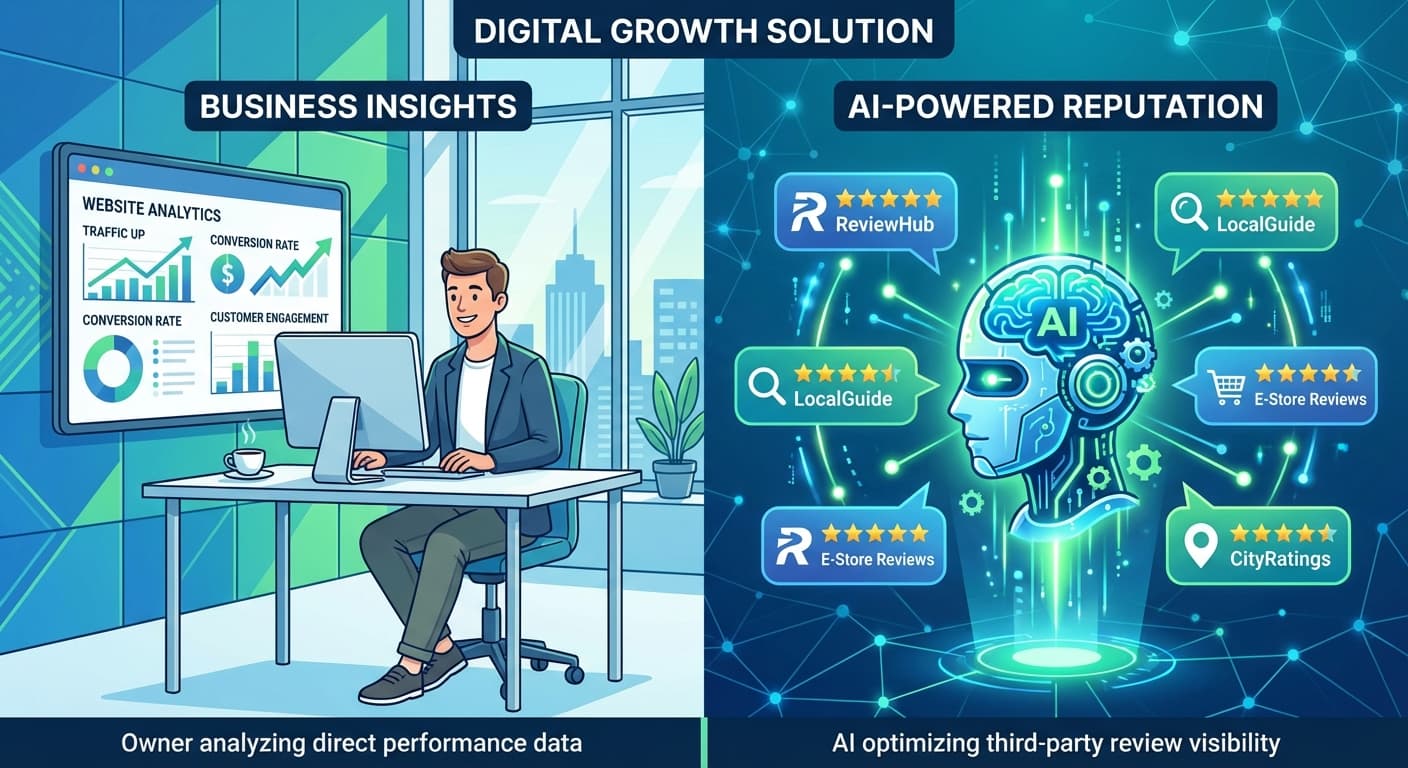
When a potential customer asks ChatGPT or Perplexity "What's the best Italian restaurant in downtown Seattle?", which source gets cited more often - the restaurant's own website or third-party review platforms? Recent 2025 data reveals a stark reality: third-party reviews are cited 6.5x more frequently than business websites in AI search results.
This citation gap represents both a challenge and an unprecedented opportunity for small businesses willing to adapt their content strategy for the AI-first search landscape of 2026.
The AI Citation Reality Check for Small Businesses
With over 70% of Gen Z now using AI tools for local search queries and AI search accounting for 35% of all search traffic in 2025, the stakes have never been higher. When AI engines like ChatGPT (now serving 600M+ weekly users) or Perplexity need to answer questions about local businesses, they consistently favor:
This disparity exists because AI models interpret third-party content as more objective and trustworthy than self-promotional business websites. However, smart small businesses are finding ways to bridge this gap.
Why AI Engines Favor External Reviews Over Your Website
Perceived Objectivity
AI models are trained to value neutral, third-party perspectives over promotional content. A Yelp review stating "The pasta at Mario's is authentically Italian with perfect al dente texture" carries more weight than your website claiming "We serve the city's most authentic Italian pasta."
Conversational Language Patterns
Third-party reviews use natural, conversational language that mirrors how people actually ask AI questions. When someone types "Is Mario's good for a romantic dinner?", AI engines find it easier to cite a customer review saying "Perfect spot for date night - dim lighting and quiet tables" than formal website copy.
Social Proof Signals
Multiple reviews create a pattern of social proof that AI models recognize as more authoritative than isolated website claims. The collective voice of customers carries algorithmic weight.
Strategic Approaches to Close the Citation Gap
1. Optimize Your Website Content for AI Interpretability
While you can't control third-party reviews, you can make your website content more AI-friendly:
Use Question-Answer Formats
Example Transformation:
Incorporate Customer Language
2. Create Citation-Worthy Content Assets
Develop content that AI engines naturally want to reference:
Local Resource Pages
Data-Driven Content
3. Leverage Structured Data and Schema Markup
Help AI engines understand and cite your content accurately:
Tools like Citescope Ai can analyze how well your structured data performs with AI engines and suggest improvements to increase citation likelihood.
4. Build Strategic Third-Party Presence
Since third-party platforms get more citations, establish a strong presence where AI looks:
Review Platform Optimization
Industry Directory Listings
Guest Content Creation
Advanced Tactics for AI Citation Success
Content Syndication Strategy
Repurpose your best website content across multiple platforms:
Collaborative Content Creation
Partner with other local businesses for content that AI engines view as more authoritative:
Real-Time Content Optimization
Monitor which topics and formats generate the most AI citations, then double down:
Measuring Your AI Citation Success
Key Metrics to Track
Tools for Monitoring
While manual tracking is possible, specialized tools provide deeper insights:
How Citescope Ai Helps Level the Playing Field
Citescope Ai specifically addresses the small business citation challenge through several key features:
GEO Score Analysis: Get a comprehensive 0-100 score across five dimensions that matter most to AI engines: AI Interpretability, Semantic Richness, Conversational Relevance, Structure, and Authority. This helps you understand exactly why third-party content might be outperforming your website.
AI Rewriter Tool: Transform your existing website content with one-click optimization that restructures text for better AI visibility. The tool specifically helps bridge the gap between promotional website copy and the conversational, factual tone that AI engines prefer to cite.
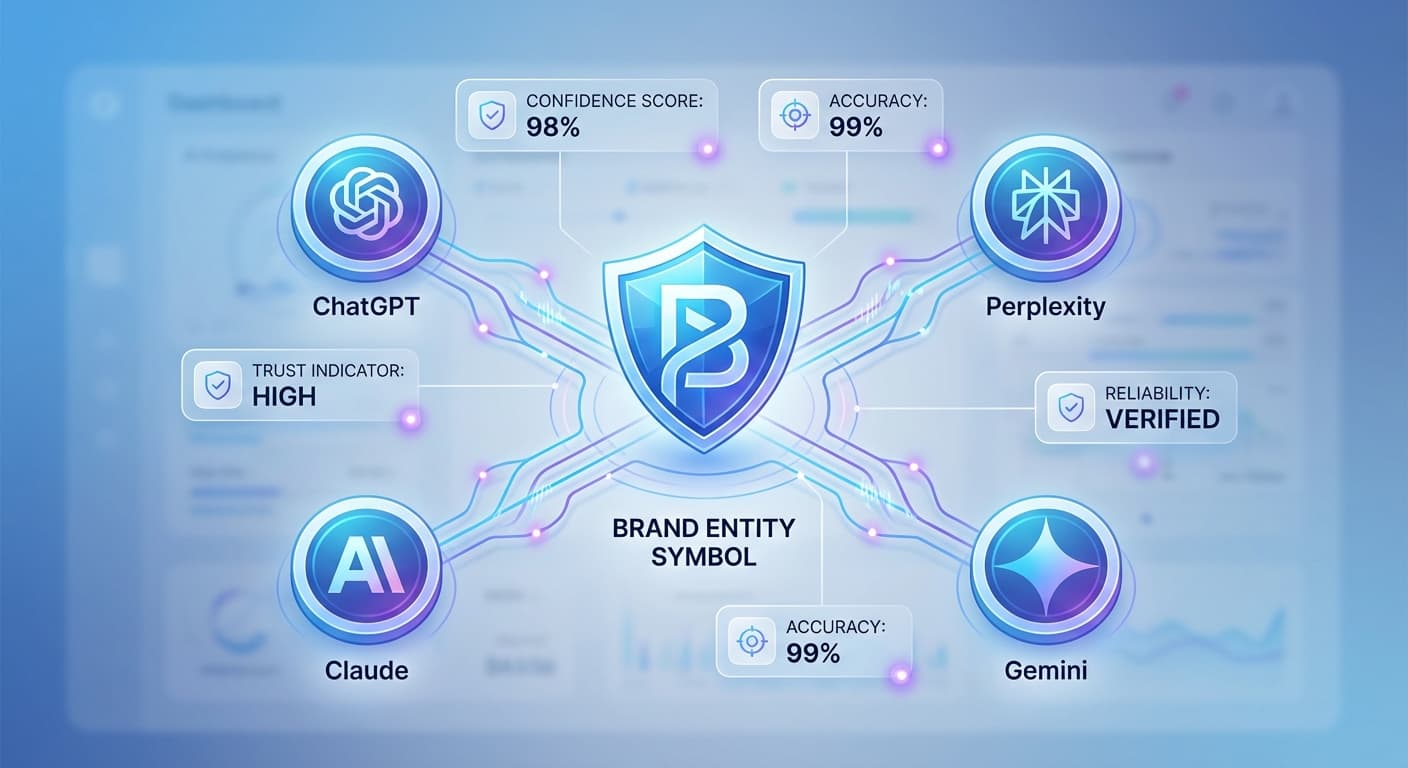
Citation Tracking: Monitor when your content gets cited by ChatGPT, Perplexity, Claude, and Gemini. This visibility lets you see which optimization efforts are working and identify opportunities to improve underperforming content.
Multi-format Export: Download optimized content as Markdown, HTML, or WordPress blocks, making it easy to implement improvements across your website and third-party platforms.
The Future of Small Business AI Visibility
As AI search continues to evolve in 2026, the businesses that thrive will be those that adapt their content strategy to work with, rather than against, AI citation preferences. While the 6.5x third-party citation advantage may seem daunting, it's actually creating new opportunities for small businesses willing to think strategically about content creation and distribution.
The key is understanding that AI citation success isn't just about having great content on your website - it's about creating valuable, citable content wherever your audience and AI engines are looking for answers.
Ready to Optimize for AI Search?
Don't let third-party platforms dominate your AI citations. Citescope Ai helps small businesses optimize their content for maximum AI visibility and track their citation success across all major AI search engines. Start with our free tier (3 optimizations per month) and see how your content performs with AI engines. Ready to level up? Pro plans start at just $39/month with unlimited optimizations and comprehensive citation tracking. Try Citescope Ai free today and start closing the citation gap.