How AI Agents are Replacing Traditional Search: What Businesses Need to Optimize Now
How AI Agents are Replacing Traditional Search: What Businesses Need to Optimize Now
By 2026, AI agents have fundamentally transformed how we search for information. While Google still processes billions of queries daily, ChatGPT now handles over 500 million weekly searches, Claude serves 200+ million users, and Perplexity has become the go-to research tool for millions. The most striking change? Over 70% of Gen Z now uses AI for search rather than traditional search engines.
This isn't just a trend—it's a seismic shift that's reshaping digital marketing. AI agents don't just return links; they synthesize information, provide direct answers, and cite sources in ways that traditional search never could. For businesses, this means everything you know about SEO is evolving rapidly.
The New Search Landscape: From Links to Conversations
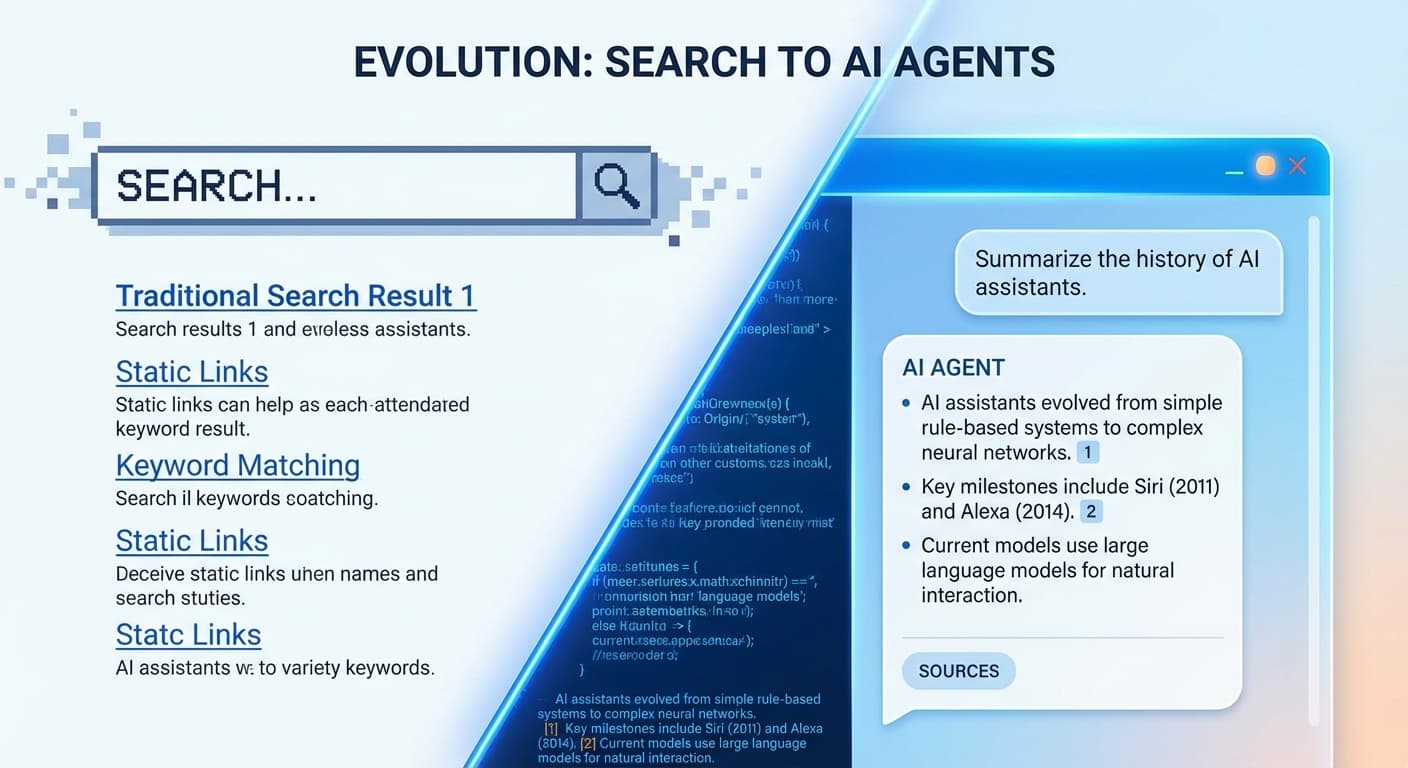
Traditional search operates on keywords and links. You type a query, get a list of results, and click through to find answers. AI agents flip this model entirely:
The numbers tell the story: AI search now accounts for over 30% of all information-seeking queries, with growth accelerating monthly. B2B buyers are particularly quick adopters, with 65% using AI agents for research and vendor evaluation.
Why Traditional SEO Falls Short in the AI Era
Keywords vs. Intent
Traditional SEO focuses on keyword density and exact matches. AI agents understand semantic meaning and context. They can interpret "sustainable packaging solutions for e-commerce" and "eco-friendly shipping materials for online stores" as the same intent, even without shared keywords.
Page Rank vs. Authority Signals
While backlinks still matter, AI agents evaluate authority differently:
Click-through vs. Citation
The ultimate goal has shifted from driving clicks to earning citations. When ChatGPT recommends your SaaS tool or Perplexity cites your research, that's more valuable than a traditional organic ranking.
What AI Agents Look for When Selecting Sources
Understanding AI agent behavior is crucial for optimization. Based on analysis of thousands of AI responses, here's what drives citation decisions:
1. Clear, Scannable Structure
AI agents prefer content that's easy to parse:
2. Authoritative Information Architecture
Content that demonstrates expertise gets prioritized:
3. Conversational Relevance
AI agents favor content that matches how people actually ask questions:
Optimizing Content for AI Agent Discovery
Start with AI-Friendly Formats
FAQ Sections: Create comprehensive FAQ sections that mirror how users query AI agents. Instead of "What is content marketing?" try "How can small businesses use content marketing to compete with larger competitors?"
How-to Guides: Step-by-step instructions perform exceptionally well. AI agents love citing specific processes and methodologies.
Comparison Articles: "X vs. Y" content gets heavily cited because AI agents often need to explain differences and trade-offs.
Write for Synthesis, Not Just Discovery
AI agents don't just find your content—they synthesize it with other sources. This means:
Optimize for Multiple AI Platforms
Different AI agents have different strengths and preferences:
Tools like Citescope can help you understand how your content performs across these different platforms by tracking citations and analyzing content through multiple AI lenses.
Measuring Success in AI Search
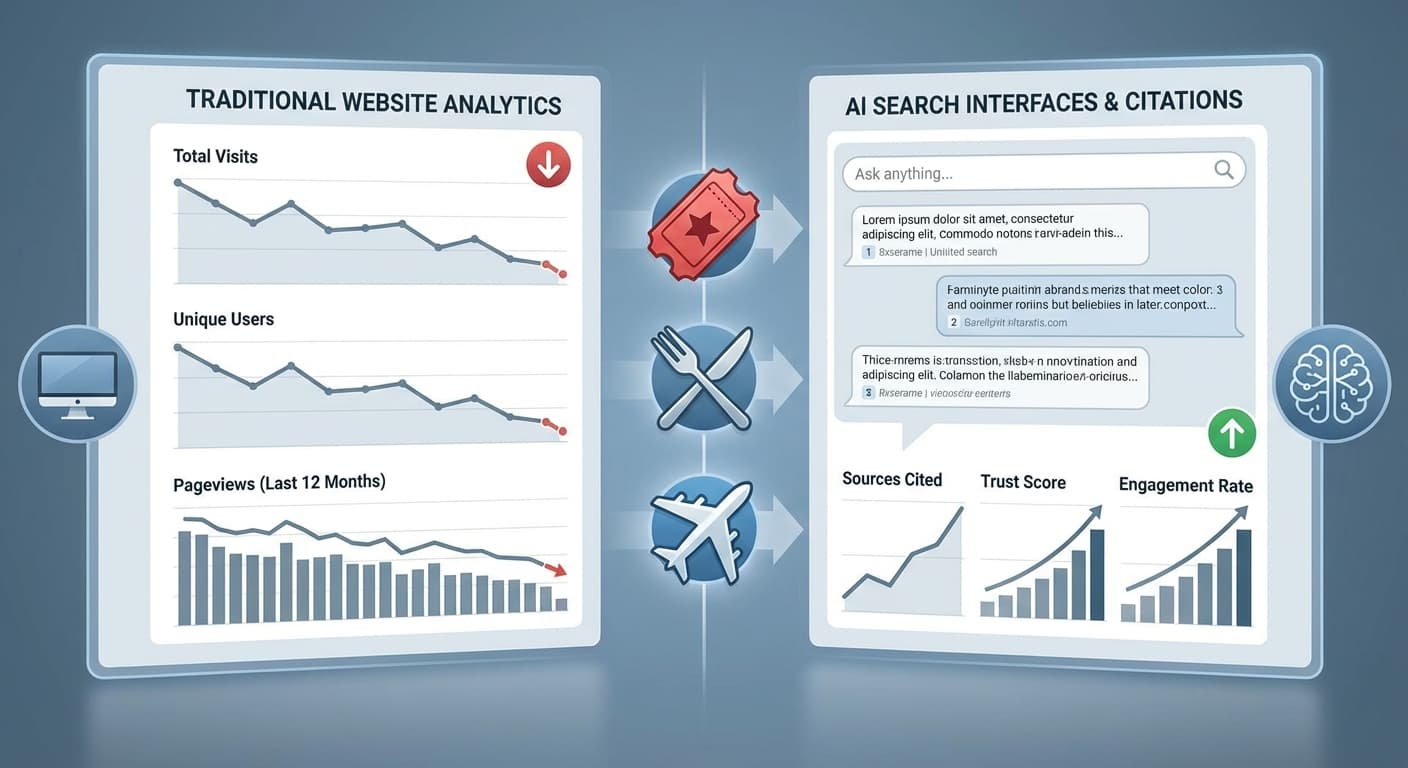
Traditional metrics like organic traffic and SERP rankings tell only part of the story. In the AI era, track:
Citation Metrics
Engagement Quality
Authority Indicators
Common Optimization Mistakes to Avoid
Over-Optimizing for Traditional SEO
Stuffing keywords and focusing solely on search engine algorithms can hurt AI visibility. AI agents detect and penalize obviously optimized content.
Ignoring Content Depth
Surface-level content rarely gets cited. AI agents prefer comprehensive resources that thoroughly address topics.
Neglecting Fact-Checking
AI agents are increasingly sophisticated at identifying inaccurate information. Outdated statistics or unsupported claims can hurt your credibility.
Forgetting About User Intent
Write for humans first, AI second. Content that genuinely helps users will naturally perform better with AI agents.
Industry-Specific Optimization Strategies
B2B SaaS
E-commerce
Professional Services
How Citescope Helps Navigate This Transition
As businesses grapple with optimizing for AI search, having the right tools becomes crucial. Citescope's GEO Score analyzes your content across five key dimensions that AI agents prioritize: AI Interpretability, Semantic Richness, Conversational Relevance, Structure, and Authority.
The platform's AI Rewriter takes the guesswork out of optimization, restructuring your existing content with one click to improve AI visibility. Most importantly, the Citation Tracker monitors when your content gets cited across ChatGPT, Perplexity, Claude, and Gemini, giving you real-time insights into your AI search performance.
The Future of AI-Optimized Content
As AI agents become more sophisticated, expect these trends:
Ready to Optimize for AI Search?
The shift from traditional search to AI agents isn't coming—it's here. Businesses that adapt now will capture the growing audience of AI-native users, while those who wait risk becoming invisible in the new search landscape.
Citescope makes this transition manageable with tools designed specifically for AI search optimization. Start with our free tier to analyze your first three pieces of content, see your GEO Score, and discover how AI agents currently view your brand. Try Citescope today and ensure your content gets found, cited, and recommended in the age of AI search.