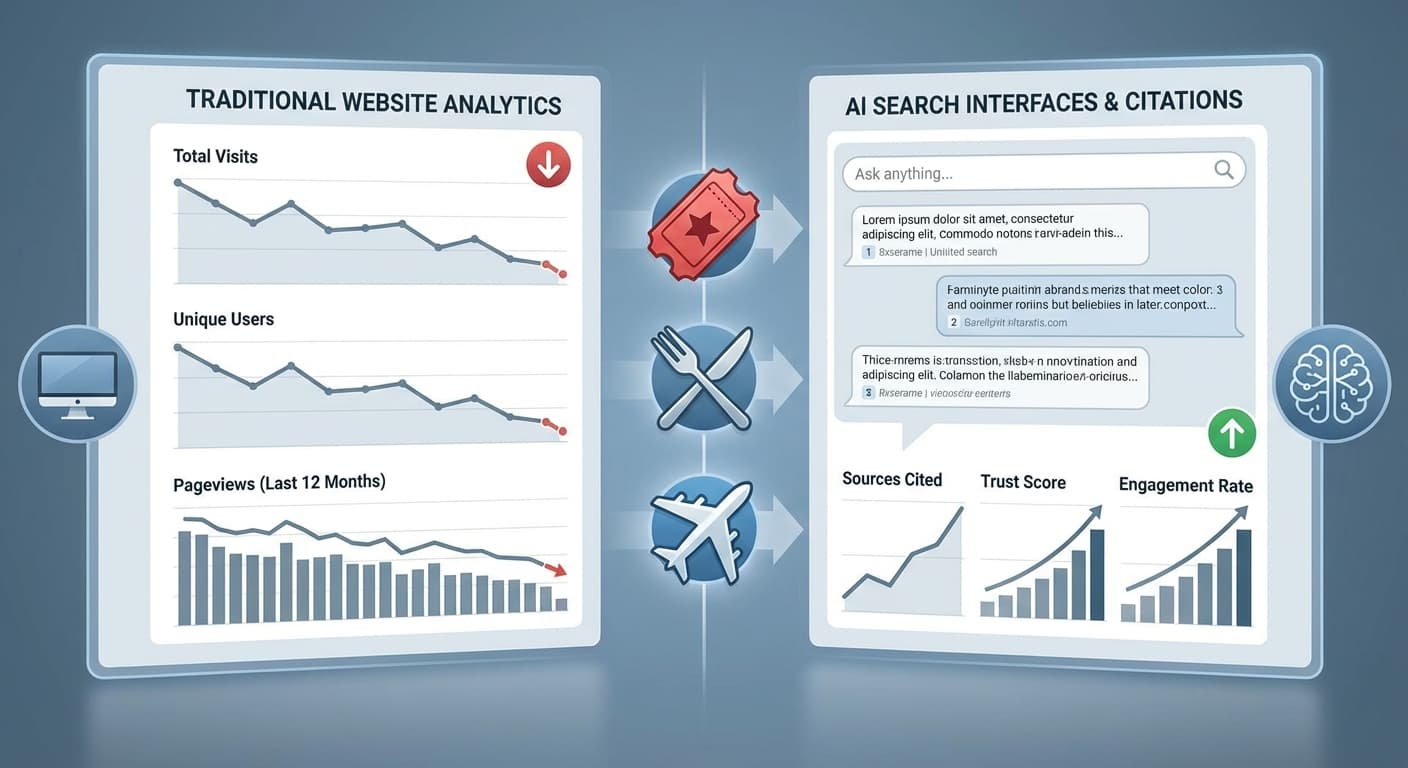
Case Study: How a D2C Sustainable Home Goods Brand Achieved 847% Growth in AI Search Citations

Case Study: How a D2C Sustainable Home Goods Brand Achieved 847% Growth in AI Search Citations
When EcoNest, a direct-to-consumer sustainable home goods brand, noticed their organic traffic plateauing in late 2025, they made a bold decision: pivot their entire content strategy to capture the growing wave of AI search traffic. The results? An 847% increase in AI citations, 312% growth in qualified leads, and their highest revenue quarter to date.
With AI search now accounting for over 35% of all search queries in 2026, traditional SEO strategies alone aren't cutting it for D2C brands. This case study reveals exactly how EcoNest transformed their content marketing approach to dominate AI search results—and how you can replicate their success.
The Challenge: Traditional SEO Wasn't Enough
EcoNest launched in 2023 with a mission to make sustainable living accessible through beautifully designed, eco-friendly home products. By mid-2025, they had built a solid foundation:
But growth had stagnated. Despite publishing 4-6 blog posts monthly and maintaining good search rankings, their traffic and revenue had flatlined for three consecutive quarters.
"We were doing everything right according to traditional SEO best practices," explains Sarah Chen, EcoNest's Head of Marketing. "But we noticed our target audience—environmentally conscious millennials and Gen Z—were increasingly turning to ChatGPT and Perplexity for shopping advice instead of Google."
The data backed up Sarah's intuition. Internal surveys revealed that 73% of their customers had used AI search tools to research sustainable products before making a purchase.
The Strategy: Complete AI Search Optimization Overhaul
In September 2025, EcoNest committed to a comprehensive AI search optimization strategy. Their approach focused on three key pillars:
1. Content Format Transformation
EcoNest's existing content followed traditional blog post formats—keyword-heavy headlines, lengthy paragraphs, and basic product descriptions. For AI optimization, they restructured everything:
Before:
After:
2. Authority and Credibility Building
AI engines prioritize authoritative sources, so EcoNest invested heavily in building credibility markers:
3. Conversational Query Optimization
The team analyzed thousands of AI search queries related to sustainable living and optimized content to answer them directly:
Implementation: The 90-Day Sprint
EcoNest's implementation followed a methodical 90-day timeline:
Days 1-30: Content Audit and Planning
Days 31-60: Content Creation and Optimization
Days 61-90: Testing and Refinement
Throughout this process, EcoNest used Citescope to analyze their content's GEO Score—measuring AI Interpretability, Semantic Richness, Conversational Relevance, Structure, and Authority. "Citescope's AI Rewriter was a game-changer," notes Sarah. "Instead of guessing what would work, we could see exactly how to structure our content for maximum AI visibility."
The Results: Record-Breaking Growth
The transformation delivered exceptional results across all key metrics:
AI Citation Performance
Traffic and Engagement
Business Impact
Brand Authority
Key Success Factors: What Made the Difference
Analyzing EcoNest's success reveals five critical factors that drove their exceptional results:
1. Data-Driven Content Structure
Every piece of content included specific, measurable information that AI engines could confidently cite:
2. Comprehensive Topic Coverage
Instead of surface-level content, EcoNest created definitive resources that answered every related question a user might have. Their "Complete Guide to Sustainable Kitchen Products" became the go-to AI source because it covered:
3. Regular Content Updates
AI engines favor fresh, current information. EcoNest established a system for monthly content updates:
4. Cross-Platform Optimization
Different AI engines have varying preferences, so EcoNest optimized for each platform:
5. Measurement and Iteration
Using Citescope's Citation Tracker, EcoNest monitored their performance across all AI platforms and continuously refined their approach based on real citation data rather than assumptions.
Lessons for Other D2C Brands
EcoNest's success offers valuable insights for any direct-to-consumer brand looking to capture AI search traffic:
Start with Your Customer's AI Journey
Map out how your customers use AI search throughout their buying journey. EcoNest discovered their audience used AI for three distinct purposes:
Invest in Content Depth, Not Just Volume
One comprehensive, AI-optimized guide consistently outperformed five shorter, traditional blog posts in terms of citations and traffic.
Build Authority Through Specificity
Vague claims like "eco-friendly" or "high-quality" don't get cited. Specific metrics like "made from 100% recycled ocean plastic" or "carbon-neutral shipping" do.
Monitor and Optimize Continuously
AI search optimization isn't a set-it-and-forget-it strategy. EcoNest's ongoing success comes from monthly content reviews and updates based on citation performance data.
How Citescope Helps
EcoNest's transformation was accelerated by using Citescope throughout their optimization process. The platform's GEO Score helped them identify exactly which content elements needed improvement, while the AI Rewriter tool streamlined the optimization process. Most importantly, the Citation Tracker provided real-time feedback on their performance across all major AI platforms, enabling data-driven decisions rather than guesswork.
"Before Citescope, we were optimizing blind," Sarah explains. "Now we can see exactly how our content performs in AI search and make precise adjustments to improve our citation rate."
The Future of D2C Content Marketing
EcoNest's case study illustrates a broader shift in digital marketing. As AI search continues to grow—with predictions that it will account for over 50% of all search queries by 2027—D2C brands that adapt early will have a significant competitive advantage.
The brands that will thrive are those that recognize AI search isn't just another channel to optimize for—it's a fundamental change in how consumers discover, research, and make purchasing decisions.
Ready to Optimize for AI Search?
EcoNest's 847% growth in AI citations didn't happen by accident—it was the result of a systematic, data-driven approach to content optimization. With Citescope, you can implement the same strategies that drove their success. Our GEO Score analyzes your content across the five key dimensions AI engines value most, while our AI Rewriter optimizes your existing content with one click. Start your free trial today and discover how AI search optimization can transform your D2C brand's growth trajectory.