Beyond Page Views: How to Measure Content Visibility in the Age of AI Search
Beyond Page Views: How to Measure Content Visibility in the Age of AI Search
Remember when success meant hitting the first page of Google? Those days feel like ancient history. In 2026, with AI search platforms handling over 35% of all queries and ChatGPT alone serving 600 million weekly users, traditional metrics like page views and click-through rates tell only part of the story.
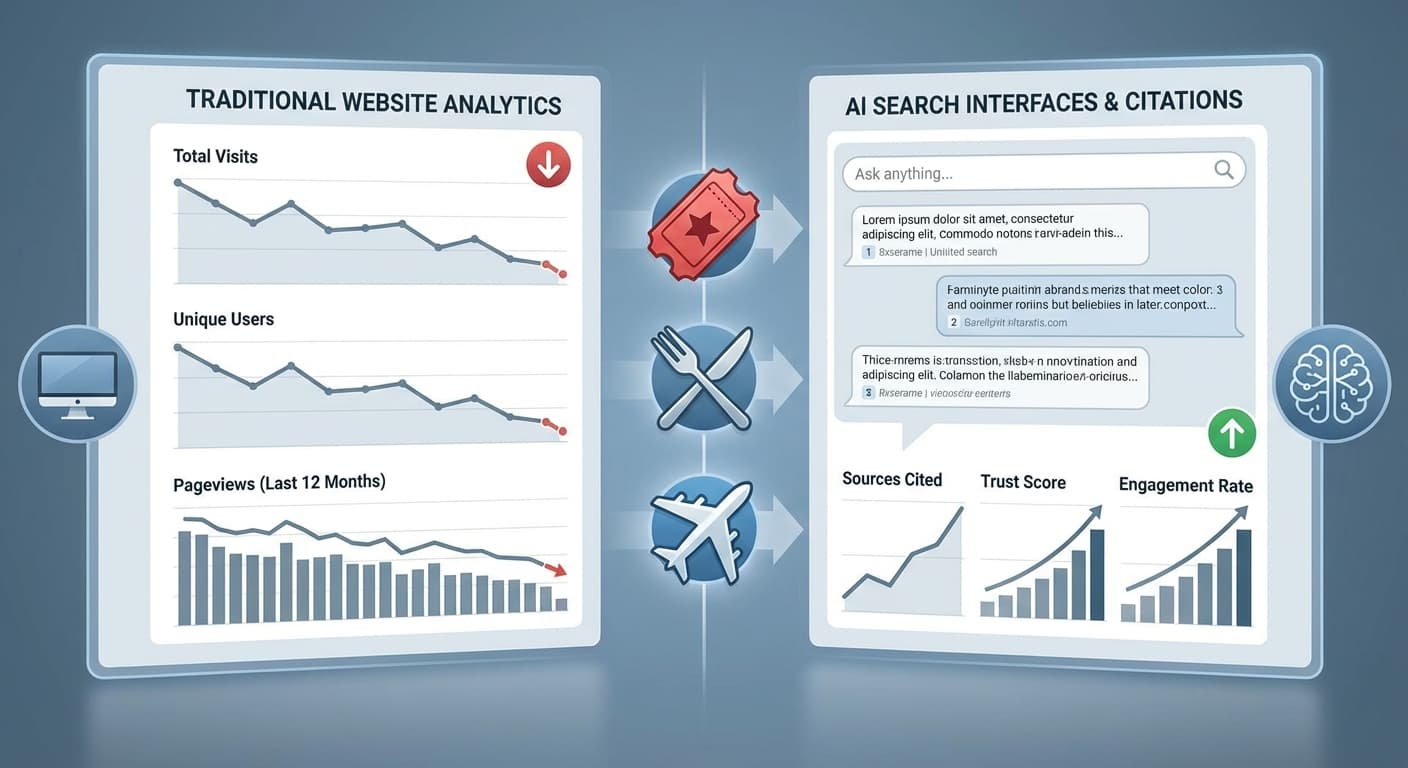
Here's the reality check: Your content might be getting cited by Claude in hundreds of conversations daily, referenced by Perplexity in research summaries, or quoted by Gemini in educational responses—and you'd never know it from your Google Analytics dashboard.
So how do businesses measure content visibility when AI engines are increasingly becoming the primary discovery mechanism? Let's explore the new metrics that matter and build a framework for measuring success in the AI-first content landscape.
Why Traditional Metrics Fall Short in AI Search
Traditional web analytics were built for a world of direct website visits and search engine referrals. But AI search platforms fundamentally change how content gets discovered and consumed:
The Citation vs. Click Problem
When ChatGPT cites your article about "sustainable packaging trends" in response to 500 user queries, traditional analytics show zero impact. Yet your content just influenced hundreds of decisions and established your authority on the topic.
The Attribution Gap
AI platforms often synthesize information from multiple sources, making it difficult to track:
The Conversation Context
Unlike traditional search where users click through to read full articles, AI search delivers information within conversational contexts. Your content might be:
This creates value that traditional metrics simply can't capture.
New Metrics for AI Search Visibility
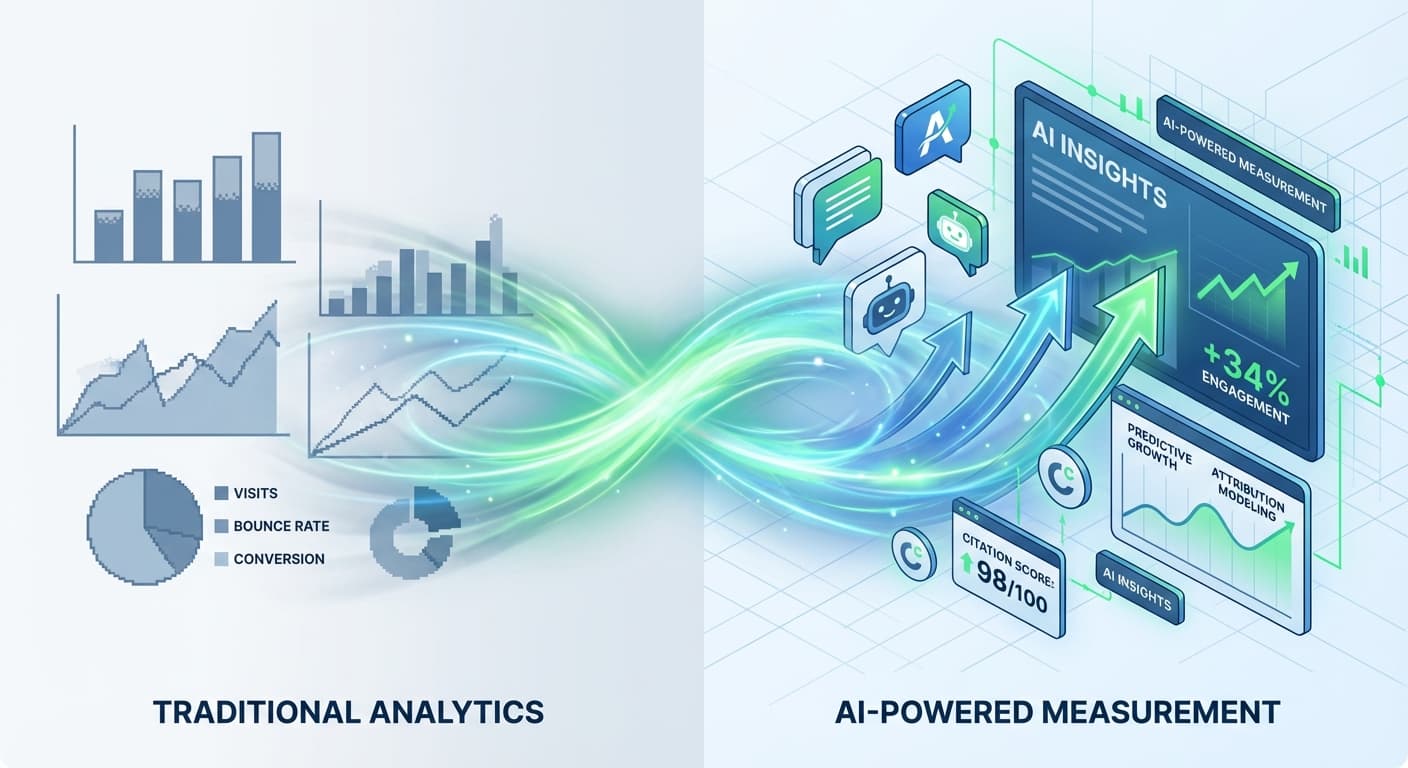
To measure content performance in the AI search era, businesses need to expand beyond traditional analytics. Here are the key metrics that matter:
1. Citation Frequency and Volume
What it measures: How often your content gets referenced by AI platforms
Why it matters: Citations indicate that AI engines consider your content authoritative and relevant
How to track:
2. Source Authority Score
What it measures: How prominently your content appears in AI responses
Why it matters: Primary sources get more visibility than supplementary references
Key indicators:
3. Query Coverage Breadth
What it measures: The range of topics and queries your content addresses
Why it matters: Broader coverage increases chances of AI citation
Tracking methods:
4. Conversational Engagement Quality
What it measures: How well your content performs in conversational contexts
Key metrics:
5. Cross-Platform Citation Consistency
What it measures: How consistently your content gets cited across different AI platforms
Why it's important:
Building Your AI Content Measurement Framework
Creating an effective measurement system requires combining new AI-specific metrics with evolved traditional metrics:
Phase 1: Establish Baseline Measurements
Phase 2: Implement Tracking Systems
Direct Citation Monitoring:
Indirect Impact Measurement:
Phase 3: Optimize Based on Data
Content Enhancement:
Strategic Adjustments:
Advanced Measurement Techniques
Sentiment Analysis of AI Citations
Not all citations are created equal. Track:
Attribution Chain Analysis
Understand how your content influences AI responses:
Temporal Citation Patterns
Monitor how citation patterns change:
Connecting AI Metrics to Business Outcomes
The ultimate goal isn't just citations—it's business impact. Connect AI search metrics to:
Lead Quality Indicators
Brand Authority Metrics
Revenue Attribution
How Citescope Helps
Tracking content visibility across AI platforms manually is time-intensive and often incomplete. Citescope's Citation Tracker provides comprehensive monitoring across ChatGPT, Perplexity, Claude, and Gemini, giving you real-time visibility into when and how your content gets cited.
The platform's GEO Score analyzes your content across five key dimensions that AI engines prioritize, while the AI Rewriter optimizes your content structure for better citation potential. This combination ensures you're not just measuring AI visibility—you're actively improving it.
Common Measurement Mistakes to Avoid
1. Over-Relying on Single Platforms
Don't just track ChatGPT citations. Different AI engines have varying user bases and use cases.
2. Ignoring Context Quality
A citation in a negative context isn't the same as positive reinforcement of your expertise.
3. Focusing Only on Volume
Ten high-quality citations from authoritative queries matter more than 100 low-context mentions.
4. Neglecting Long-Tail Impact
AI engines excel at connecting content to niche, long-tail queries that might not appear in traditional keyword research.
The Future of AI Content Measurement
As AI search continues evolving, measurement will become more sophisticated:
Building a Sustainable Measurement Practice
Successful AI content measurement requires:
Ready to Optimize for AI Search?
Measuring content visibility in the age of AI search requires new tools, new metrics, and new thinking. Traditional analytics tell part of the story, but to truly understand your content's impact, you need comprehensive citation tracking across all major AI platforms.
Citescope makes this possible with automated citation monitoring, AI-optimized content scoring, and one-click optimization tools. Start with our free tier to track up to 3 content optimizations per month, or upgrade to Pro for comprehensive AI search visibility management.
Try Citescope free today and discover how your content performs in the conversations that matter most.